

Key Takeaways
Why Budget Eating Doesn't Have to Mean Nutritional Sacrifice
Many people assume that eating healthfully requires spending more. In practice, some of the most nutrient-rich foods available - dried legumes, oats, eggs, seasonal produce, and frozen vegetables - are consistently among the least expensive items in any grocery store. The challenge isn't access to nutritious food so much as knowing where to focus your dollars.
Research from nutrition economists consistently shows that diet quality is more strongly tied to food knowledge and planning habits than to raw spending power. That's encouraging news for anyone navigating a tight household budget. This article outlines the foundational practices that nutrition professionals and budget-conscious households rely on - approaches grounded in evidence, not marketing.
For a deeper look at where low-cost diets most commonly fall short, see our guide to common nutritional pitfalls.
This article provides general nutritional information for educational purposes only. It is not a substitute for personalized advice from a registered dietitian or qualified healthcare provider.
Core Practices for Eating Well Without Overspending
The strategies below work across a wide range of household sizes, dietary preferences, and income levels. They're not quick fixes - they're durable habits that compound over time.
Anchor your meals around plant-based proteins
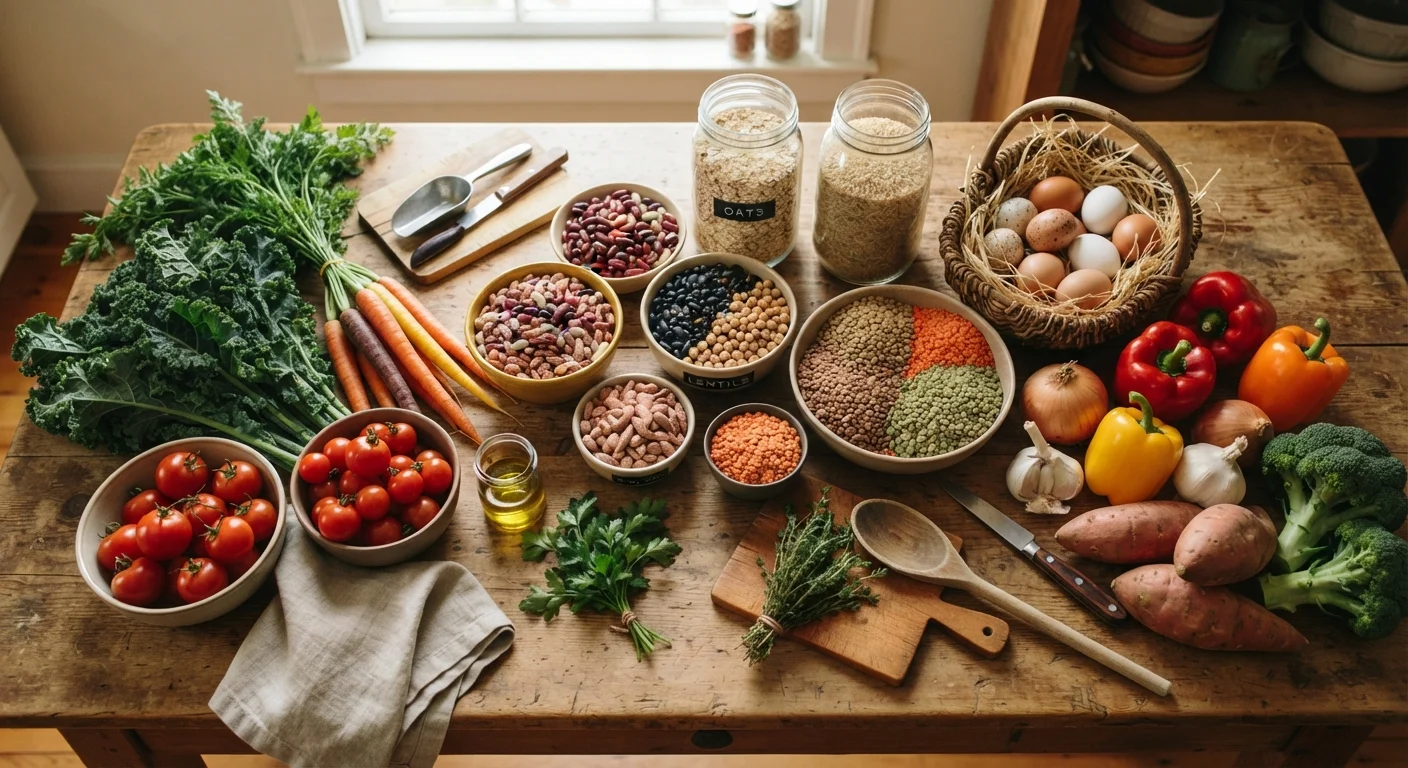
Dried beans, lentils, split peas, and chickpeas provide substantial protein, fiber, and key micronutrients at a fraction of the cost of most animal proteins. Shifting even two or three meals per week toward these ingredients can produce meaningful savings without sacrificing nutrition.
Plan meals before writing your grocery list
Shopping without a plan is one of the most reliable drivers of both overspending and food waste. Mapping out meals for the week - even loosely - ensures you buy what you'll actually use and reduces impulse purchases that inflate the bill.
Embrace frozen and canned vegetables as nutritional equals
Freezing and canning preserve most of the nutritional content of vegetables at peak ripeness. For budget shoppers, these formats offer a practical way to eat a variety of vegetables year-round without paying fresh out-of-season prices or worrying about spoilage.
Cook large batches of staple ingredients weekly
Batch cooking grains (such as brown rice or barley) and proteins (such as a pot of beans or a tray of roasted vegetables) reduces daily cooking time and lowers per-serving cost by eliminating single-serving convenience shortcuts.
Choose store-brand staples over name-brand equivalents
For commodity grocery items - oats, canned goods, frozen vegetables, dried pasta, flour - store-brand products meet the same food safety and quality standards as their name-brand counterparts, typically at 20-40% lower prices.
Minimize food waste through strategic storage and use
The USDA estimates that American households waste roughly 30-40% of the food supply, meaning a substantial portion of grocery spending simply ends up in the trash. Proper storage, use of leftovers, and creative repurposing of ingredients directly reduce this loss.
Start Here: Quick Actions You Can Take This Week
Before overhauling your entire approach to grocery shopping, start with a handful of high-impact changes that require minimal effort. These quick wins build momentum and deliver measurable results fast.
Pairing smart grocery habits with broader financial strategies can amplify the impact. The budgeting basics hub offers practical frameworks for tracking household spending across all categories, including food.
Building Habits That Last
Short-term tactics only go so far. Sustainable budget eating depends on a few structural changes to how you shop, store, and cook.
30-40%
Food wasted by US households
According to USDA estimates, American households waste between 30 and 40 percent of the food supply - representing a significant share of grocery budgets lost to spoilage and discard.
~$1,500/yr
Estimated savings from meal planning
Nutrition and consumer research suggests that households practicing consistent weekly meal planning can reduce grocery costs substantially compared to unplanned shopping, with some estimates reaching $1,500 or more annually.
3x
Cost difference: dried vs. canned beans
Dried legumes can cost roughly one-third the per-serving price of canned equivalents, making them one of the highest-value protein sources available in any grocery store.
One often-overlooked avenue is growing even a small amount of your own food. Our guide to starting a vegetable garden on a budget walks beginners through low-cost approaches to producing fresh produce at home. Combined with the shopping practices outlined here, it can meaningfully extend your food dollar.
It's also worth remembering that stress and poor mental wellness can undermine even the best nutrition intentions. Explore free and low-cost mental wellness habits that complement a healthy eating routine.
Assistance Programs Can Help Bridge Gaps
If your food budget is severely constrained, federal nutrition assistance programs such as SNAP (Supplemental Nutrition Assistance Program) and WIC (Women, Infants, and Children) exist specifically to help eligible households access nutritious food. Local food banks and community meal programs are also legitimate resources, not last resorts. Eligibility requirements vary, so checking with your state's social services agency or benefits.gov is a practical first step.