

Key Takeaways
Why a Pet First-Aid Kit Is Worth Assembling
Emergencies rarely happen during clinic hours. A pet that cuts a paw on broken glass at 9 p.m., ingests something questionable on a weekend hike, or goes into a minor allergic reaction when your vet's office is closed puts you in a position where having the right supplies on hand can meaningfully reduce harm before professional care is available.
A well-assembled kit isn't about attempting complex treatment at home-it's about controlling bleeding, keeping wounds clean, staying calm, and gathering information. That scope is achievable for most pet owners with minimal cost and a one-time investment of about 30 minutes. If you're also working to manage overall veterinary expenses, see our guide to keeping vet costs manageable for complementary strategies.
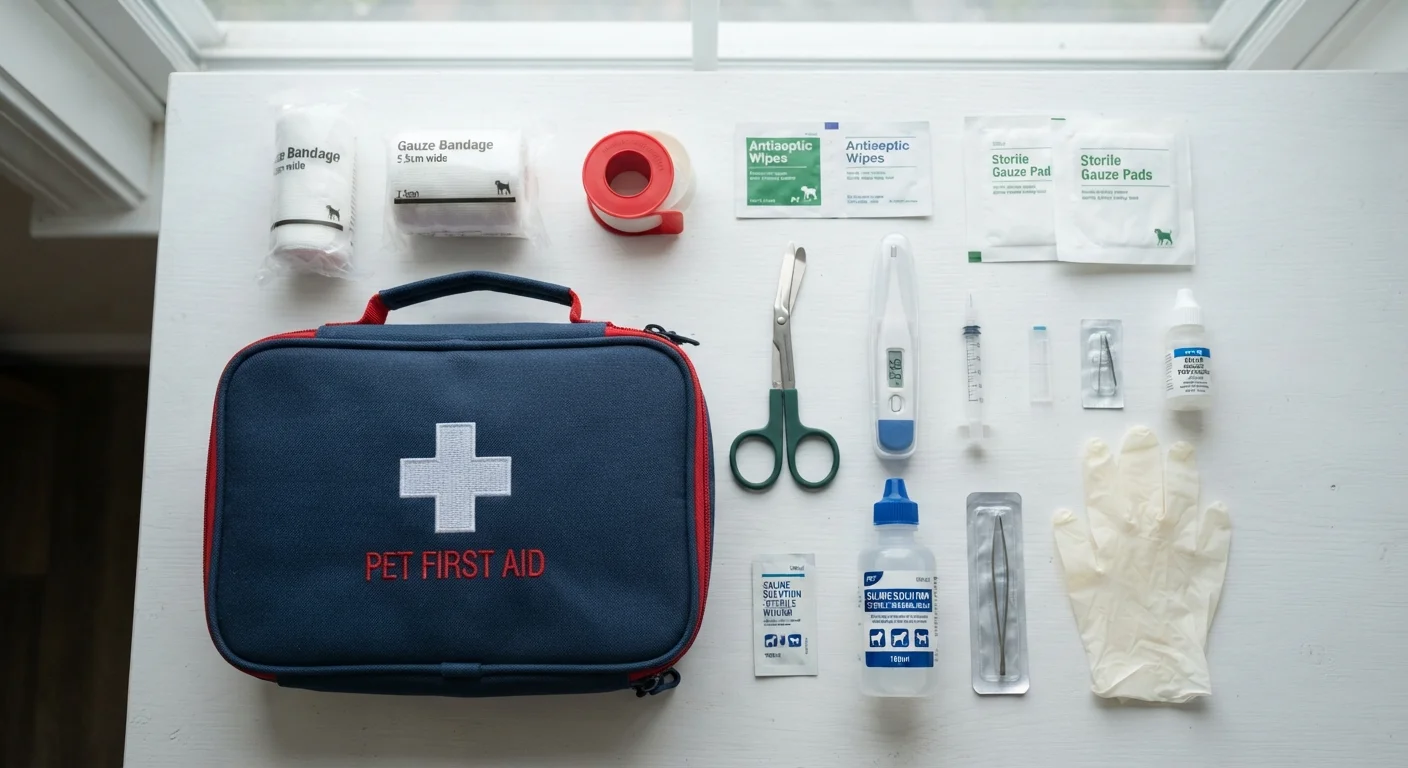
What you will need
One important caution before you start: not all human first-aid items transfer safely to pets. Our article on when home remedies for pets go wrong covers common mistakes to avoid.
A First-Aid Kit Is Not a Substitute for Veterinary Care
Everything in this kit is intended to stabilize your pet or provide basic comfort before a professional examination-not to replace one. If your pet is seriously injured, in pain, having difficulty breathing, or showing signs of shock, contact a veterinarian or 24-hour emergency animal hospital immediately. This article is general educational information and is not veterinary advice.
What to Put in Your Kit and What Each Item Does
The items below represent a practical baseline-expandable based on your pet's species, size, and health history. Talk to your vet about any additions specific to your animal's known conditions.
Blunt-tip scissors
Safely trim fur around a wound or cut through bandaging material without risk of skin punctures.
Digital rectal thermometer
Accurately measure your pet's temperature to help identify fever or hypothermia before a vet visit.
Sterile saline solution
Flush debris or discharge from wounds and eyes without introducing irritants.
Gauze rolls and pads
Apply pressure to wounds and create temporary bandaging to control bleeding.
Self-adhering (cohesive) bandage wrap
Secure gauze in place without adhesive that would pull on fur or skin.
Veterinary-approved antiseptic solution
Clean minor wounds to reduce infection risk-only products confirmed safe for your specific pet species.
Slip lead or spare leash
Safely restrain an injured or frightened pet to prevent escape or additional injury during assessment.
Disposable gloves
Protect both you and your pet from cross-contamination when handling wounds or bodily fluids.
Never Use Human Medications Without Vet Guidance
Common over-the-counter products-including ibuprofen, acetaminophen, certain antifungal creams, and some antiseptics containing phenol-can be toxic or fatal to dogs and cats. Before applying any human-labeled product to your pet, confirm it is safe for animals with your veterinarian or a poison control hotline.
Once you have the materials, follow the steps below to assemble your kit in a logical, ready-to-use order.
Choose a Dedicated, Accessible Container
Pick a container that's easy to grab quickly-a handled plastic bin, small duffel, or zip-top bag organizer. Label it clearly so anyone in the household can find it. Store it somewhere accessible but out of reach of children and pets: a high shelf in a common area, not buried in a closet.
Add Contact Information First
Before stocking any supplies, place a written card in the kit with your regular vet's number, the nearest 24-hour emergency animal hospital address and phone, and the ASPCA Animal Poison Control Center number (a resource in the US for toxin-related emergencies). Don't rely solely on your phone-in a stressful situation, having written information is faster and more reliable.
Stock Wound Care Basics
Add sterile gauze pads and rolls, self-adhering bandage wrap, and blunt-tip scissors. These three items let you apply pressure to a bleeding wound, cover it to keep it clean, and trim surrounding fur if needed. Avoid cotton balls directly on open wounds-fibers can embed and complicate treatment.
Include a Veterinary-Safe Antiseptic and Saline
Sterile saline is your safest all-purpose flush for wounds and eyes. For cleaning minor cuts, include a veterinary-approved antiseptic-confirm with your vet which formulations are appropriate for your pet's species. Cats and dogs have different tolerances, and some products safe for dogs can be harmful to cats.
Add a Thermometer and Understand Normal Ranges
A digital rectal thermometer gives you accurate temperature data a vet will ask about. Normal body temperature for dogs and cats is generally around 101-102.5°F (38.3-39.2°C), though individual baselines vary. Readings meaningfully above or below this range warrant a call to your vet. Include a small tube of water-soluble lubricant in the kit for safe use.
Pack Restraint and Transport Aids
An injured or frightened pet may bite or scratch even if ordinarily gentle. Include a spare slip lead or leash, and consider a muzzle sized for your pet (soft fabric muzzles are less stressful than rigid ones). A large towel serves multiple purposes: gentle restraint wrap, surface for examination, and improvised stretcher for small animals.
Include Gloves, a Penlight, and a Small Notepad
Disposable gloves protect both you and your pet during wound care. A small penlight lets you examine mouth, ears, and eyes in poor lighting. A notepad allows you to record the time an injury occurred, what you observed, and what first aid you administered-information your vet will find useful when you arrive.
Check and Refresh Your Kit Every Six Months
Set a reminder to inspect expiration dates on saline, antiseptic, and any topical treatments twice a year. Replace anything that's expired or depleted. A kit you can rely on in a stressful moment is one that's been maintained, not just assembled once.
For new pet owners building broader wellness habits, the first-time pet owner's health checklist covers the foundational care steps that complement keeping a first-aid kit ready.
This article is for general informational purposes only and does not constitute veterinary advice. Always consult a licensed veterinarian for guidance specific to your pet's health needs.