

Key Takeaways
Summary
18 items · 30-60 minutes
Why Subscriptions Accumulate Without You Noticing
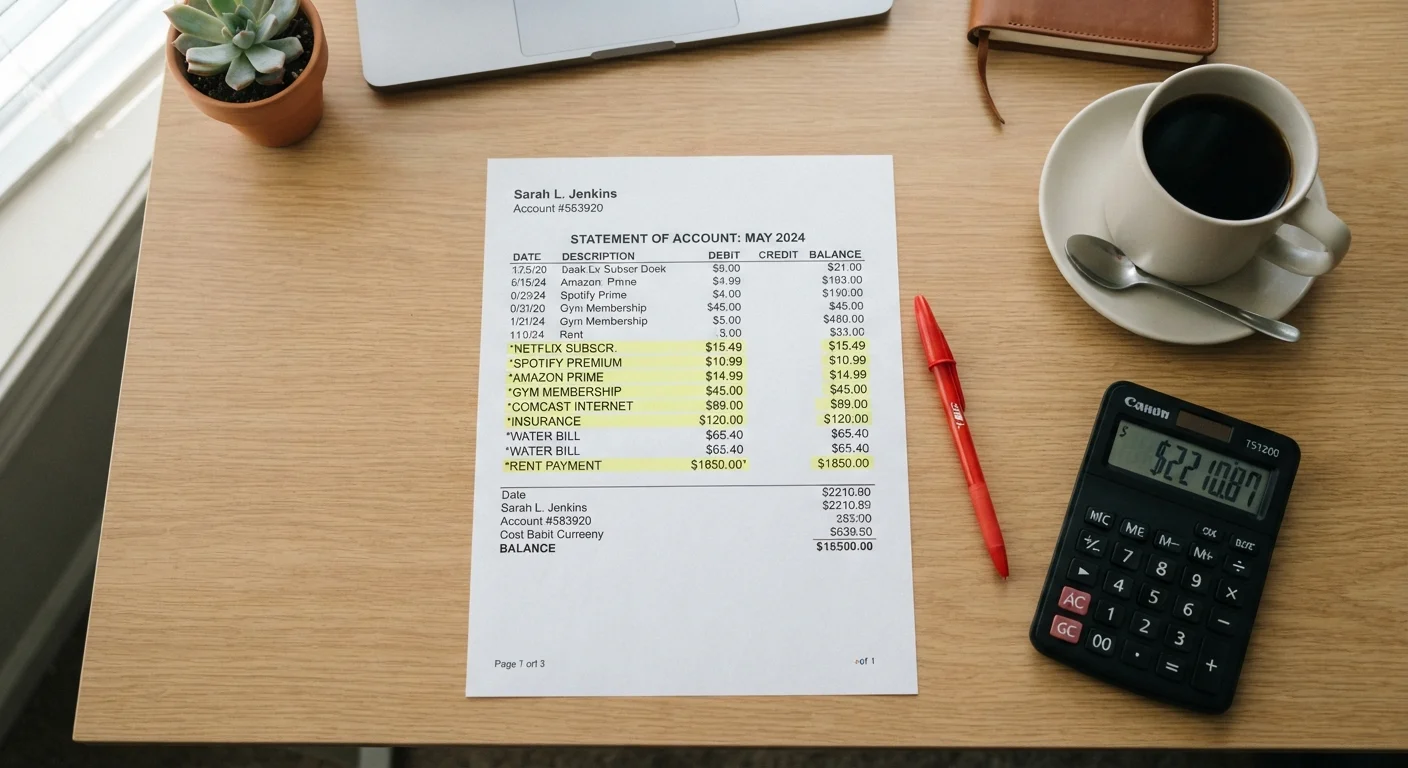
Subscription services are designed for frictionless sign-up and quiet renewal. A free trial converts to a paid plan. An annual membership auto-renews while you're distracted. A streaming service you used once during a road trip keeps billing monthly. None of these require any action from you - that's the point.
The result is what financial planners sometimes call subscription creep: a gradual accumulation of small recurring charges that, individually, feel trivial but collectively drain hundreds of dollars a year. Research consistently shows that consumers underestimate their monthly subscription spending, often by a wide margin.
Before you can trim, you need to find. This checklist gives you a repeatable framework - not a one-time scramble - to locate every recurring charge, assess whether it earns its place in your budget, and act decisively. For a broader picture of where your money flows, see our guide to tracking spending before you budget.
Free Trials Are the Most Common Culprit
Most forgotten subscriptions started as a free trial. Companies rely on the fact that a significant share of trial users will not cancel before the billing date. When starting any future free trial, immediately set a calendar alert for two days before the trial ends - not on the last day, which often doesn't allow enough time to navigate cancellation flows.
What You'll Need Before You Start
Gather these resources before working through the checklist. Having everything in one place prevents the audit from stalling mid-process.
Bank and credit card statements (3 months)
The primary source for finding every recurring charge - online statement access is sufficient.
Email inbox search
Uncovers subscription receipts and renewal notices for accounts you may have forgotten.
Spreadsheet or note-taking app
Tracks your master subscription list with costs, billing dates, and decisions.
Phone app store subscription screen
Reveals active in-app subscriptions billed directly through Apple or Google accounts.
Digital wallet account (PayPal, etc.)
Shows automatic payment agreements that may not appear on standard bank statements.
The Subscription Audit Checklist
Work through each group in order. The first two groups are about discovery - resist the urge to cancel anything until you've built a complete list. Decisions made with incomplete information often miss the worst offenders.
Discovery: Find Every Recurring Charge
Categorization: Sort What You Found
Evaluation: Test Each Subscription's Value
Action: Cancel, Downgrade, or Keep
Maintenance: Keep the List Clean
Unrecognized Charges May Signal Fraud
If your audit uncovers a recurring charge you have no memory of authorizing and cannot trace to any service you use, treat it as a potential unauthorized charge rather than a forgotten subscription. Contact your bank or card issuer immediately to dispute the charge and request a card number change. Do not assume all mystery charges are simply forgotten sign-ups - small recurring amounts are a known pattern in card fraud.
Once you've completed the audit, your findings feed directly into your broader budget. Subscriptions are just one category of irregular spending that tends to go untracked - our article on spending categories most households forget to budget for covers the rest. And if you want to turn this into a full monthly transaction review, the spending audit framework walks you through that process systematically.
Making the Savings Stick
Canceling subscriptions is only half the job. Without a maintenance habit, new subscriptions will quietly accumulate again within a few months. Schedule a recurring calendar reminder - quarterly or semi-annually - to re-run the discovery steps in this checklist. It takes far less time on repeat passes because your baseline list already exists.
Consider also auditing utility and household overhead charges on the same cadence. Small recurring costs in those categories follow the same pattern of silent growth. Our piece on lowering monthly utility overhead applies the same audit mindset to electricity, water, and heating costs.
The dollars you recover from a subscription audit are most useful when they're redirected intentionally - not just absorbed back into vague spending. Tie freed-up cash to a specific budget line or savings goal immediately. For practical frameworks on making those decisions, the Budget Buying Strategies hub is a useful next stop.
This article is for general informational and educational purposes only and does not constitute personalized financial advice. Consult a qualified financial professional for guidance specific to your situation.