

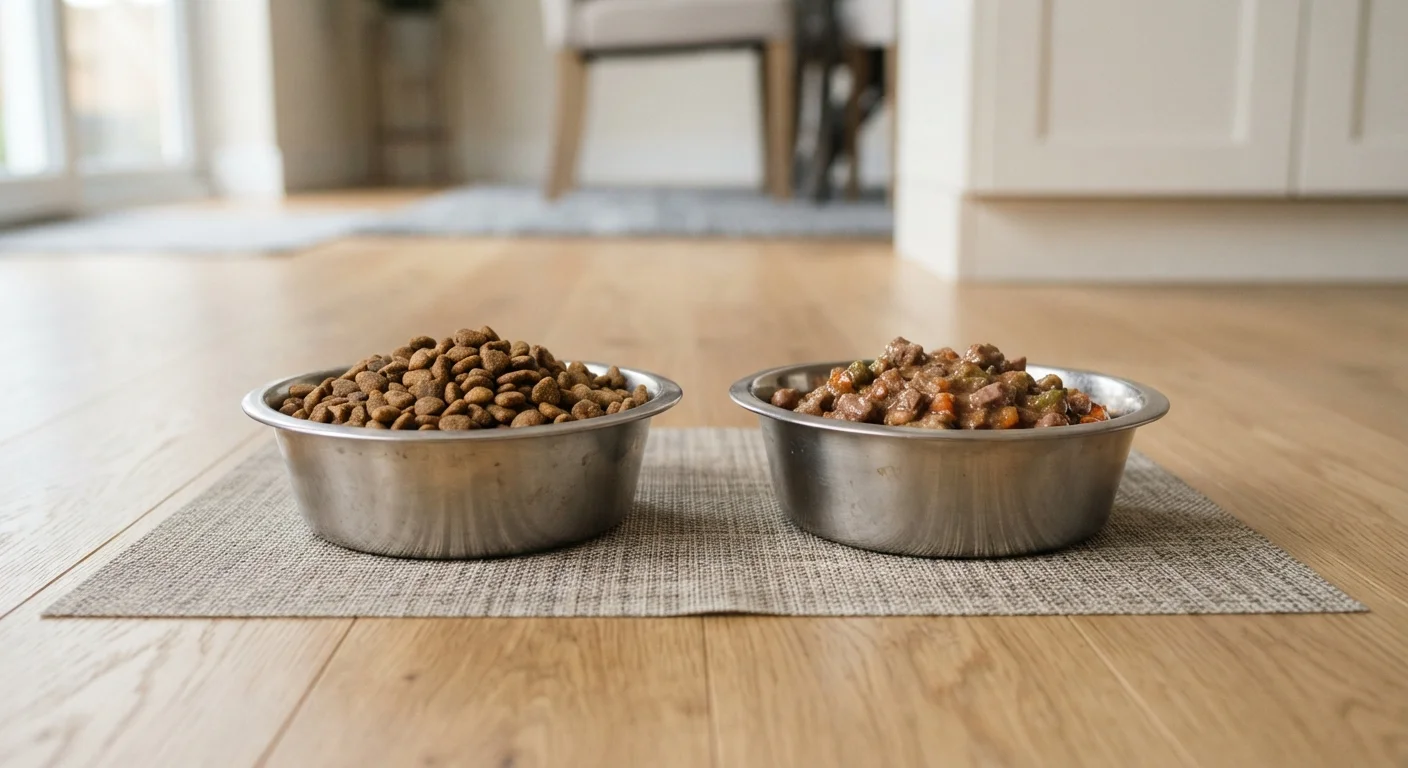
Key Takeaways
Option A
Dry Kibble
The convenient, shelf-stable everyday staple.
Best for: Owners who prioritize affordability, long shelf life, and ease of portioning.
Option B
Wet Food
The moisture-rich, palatable alternative.
Best for: Pets with hydration needs, picky eaters, or those requiring higher protein density.
If your cat drinks very little water
Wet Food
Cats are not strong drinkers by instinct, and wet food's 70-80% moisture content meaningfully contributes to daily fluid intake, supporting kidney and urinary health.
If you're managing a tight monthly pet food budget
Dry Kibble
Kibble typically costs less per calorie and stays fresh for weeks after opening, reducing waste and cost compared to single-serving wet cans.
If your pet is a picky eater or has a reduced appetite
Wet Food
The stronger aroma and softer texture of wet food is often more appealing to reluctant eaters, particularly older pets or those recovering from illness.
If you have a healthy dog or cat with no specific medical concerns
Dry Kibble
A complete-and-balanced dry food meets the nutritional needs of most healthy adult pets at a lower ongoing cost and with simpler storage.
If you want to improve nutrition without fully switching formats
Wet Food
Adding a small amount of wet food as a topper to dry kibble can boost moisture and palatability without a dramatic change in your monthly food spend.
What Each Format Actually Delivers Nutritionally
At their core, both dry and wet pet foods can be formulated to meet AAFCO nutritional standards - meaning either format, when labeled "complete and balanced," is designed to serve as a sole-source diet. The differences come down to composition, not completeness.
Dry kibble typically contains 6-10% moisture. It's calorie-dense, meaning smaller volumes deliver adequate energy. Because manufacturers remove most water during processing, the resulting product is shelf-stable and economical to ship and store. Protein, fat, and carbohydrate ratios vary widely by brand and formula, so reading the guaranteed analysis panel matters more than the format itself.
Wet food contains 70-82% moisture by weight. That water content lowers the caloric density substantially, which means pets need to eat a larger volume to get the same calories - and why wet food appears more expensive per can when you're comparing apples-to-apples calories. The higher moisture also means lower levels of preservatives, since the sealed can or pouch does that work. Protein content on a dry-matter basis (stripping out the water) is often comparable or higher than kibble.
For a full breakdown of why cats and dogs have different nutritional baselines to begin with, see why cats and dogs need different diets.
| Criterion | Dry Kibble | Wet Food |
|---|---|---|
| Moisture content | 6-10% | 70-82% |
| Cost per day (avg. medium dog) | Lower (~$1.50-$3) | Higher (~$4-$8) |
| Shelf life after opening | Weeks (sealed bag) | 2-3 days (refrigerated) |
| Caloric density | High | Lower per gram |
| Dental abrasion benefit | Modest | Minimal |
| Palatability for picky eaters | Variable | Generally higher |
| Supports urinary health (cats) | Less directly | More directly via hydration |
| Storage convenience | High | Moderate |
Hydration, Dental Health, and the Claims Worth Scrutinizing
Hydration is the most clinically meaningful difference between the two formats. Cats evolved from desert animals and have a naturally low thirst drive - they obtain most of their moisture from prey. A cat eating exclusively dry food may have chronically lower fluid intake than one eating wet food, which veterinary nutritionists associate with higher risk of feline lower urinary tract disease and kidney strain over time. Dogs, who drink more readily from a bowl, are generally less vulnerable to this gap, though wet food still contributes to total fluid intake. Hydration's role in nutrient absorption is worth understanding for pets and people alike.
Dental health is where dry kibble's reputation outpaces its evidence. The mechanical abrasion of crunching kibble does provide some plaque-reduction benefit compared to soft food, but research from veterinary dental specialists suggests the effect is modest at best. Most kibble pieces shatter before they contact the gumline - where periodontal disease begins. The Veterinary Oral Health Council (VOHC) evaluates and endorses specific products that demonstrate measurable dental benefit; not all kibble qualifies. Tooth brushing remains the most effective preventive measure regardless of food format.
Check the AAFCO Statement First
Regardless of format, look for an AAFCO nutritional adequacy statement on the packaging. The label should indicate the food is "complete and balanced" for your pet's life stage - puppy/kitten, adult, or senior. This statement is the most reliable baseline indicator that the food meets established minimum nutritional standards, whether it's kibble or wet food.
Cost per serving favors dry kibble significantly in most cases. A typical adult medium-sized dog might cost $1.50-$3.00 per day to feed on dry food versus $4-$8 on wet, though those figures vary by formula and region. For budget-conscious owners, see strategies for feeding pets well on a smaller budget.
70-82%
Moisture content in wet pet food
Compared to just 6-10% in dry kibble, this difference has real implications for cats' daily fluid intake.
~58%
US pet owners who feed dry food exclusively
According to the American Pet Products Association's National Pet Owners Survey, dry food remains the dominant feeding format in American households.
How to Choose - or Combine Both
Neither format wins outright. The more useful question is: what does your pet need, and what can you sustain financially?
For most healthy adult dogs, a complete-and-balanced dry kibble is a practical default. For cats - particularly those with any history of urinary issues - incorporating wet food, even partially, is a common veterinary recommendation. For senior pets or those with dental pain that makes crunching difficult, wet food may be the more comfortable option.
A mixed feeding approach - dry kibble as a base with wet food added as a topper - is widely used to balance cost, hydration, and palatability without committing fully to one format. If you go this route, account for the total calories from both to avoid overfeeding.
Pets with diagnosed health conditions - kidney disease, diabetes, food allergies - may have format-specific dietary requirements. General feeding guidelines don't cover these cases well; see what standard feeding advice gets wrong for pets with conditions for more context, and consult your veterinarian before making significant dietary changes.
If you're considering going further and preparing food at home, homemade pet food carries real nutritional risks that are worth understanding before you start.
This article is for general informational purposes only and does not constitute veterinary or medical advice. Consult a licensed veterinarian for guidance specific to your pet's health needs.