

Key Takeaways
Why Good Intentions Lead to Harmful Choices
When a pet seems uncomfortable and a vet visit isn't immediately possible, the instinct to act is natural. Online searches surface confident-sounding remedies, and household staples feel familiar and safe. The problem is that animal physiology differs significantly from human physiology - sometimes in ways that turn an ordinary product into a serious hazard.
This isn't a judgment on well-meaning owners. It's a practical warning about a pattern that veterinary professionals see regularly. Understanding the most common mistakes - and why they happen - is the first step toward safer decisions under pressure.
For owners trying to manage pet healthcare costs thoughtfully, see strategies for keeping vet costs manageable without cutting corners that could lead to bigger bills later.
Giving pets human pain relievers such as ibuprofen, acetaminophen, or aspirin.
Why it happens: These medications are in almost every home and feel routine. Owners assume that a smaller dose scaled down from a human dose must be safe.
Applying essential oils - including tea tree, eucalyptus, or lavender - directly to a pet's skin or coat.
Why it happens: Natural products carry an association with safety, and some essential oils are marketed with pet-related language. Owners may use them for skin irritation, fleas, or calming.
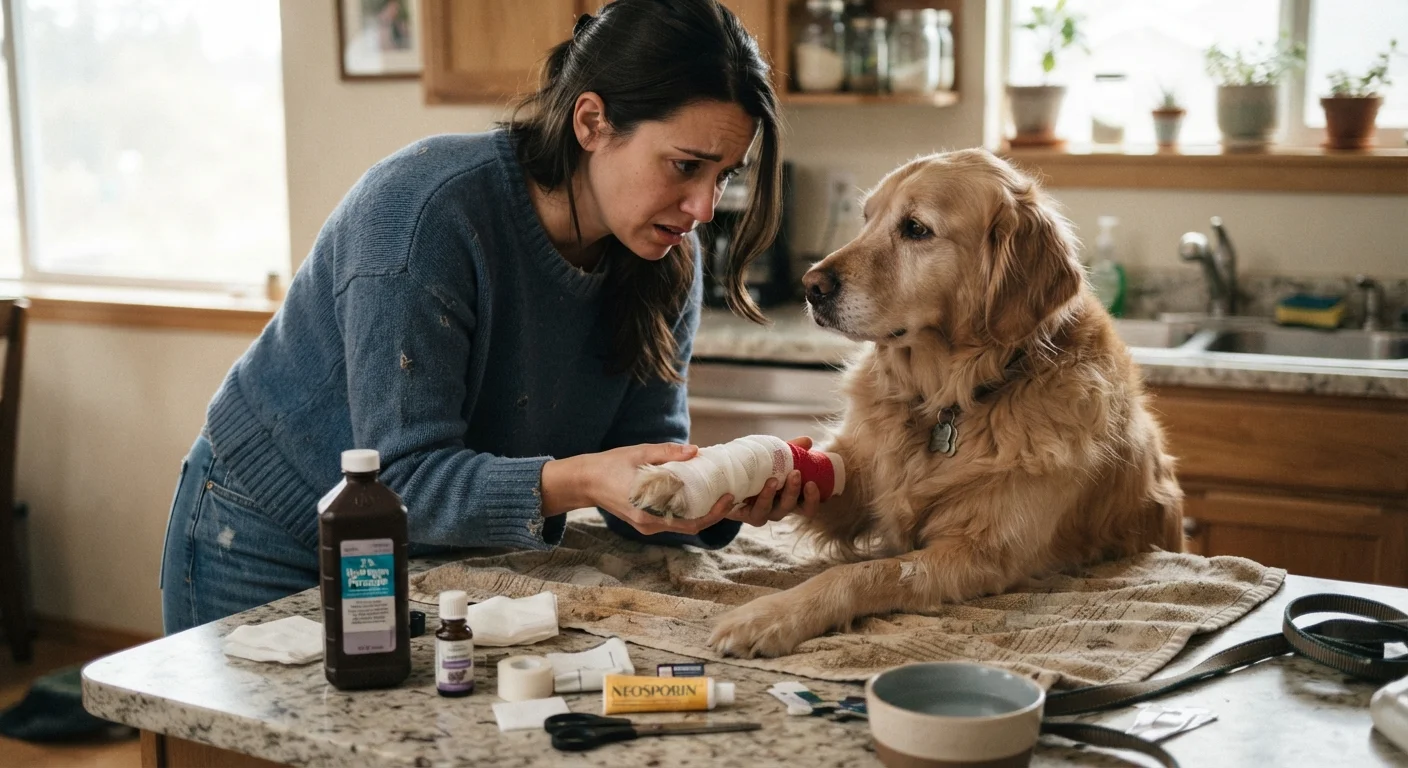
Flushing wounds with hydrogen peroxide or applying it to skin injuries.
Why it happens: Hydrogen peroxide has long been associated with wound cleaning, and older first-aid advice still circulates widely online.
Using garlic or onion to treat parasites or boost immunity.
Why it happens: Both ingredients appear in natural remedy communities as antiparasitic or immune-boosting agents. Their use in human cooking makes them seem benign.
Wrapping injuries tightly with bandaging materials intended for humans.
Why it happens: Stopping bleeding feels urgent, and elastic bandaging wraps are a logical-seeming tool. Owners often apply them too tightly without realizing it.
Safer Alternatives When You Can't Get to a Vet Right Away
The goal isn't to do nothing - it's to act without making things worse. A few genuinely useful options exist for the gap between noticing a problem and reaching professional care.
~215,000
Annual pet poison cases reported to US hotlines
The ASPCA Animal Poison Control Center reports handling hundreds of thousands of cases each year, with household products and human medications consistently among the leading causes.
Top 3
Human medications rank among most common pet toxin calls
Human over-the-counter pain relievers, vitamins, and prescription drugs routinely appear in the top categories of pet poisoning inquiries received by veterinary toxicology hotlines.
Call before you treat. The ASPCA Animal Poison Control Center (888-426-4435) and the Pet Poison Helpline operate around the clock and can advise on specific exposures. Many veterinary clinics also offer telehealth or nurse triage lines. These resources cost far less than an emergency visit prompted by a harmful home remedy.
Build a proper first-aid kit. Gauze, saline wound wash, a digital thermometer, and an e-collar cover many legitimate first-aid needs without improvised substitutes. What to keep in a pet first-aid kit explains what each item is actually for and when it applies.
Contain and monitor. For minor issues - a small surface scrape, mild lethargy - keeping the pet calm, preventing self-trauma, and documenting symptoms is often the right move. Write down what you observed, when it started, and any exposures; this information helps the vet considerably.
This article provides general educational information about pet care and is not a substitute for professional veterinary advice. Always consult a licensed veterinarian for diagnosis and treatment of your pet's health concerns.