

Key Takeaways
How Stacking Actually Works
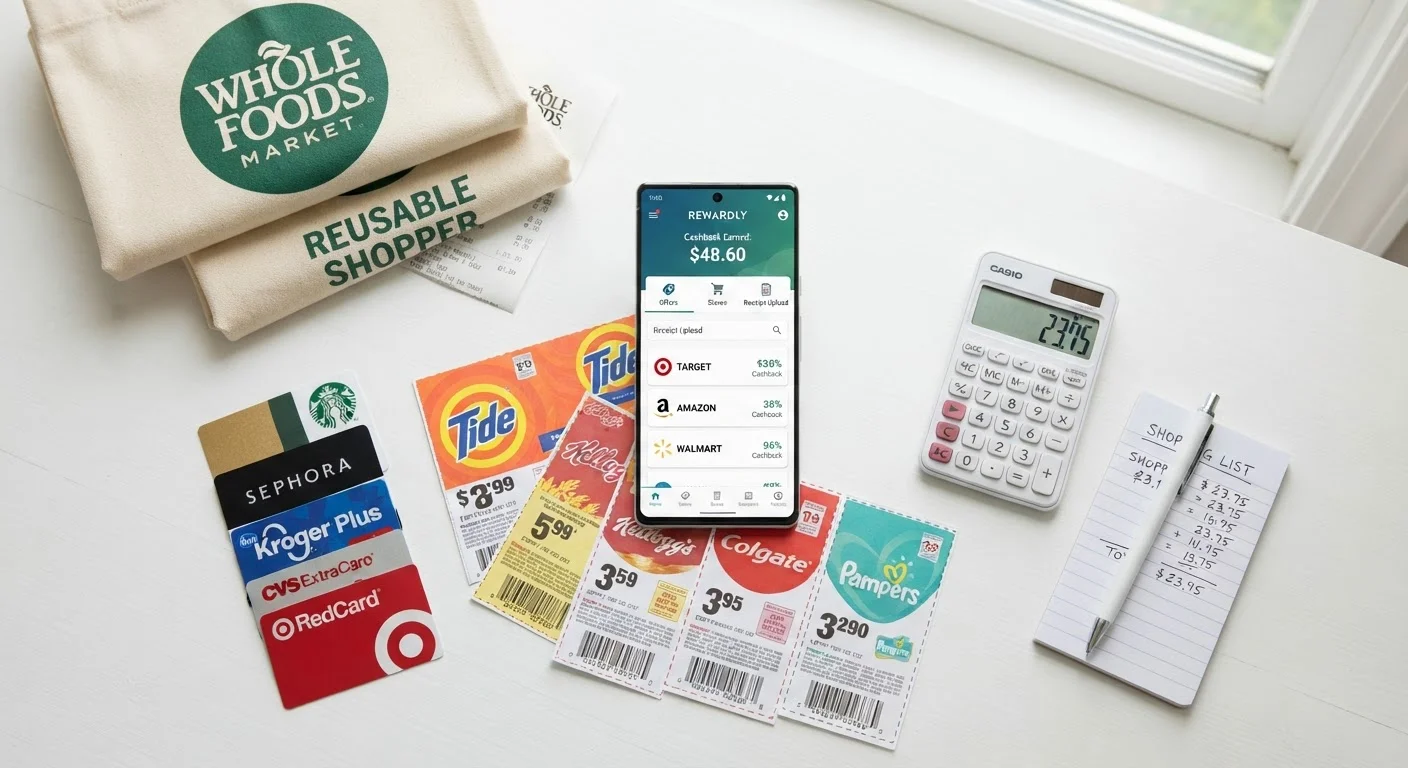
Stacking is the practice of layering multiple independent discount mechanisms on a single transaction. Three layers are typically available: a coupon or promo code (a merchant-side discount), a cashback portal or browser extension (a third-party rebate paid after purchase), and a rewards credit or debit card (a card-network rebate). Each layer is independently calculated, so the savings compound rather than cancel each other out.
The activation sequence matters. Navigate to the retailer's site through the cashback portal first - clicking out to apply a browser extension coupon before completing that step can break the tracking cookie and void your cashback. Apply promo codes at checkout after the portal click is recorded. Swipe your rewards card last, as always.
For deeper context on spending-wide strategies, see our category-spanning budget shopping guide. Understanding saving money fundamentals also helps frame where coupon-and-cashback fits inside a broader personal finance plan.
Always Click the Portal First
Before adding anything to your cart, navigate to the retailer through your cashback portal - not a search engine or bookmarked URL. This step takes three seconds and is the one most commonly skipped. Without it, the portal has no tracking cookie to attribute your purchase, and the cashback is lost regardless of what else you do correctly.
Groceries and Everyday Consumables
Grocery stacking combines manufacturer coupons (found in store apps, newspaper inserts, and coupon aggregator sites), store-loyalty digital coupons clipped inside the retailer's own app, and cashback apps that photograph your receipt after purchase. These three sources are independently stackable at most major supermarket chains.
Timing amplifies the effect: most chains mark down perishables mid-week and rotate 10-for-$10 promotions on a predictable cycle. Clipping digital coupons for items already on a weekly sale - rather than buying off-cycle items just because a coupon exists - is the discipline that separates real savings from impulse spending. Receipt-based cashback apps pay on any store, making them useful for specialty grocers and ethnic markets that rarely offer loyalty programs.
Clip every available digital coupon in your grocery store's app weekly - even for items you don't plan to buy immediately. Many chains allow pre-clipping, so when the item goes on sale, the discount is already attached to your account.
Digital coupons at most chains are account-linked, not cart-linked, which means pre-clipping costs nothing and ensures you capture the discount even when you shop quickly and forget to clip at the register.
When a receipt-based cashback app and a store app offer overlapping rewards on the same product, submit to the receipt app last - store apps update automatically at point of sale, while receipt apps require manual submission within a time window.
Missing the submission window is the most common reason shoppers forfeit receipt-based cashback. Treating it as a post-shopping step rather than a checkout step prevents the lapse.
Automotive: Parts, Supplies, and Service
Auto parts retailers run consistent promotional calendars - percentage-off sitewide events typically align with spring tune-up season and pre-winter preparation periods. Cashback portals frequently list elevated rates for major auto parts e-commerce sites, sometimes reaching 8-12% during promotional windows. Stack these with any email coupon you've received as a loyalty member before adding a flat-rate cashback card to the transaction.
For in-store service work, printable or mobile coupon codes for oil changes, tire rotations, and brake inspections are widely available through chain service center websites and coupon aggregators. These are genuine discounts, not manufactured urgency - the chains use them to drive traffic during slow periods, which means the service quality is the same.
Check deal timing patterns by category to identify the specific months when auto-supply promotions tend to peak - buying wiper blades or filters ahead of peak demand periods often means a better-stacked deal.
Home, Garden, and Improvement
Home goods retailers commonly permit promo codes to stack on top of clearance pricing, which is uncommon in other categories - always test a code on a clearance item before assuming it won't work. Cashback portals for major home improvement e-commerce typically pay 3-6% on most categories but exclude certain brands by contract; check the portal's exclusion list before building your cart.
For big-ticket items like appliances or patio furniture, the highest-leverage technique is purchasing during a known clearance cycle (post-holiday, end of seasonal line) while activating a portal and using a card with elevated home-category rewards. The combination of timing, portal, and card can meaningfully outperform any one discount acting alone.
Permits and Professional Work Still Apply
Cashback and coupon savings on home improvement purchases don't change the safety and legal requirements of the underlying work. Electrical, structural, gas, and plumbing projects typically require licensed contractors and permits regardless of what you paid for the materials. Always verify local code requirements and consult a licensed professional before beginning regulated work.
Travel and Experiences
Travel cashback operates differently from retail: hotel and airline booking portals are separate ecosystems, and the cashback rates for travel bookings through general shopping portals are typically lower than those offered by travel-specific cashback or rewards programs. The key decision is whether to book through a general cashback portal (earning a cash rebate) or through a travel rewards program (earning points). Neither is universally better - it depends on your redemption pattern.
Where stacking is most reliable in travel: car rentals (promo codes from membership organizations stack freely with portal cashback and card rewards), hotel booking sites that accept promo codes alongside portal tracking, and activity or experience bookings through third-party platforms. For flights, fare rules typically prevent code stacking, so focus your savings effort on the card-rewards layer instead.
Note: Travel pricing, availability, and portal terms change frequently. Always verify portal eligibility and cashback exclusions before completing a travel booking. For visa, entry, and safety information, consult official government sources before travel.
Health, Pet, and Specialty Categories
Over-the-counter health products and pet supplies are two categories where manufacturer coupons - distributed through brand websites and physical inserts - remain especially strong. Many OTC brands issue high-value printable or digital coupons directly, which stack with drugstore loyalty rewards and receipt-based cashback apps. Pet supply chains similarly run loyalty point multiplier events that combine with manufacturer coupons clipped inside the chain's app.
For prescription and specialty health items, consult a qualified healthcare professional before making decisions based on cost alone - savings tools should supplement, not drive, health-related purchasing choices. For general OTC and pet consumables, the stacking mechanics are straightforward and consistent.
~$1,700
Estimated annual household savings potential from loyalty programs
Consumer research from loyalty industry analysts has estimated that active engagement with store loyalty programs - coupons, points, and personalized offers - can represent hundreds to over a thousand dollars annually for a typical household.
3-12%
Typical cashback portal rate range across retail categories
Cashback portal rates for mainstream retail categories generally fall in this range, with the highest rates appearing during promotional windows or for categories with higher merchant margins, such as specialty goods.
This article is for general informational purposes only and does not constitute medical, financial, or professional advice. Consult a qualified professional for decisions specific to your circumstances.
Building a Repeatable System
The difference between occasional savings and consistent savings is a lightweight system. Maintain a single notes file or spreadsheet tracking: (1) which cashback portals are active for your regular spending categories, (2) any pending cashback amounts and their expected confirmation dates, and (3) the loyalty program thresholds you're tracking toward. This takes under five minutes a month to update and prevents the two most common failure modes - missed portal activation and expired rewards points.
Set a calendar reminder to check portal rates before any purchase over $30. Rates fluctuate, and a portal that offered 2% last month may be offering 8% during a promotional window today. Pairing this habit with seasonal deal timing knowledge gives you both the discount layer and the timing layer working together.
No system produces guaranteed savings on every purchase - some categories have thin margins and portals exclude certain brands. The goal is a reliable process that captures available savings without adding friction that causes you to abandon the habit.