

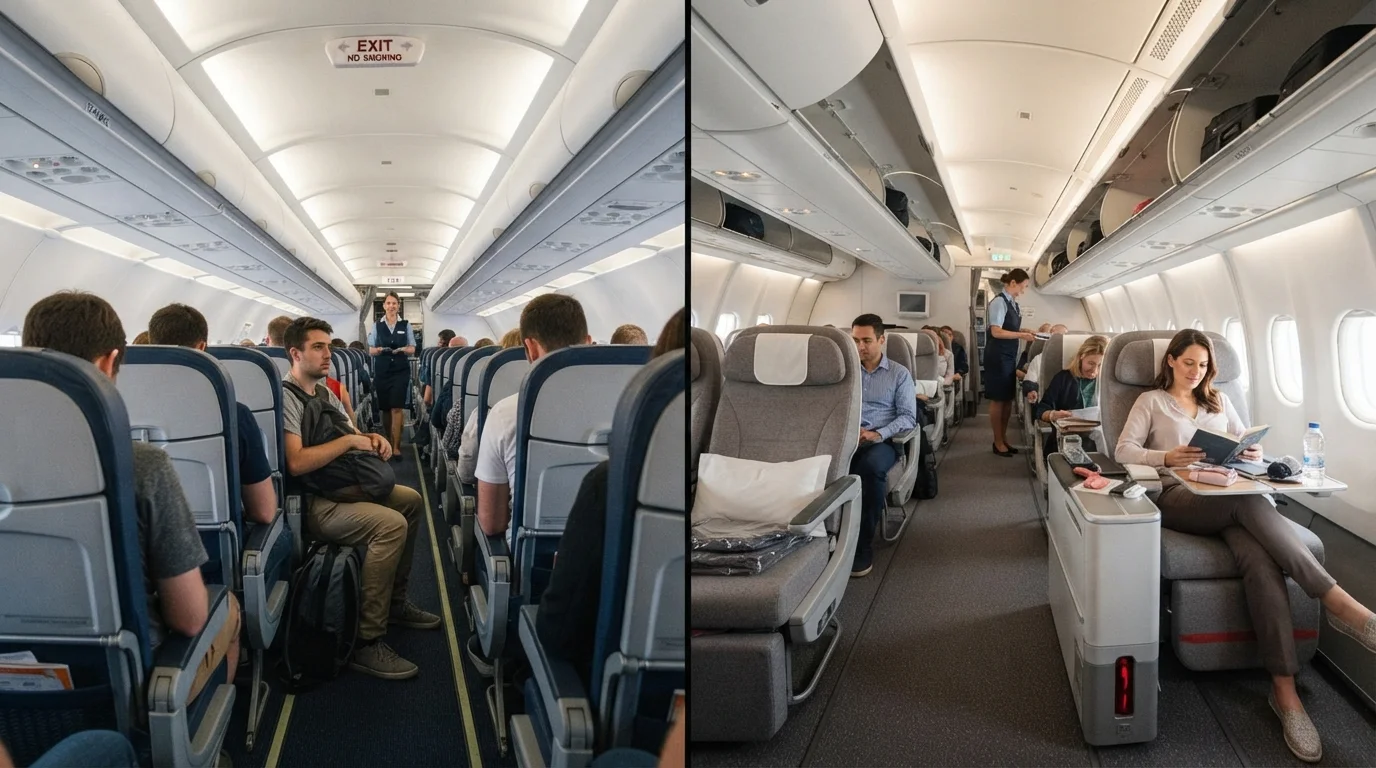
Key Takeaways
Option A
Low-Cost Carrier (LCC)
The ultra-low base fare with an à la carte cost structure.
Best for: Travelers flying carry-on only on short-to-medium haul routes who can tolerate a no-frills experience.
Option B
Legacy Airline
The full-service option with bundled amenities and broader networks.
Best for: Travelers checking bags, flying longer routes, or valuing flexibility and loyalty program benefits.
If you're flying carry-on only on a short domestic route
Low-Cost Carrier (LCC)
With no bag fees and a short flight time, LCC base fares frequently represent genuine savings over legacy equivalents on the same route.
If you're checking bags or traveling with family
Legacy Airline
Bundled baggage allowances and included seat assignments often make legacy fares more economical once per-person LCC fees are calculated.
If your itinerary requires a connecting flight
Legacy Airline
Legacy carriers offer interline agreements and protected rebooking on delays; LCC connections typically carry full re-purchase risk if a leg is missed.
If your travel dates are completely firm
Low-Cost Carrier (LCC)
When there's zero chance you'll need to change or cancel, the flexibility premium built into legacy fares provides no practical benefit.
If you fly several times a year and value status benefits
Legacy Airline
Loyalty programs on legacy carriers accumulate miles and status perks - free upgrades, lounge access, and waived fees - that compound over multiple trips.
How the Two Models Actually Work
Low-cost carriers (LCCs) - sometimes called ultra-low-cost carriers (ULCCs) at the extreme end - generate revenue by stripping their base fare down to the seat itself, then charging separately for nearly every additional service. Checked bags, carry-on bags (on some carriers), seat selection, onboard snacks, and even printing a boarding pass at the airport can each carry a fee.
Legacy airlines - the large full-service carriers that operate hub-and-spoke networks - typically bundle more into standard fares. Economy tickets often include at least one personal item and a carry-on, assigned seating, and access to customer service infrastructure like same-day standby and rebooking protection. That bundling is priced in, which is why base fares appear higher at the outset.
Understanding this structural difference is the first step. As our guide on hidden fees that inflate cheap flights explains, the add-ons are where budget travelers most often get surprised.
| Criterion | Low-Cost Carrier | Legacy Airline |
|---|---|---|
| Base fare | Often lower | Typically higher |
| Carry-on bag | Fee on many carriers | Usually included |
| Checked bag | Fee required | Included on some fare tiers |
| Seat selection | Fee or random assignment | Included or low-cost upgrade |
| Change/cancel flexibility | Limited; fees often apply | More options; varies by fare class |
| Route network | Point-to-point, selective | Hub-and-spoke, broad |
| Connection protection | Usually not covered | Typically rebooking included |
| Loyalty program value | Limited | Strong for frequent flyers |
The Real Cost Comparison: Running the Numbers
A $59 LCC fare can easily become $120-$160 once a carry-on bag fee ($35-$65 each way on several major budget carriers), a seat selection fee ($10-$30), and a booking fee are applied. A legacy economy fare on the same route priced at $110 - appearing more expensive at first glance - may include a carry-on, a seat assignment, and no booking surcharge.
The math shifts again on longer routes and international flights, where LCC coverage is often thinner and legacy carriers offer more competitive pricing due to greater route competition. Before committing to any fare, total the realistic cost of your actual travel needs: bags, seats, and one change fee if your plans carry any uncertainty.
$35-$65
Typical one-way carry-on fee range on major US LCCs
Carry-on bag fees vary by carrier and when they're purchased - airport fees are consistently the most expensive option.
2-4x
Multiplier by which LCC bag fees can exceed legacy equivalents
On routes where legacy carriers include a carry-on and seat assignment, the total cost advantage of an LCC base fare can disappear or reverse.
~30%
Share of US domestic passengers flying LCCs
Low-cost and ultra-low-cost carriers have grown substantially in domestic US market share over the past decade, according to Bureau of Transportation Statistics data.
For a structured approach to fare searching that goes beyond surface-level price comparisons, see our guide to finding lower fares without obsessing over deals.
Where Each Carrier Type Wins
LCCs hold a clear edge on short point-to-point domestic routes - think under two hours - where a carry-on-only traveler can board, fly, and deplane without any of the fee structure applying. These carriers also tend to serve secondary airports (e.g., Midway instead of O'Hare, Oakland instead of SFO), which occasionally adds ground transportation costs worth factoring in.
Legacy airlines generally win when itineraries involve connections, checked baggage, international routing, or any real possibility of schedule changes. Their interline agreements mean a missed connection can be rebooked on the same ticket; with most LCCs, a missed leg is treated as a new purchase. Frequent flyer status also pays off over time - fee waivers, upgrade priority, and priority boarding are tangible benefits for travelers who fly a few times a year.
Route and destination selection shapes this decision too. Our overview of what budget travel looks like across trip types covers how transportation costs shift depending on the journey format - which is directly relevant when choosing between carrier types for different kinds of trips.
Secondary Airports Add Ground Cost
Several major LCCs primarily operate from secondary airports - which may be 30-60 miles from a city center. Ground transportation to and from these airports can add $30-$80 or more to your round-trip cost. Always factor this into your total comparison, not just the airfare.
Making the Decision for Your Specific Trip
The right carrier type depends on four variables: your baggage needs, your route, your flexibility requirements, and your loyalty to any existing frequent flyer program. Travelers who can answer those four questions honestly will almost always be able to identify which option delivers lower total cost - not just a lower headline fare.
If you're at the trip-planning stage and haven't yet settled on a destination, consider reading how to plan a low-cost international trip from the US, which covers how carrier selection fits into the broader cost picture before you've committed to a destination or dates. And before booking anything, it's worth checking common airfare myths that cost travelers money - some widely held assumptions about when and how to book can lead budget travelers in the wrong direction.
No single carrier type is categorically cheaper. The one that costs less is the one that aligns with your actual travel profile after every realistic fee is counted.