

Key Takeaways
PSI (Pounds per Square Inch)
PSI stands for pounds per square inch - the unit used to measure how much air pressure is inside your tire. Think of it as the force the air inside pushes outward against every square inch of the tire's inner surface. Your vehicle has a recommended PSI range set by the manufacturer to keep the tire performing safely and efficiently.
PSI measures gauge pressure, meaning the pressure above atmospheric (ambient) pressure - so a reading of 0 PSI on a gauge means the tire is at atmospheric pressure, not truly empty.
What PSI Actually Measures
Tire pressure is the amount of air compressed inside your tire, expressed in pounds per square inch. That air isn't just filler - it carries the weight of your vehicle, cushions road impacts, and allows the tire to maintain its intended shape at speed. Too little air and the tire deforms, creating excess heat and uneven contact with the road. Too much and you lose the flexible give the tire needs to grip properly.
The number you're aiming for isn't written on your tire - that molded figure on the sidewall is the tire's maximum pressure ceiling, not a target. Your actual recommended PSI comes from the vehicle manufacturer and is printed on a sticker inside the driver's door jamb or in the owner's manual. This figure reflects the weight of your specific vehicle, its suspension geometry, and how the manufacturer balanced ride quality against load capacity.
1-3 PSI
Monthly pressure loss through normal permeation
Automotive engineers note that air permeates through rubber even in perfectly intact tires, making monthly checks a practical maintenance baseline.
~1 PSI
Pressure drop per 10°F temperature decrease
This widely cited rule of thumb reflects the behavior of gases under changing temperatures and is consistent with physics principles taught in automotive training programs.
4-6 PSI
Pressure rise after driving on hot tires
Heat generated by tire flexion and friction during normal driving can temporarily elevate internal pressure, which is why cold-tire readings are the standard for accuracy.
Why Pressure Drifts Even Without a Leak
Many drivers assume a pressure drop means a puncture. In reality, tires lose air continuously through a process called permeation - air molecules slowly migrate through the rubber itself. This is normal and unavoidable. The practical result: most tires lose roughly 1-3 PSI per month under stable conditions.
Temperature swings amplify this effect significantly. When the air inside a tire cools, its molecules move more slowly and exert less force - pressure drops. The common rule of thumb is approximately 1 PSI lost for every 10°F drop in ambient temperature. A tire correctly inflated at 35 PSI on a 70°F afternoon may read closer to 30-31 PSI on a 20°F winter morning. That's a meaningful gap, and it happens without any damage to the tire at all.
Check Pressure at the Start of Each Season
Seasonal temperature shifts are the most common cause of unexpected low-pressure warnings. Build a habit of checking all four tires when clocks change or when a new season begins. It takes about five minutes and costs nothing if you carry a pocket gauge.
Conversely, driving heats the air inside your tires and temporarily raises pressure by 4-6 PSI. This is why checking pressure on a hot tire gives a misleadingly high reading - always check when cold for accuracy.
How to Check and Correct Tire Pressure
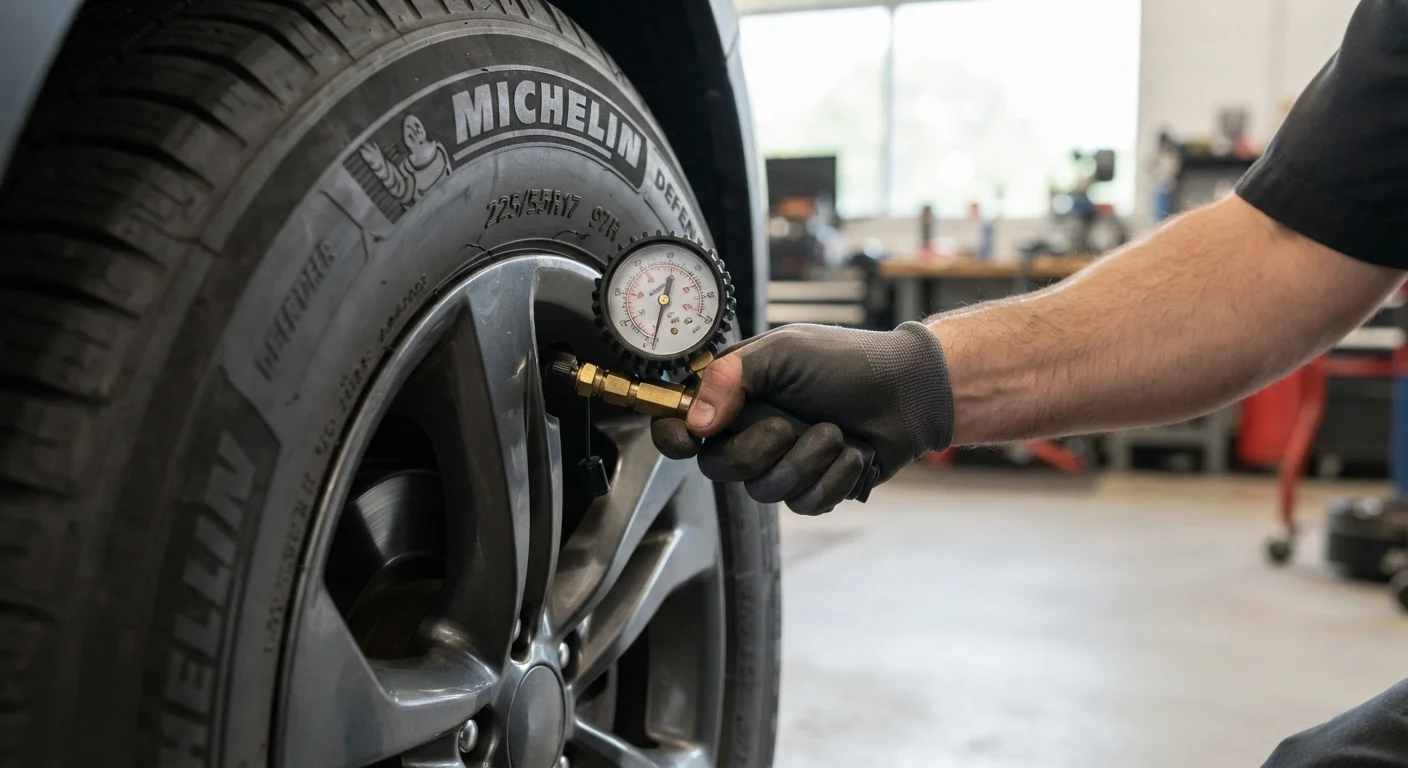
You'll need an inexpensive tire pressure gauge - digital or dial types are more reliable than pencil-style gauges. Unscrew the valve cap on the tire, press the gauge firmly and squarely onto the valve stem, and read the result. Compare it to the specification on your door jamb sticker.
If the pressure is low, add air using a gas station compressor or a portable home inflator, checking frequently to avoid overshooting. If it's high, depress the small pin inside the valve stem briefly to release air in short bursts, then recheck. Replace the valve cap when done - it keeps debris out of the valve, which can cause slow leaks over time.
A monthly check takes less than five minutes for all four tires. If you notice one tire consistently losing more pressure than the others, that pattern warrants a closer look - a slow leak from a nail, damaged valve, or cracked wheel bead is worth having a qualified mechanic inspect. Keeping pressure in the correct range is one of the simplest ways to extend tire life and, as detailed in our guide on tire pressure and fuel economy, support better fuel efficiency on every tank.