

Key Takeaways
Why Label Literacy Is a Practical Skill, Not Just a Health Trend
Nutrition labels have appeared on most packaged foods in the US since the early 1990s, and the FDA significantly updated the format in 2020 to make key information clearer. Despite this, research consistently shows that many shoppers find labels confusing or simply ignore them. That gap between label availability and label comprehension has real consequences - particularly for budget-conscious shoppers who need every purchase to deliver nutritional value.
Reading a label fluently takes only a minute once you know what to look for. It lets you compare two similar products side by side, spot marketing claims that don't hold up to scrutiny, and identify foods that offer genuine nutritional value rather than empty calories. Combined with a regular nutrition self-audit, label literacy becomes a foundation for sustained dietary awareness.
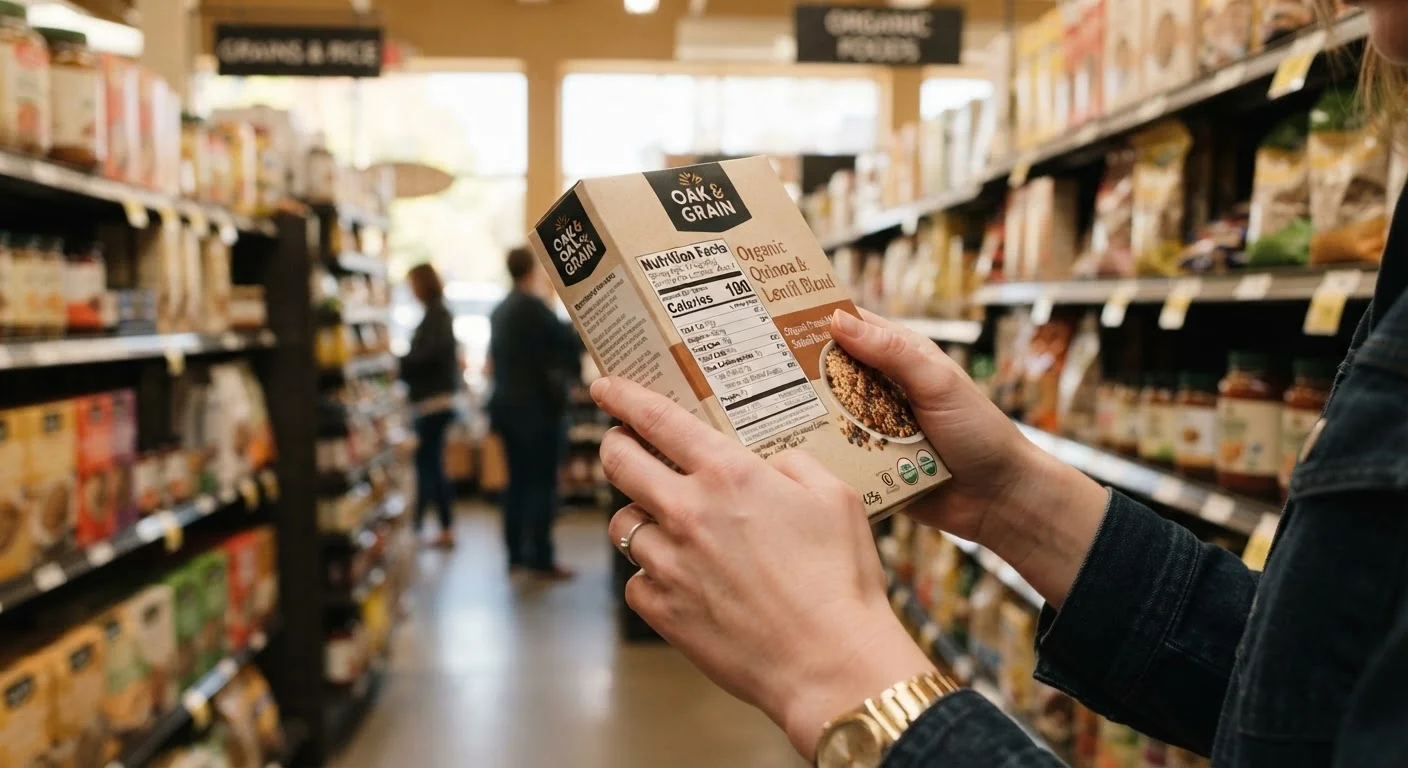
This article walks through the Nutrition Facts panel section by section, in the order you'd encounter it on a real package. Grab any item from your pantry and follow along.
What you will need
How to Read a Nutrition Label: Step by Step
Work through the steps below using an actual food package. The goal is to build a habit - once these reference points feel automatic, you'll move through a label in seconds rather than minutes.
Packaged food item with Nutrition Facts panel
Provides a real label to practice reading as you follow each step.
Pen and notepad (or notes app)
Useful for jotting down key figures when comparing multiple products.
Find the serving size and servings per container
The very first line of any Nutrition Facts panel is the serving size - the standardized amount the FDA uses as the basis for all the numbers that follow. Directly below it is servings per container, which tells you how many of those portions are in the whole package.
This matters enormously. A bag of chips listed at 150 calories per serving may contain three servings - meaning the whole bag is 450 calories. Before reading anything else, multiply the serving size by the number of servings you actually plan to eat.
Read the calorie count in context
Calories are displayed prominently and represent the total energy in one serving. On their own, calories are neither good nor bad - what matters is whether the food also delivers useful nutrients for that caloric investment.
A rough general guideline used by the FDA: 100 calories per serving is moderate; 400 or more is high for a single item. Use this as a relative benchmark, not a personal prescription. Your individual energy needs vary based on age, activity level, and health status - always consult a qualified healthcare professional for personal dietary guidance.
Identify nutrients to limit
Three nutrients warrant particular attention when you're trying to limit intake:
- Saturated fat - The Dietary Guidelines for Americans recommend limiting saturated fat. Check both the gram amount and the % Daily Value.
- Sodium - Many packaged foods are high in sodium; a single serving can account for a significant share of the daily limit recommended for most adults.
- Added sugars - Listed separately from total sugars since 2020, added sugars show how much sugar was introduced during manufacturing rather than occurring naturally in the food.
As a general guide, a % Daily Value (DV) of 5% or less is considered low; 20% or more is considered high for any nutrient.
Look for nutrients to seek out
Alongside the nutrients to limit, the label highlights nutrients that many Americans fall short on. Prioritize foods that deliver meaningful amounts of:
- Dietary fiber - Supports digestion and satiety. Most adults consume well under the generally recommended daily amount. Learn more in our article on why fiber deserves more attention.
- Protein - Essential for tissue maintenance and repair. Especially important when choosing budget-friendly packaged foods as meal components.
- Vitamin D, calcium, iron, and potassium - These four are required on the label because deficiencies are common in the US population.
Understand % Daily Values
The % Daily Value (%DV) column shows what percentage of a nutrient's daily reference amount a single serving provides, based on a 2,000-calorie diet. This benchmark is a general population reference - your personal needs may be higher or lower.
%DV is most useful for quick comparison: if two cereals both cost about the same but one provides 15% DV of fiber versus another at 4% DV, you can see at a glance which delivers more nutritional value per dollar. This kind of label comparison pairs well with a pantry-first shopping approach to stretch your food budget further.
Read the ingredient list
The ingredient list appears below the Nutrition Facts panel and follows one critical rule: ingredients are listed in descending order by weight. The first ingredient is present in the largest quantity; the last is present in the smallest.
Practical implications:
- If sugar (or any of its many aliases - corn syrup, dextrose, maltose, cane juice) appears in the first two or three positions, the product is heavily sweetened.
- Whole grains should appear before refined flour if a product claims to be a good grain source.
- A very long ingredient list is not inherently bad, but unfamiliar chemical names often indicate preservatives, colorings, or flavor enhancers - worth noting if you're monitoring these.
For a deeper look at how macronutrients work once you've eaten them, see our macronutrients explainer.
This article provides general nutrition education only and is not a substitute for personalized dietary advice from a qualified healthcare professional. Individual nutrient needs vary based on age, health status, and other factors. Consult a registered dietitian or your doctor for guidance specific to your situation.
Putting It All Together: What to Do With What You've Read
No single food needs to be nutritionally perfect. Labels are most powerful when used comparatively - between two versions of the same product, or between a packaged item and its whole-food alternative. A can of beans, for example, may carry significant sodium but also deliver substantial fiber and protein for a very low cost, making it a strong overall value when rinsed before use.
If you're working with a tight grocery budget, understanding labels helps you prioritize which packaged foods earn a place in your cart based on actual nutrient density, not front-of-package marketing. This skill pairs directly with strategies covered in avoiding common nutritional pitfalls on a budget.
For a broader view of how individual foods fit into daily eating patterns, understanding what a balanced plate looks like provides useful context. And when you're evaluating beverages alongside food, how beverages interact with your overall nutrition is worth reading alongside this guide.
Front-of-Package Claims Are Marketing
Terms like 'natural,' 'multigrain,' 'light,' and 'low-fat' are not tightly regulated and can be misleading. Always flip to the Nutrition Facts panel and ingredient list to verify what a product actually contains. A 'low-fat' product, for instance, may compensate with significantly higher added sugar.