

Key Takeaways
Start here
Why Plate Proportions Matter More Than Calorie Counts
Core concept
The Plate Method: A Practical Visual Framework
Go deeper
What Each Food Group Actually Contributes
Apply it
Budget-Friendly Ways to Build a Balanced Plate
Refine
Common Plate-Building Mistakes to Avoid
Why Plate Proportions Matter More Than Calorie Counts
For decades, nutrition messaging focused heavily on calorie totals - a number that tells you very little about what you're actually feeding your body. Two meals with identical calorie counts can vary wildly in fiber, vitamins, protein quality, and how long they keep you full. Shifting the focus to food proportions sidesteps that math and gets straight to what actually drives nutritional balance.
Research consistently links diets rich in vegetables, whole grains, and quality protein to better long-term health outcomes. The goal isn't perfection at every meal - it's building a consistent pattern that supplies your body with what it needs across the day. For more on the vocabulary behind these concepts, explore our plain-English nutrition glossary.
Plate method
A visual portioning guide that divides a dinner plate into sections for vegetables, grains, and protein, making balanced eating easier without counting calories.
Whole grains
Grains that retain all three parts of the kernel - bran, germ, and endosperm - preserving fiber, B vitamins, and minerals that are stripped out during refining.
Non-starchy vegetables
Vegetables low in starch and calories but high in fiber, vitamins, and minerals, such as leafy greens, broccoli, peppers, and cucumbers.
Macronutrients
The three main nutrient categories the body needs in relatively large amounts: carbohydrates, protein, and fat. Each plays a distinct role in energy and body function.
Legumes
A food family including beans, lentils, chickpeas, and peas that supplies both plant-based protein and dietary fiber at a low cost.
Unsaturated fats
Fats found in foods like olive oil, nuts, seeds, and avocados that are generally associated with heart health when used in place of saturated or trans fats.
The Plate Method: A Practical Visual Framework
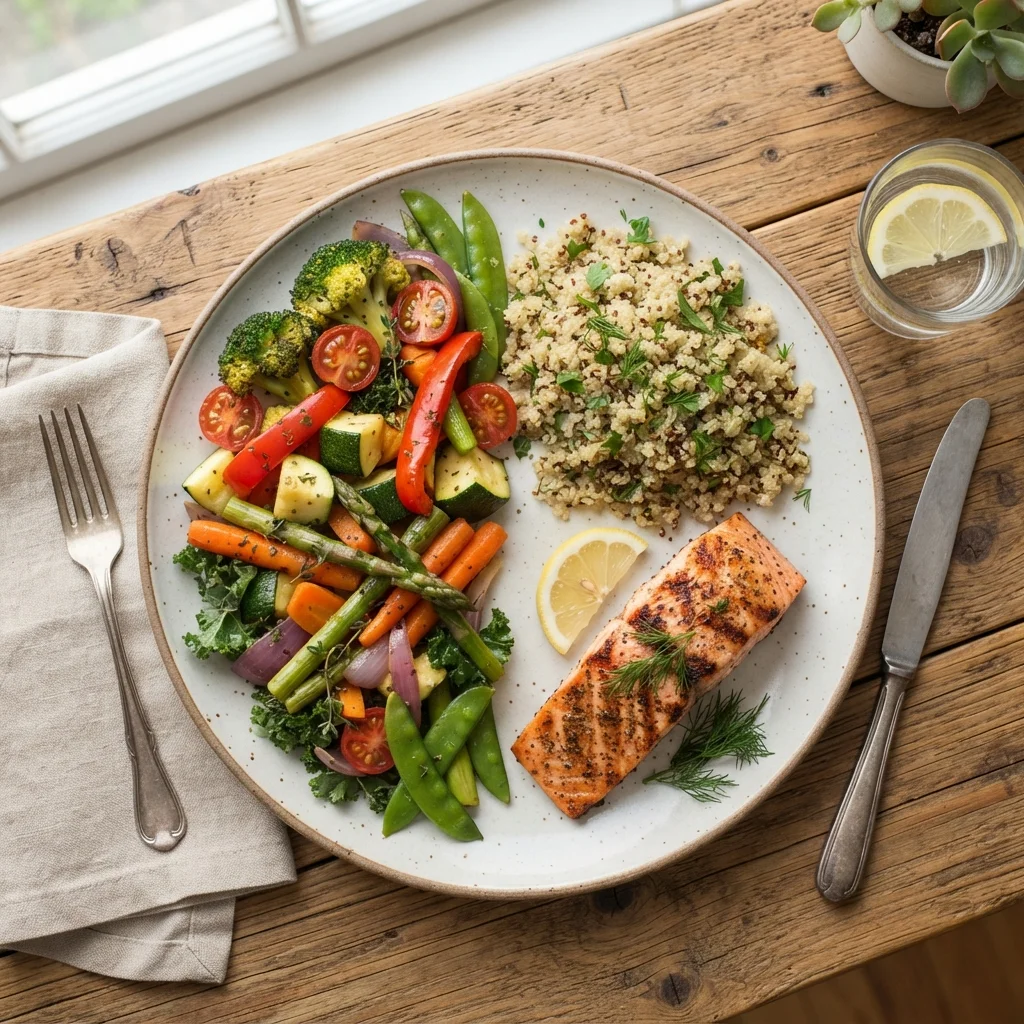
The plate method - endorsed by institutions including the USDA through its MyPlate model - divides a standard 9-inch dinner plate into three main zones:
- Half the plate: non-starchy vegetables and fruit (think leafy greens, broccoli, peppers, tomatoes, or a side of fresh fruit)
- One quarter: whole grains or starchy foods (brown rice, whole-wheat bread, oats, potatoes, corn)
- One quarter: protein (poultry, fish, eggs, beans, tofu, or lean meat)
A small amount of healthy fat - olive oil used in cooking, a few slices of avocado, or a sprinkle of nuts - supports the meal without needing its own wedge. A low-fat dairy option or fortified alternative on the side is also part of many frameworks.
The genius of the plate method is its flexibility. It works with virtually any cuisine and doesn't require measuring cups or apps.
Use Your Hand as a Backup Guide
No plate available? Your hand can approximate portions in a pinch. A cupped palm roughly represents a serving of grains, a closed fist approximates a vegetable serving, and a palm-sized portion corresponds to most protein recommendations. It's not precise, but it builds proportional thinking when you're eating away from home.
What Each Food Group Actually Contributes
Understanding why each section exists helps you make smarter swaps when options are limited:
- Vegetables & fruit
- Supply fiber, antioxidants, vitamins (notably C, A, folate), and minerals while adding volume to a meal without a heavy caloric load. Variety in color generally signals variety in nutrients.
- Whole grains & starches
- Provide sustained energy through complex carbohydrates and contribute B vitamins, iron, and fiber - especially when the grain is minimally processed. Refined grains lose much of this benefit during processing.
- Protein
- Supports muscle maintenance, immune function, and satiety. Plant proteins (legumes, tofu, tempeh) come bundled with fiber; animal proteins vary widely in saturated fat content, so lean options are generally highlighted in public health guidelines.
To understand how food labels can help you evaluate these nutrients, see our guide on reading nutrition labels on packaged foods.
Budget-Friendly Ways to Build a Balanced Plate
A balanced plate doesn't require expensive superfoods or specialty stores. Some of the most nutritious foods available are also among the most affordable:
- Frozen vegetables are harvested and frozen quickly, preserving most nutrients - often for a fraction of fresh prices.
- Canned legumes (black beans, chickpeas, lentils) deliver protein and fiber at very low cost per serving.
- Eggs remain one of the most cost-effective complete protein sources widely available.
- Oats, brown rice, and whole-wheat pasta are inexpensive whole-grain staples that store well.
- Canned fish (sardines, tuna, salmon) provides omega-3 fatty acids at a low unit cost.
Planning meals around these core items - then filling in with seasonal produce on sale - makes nutritional balance genuinely achievable on a constrained budget. For a structured approach to putting this into practice, our weekly meal planning walkthrough offers a step-by-step guide.
Common Plate-Building Mistakes to Avoid
Even with a good framework, a few patterns tend to undermine balance:
- Crowding out vegetables: When protein or grains expand to fill most of the plate, vegetables shrink to a garnish. Keep the half-plate commitment as an anchor.
- Treating all grains as equal: White bread and brown rice occupy the same plate quarter visually, but differ significantly in fiber and micronutrient content. Where possible, choose less-processed grains.
- Overlooking beverages: Sweetened drinks can add significant sugar and calories without contributing to the plate's nutritional structure. Water, unsweetened coffee, or tea are typical public health recommendations.
- Expecting perfection every meal: Balance is cumulative. A lunch that's mostly grains can be offset by a vegetable-heavy dinner. Use your overall day's pattern as the real measure.
If you want to assess how your current habits stack up, our everyday nutrition audit offers a practical self-assessment checklist.
One Framework Doesn't Fit Everyone
The plate method reflects general public health guidance and may not suit people managing specific conditions such as kidney disease, diabetes, or food allergies, where individual nutrient targets can differ significantly. If you have a diagnosed medical condition or specific dietary restriction, work with a registered dietitian rather than applying general guidelines directly.
This article is for general informational purposes only and does not constitute medical or dietary advice. Individual nutritional needs vary. Please consult a registered dietitian or qualified healthcare provider for guidance tailored to your health situation.