

Key Takeaways
Nutrition Doesn't Have to Be Expensive
The idea that eating well costs a fortune is one of the most persistent myths in nutrition. In reality, some of the most nutrient-dense foods in the world are also among the least expensive at the grocery store. The challenge is knowing which ones to prioritize - and understanding what each actually delivers nutritionally.
This list focuses on whole or minimally processed foods that typically cost under a dollar per serving in the United States. Prices naturally vary by region, store format, and season, so treat these as general estimates rather than guarantees. For a broader framework on building a low-cost nutritious diet, see our foundational strategies guide.
Each food below is highlighted for its nutrient profile, not as a prescribed eating plan. As always, individual nutrition needs differ - consult a registered dietitian or healthcare provider for personalized guidance.
Dried Lentils
Dried lentils routinely cost as little as 10-20 cents per cooked serving and deliver an impressive nutritional package. A half-cup of cooked lentils provides roughly 9 grams of protein, 8 grams of dietary fiber, and meaningful amounts of folate, iron, and potassium - all nutrients that many Americans fall short on.
Unlike dried beans, lentils require no soaking and cook in under 30 minutes, making them one of the most practical high-nutrition staples available. They also absorb flavors well, working across soups, salads, and grain bowls. The fiber and protein combination supports satiety, which matters when you're eating on a tight budget.
Lentils deliver protein, fiber, and folate for as little as 15 cents per serving.
Eggs
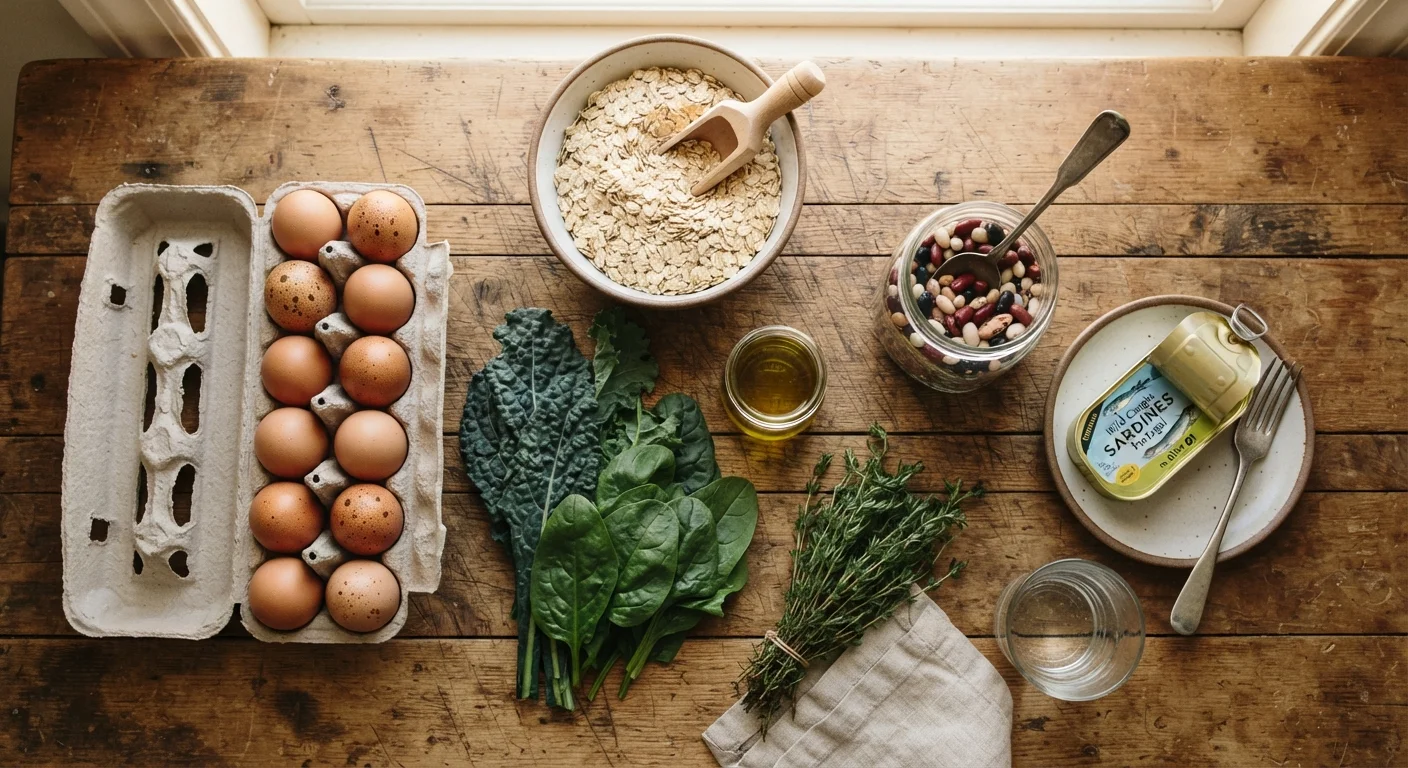
Eggs are frequently cited by nutrition researchers as one of the most nutrient-complete whole foods available. A single large egg contains about 6 grams of high-quality protein alongside choline (critical for brain and liver function), vitamin B12, vitamin D, selenium, and lutein - a carotenoid associated with eye health.
At typical US retail prices, a single egg often costs between 20 and 40 cents depending on the type and region. That makes eggs one of the strongest per-serving values in any grocery store. They're also highly versatile, requiring minimal equipment or cooking skill to prepare well.
One egg packs complete protein, choline, and B12 for under 40 cents.
Rolled Oats
A serving of rolled oats (about a half-cup dry) typically costs under 25 cents when purchased from a standard store-brand canister. Oats are one of the few whole grains that contain beta-glucan, a soluble fiber that research has consistently linked to modest reductions in LDL cholesterol when consumed as part of a balanced diet.
Beyond fiber, oats supply manganese, phosphorus, magnesium, and B vitamins. They also have a relatively low glycemic impact compared to refined breakfast alternatives, meaning they tend to provide more sustained energy. Steel-cut oats offer a denser texture and slightly lower glycemic index, though they take longer to cook.
Oats provide cholesterol-supporting beta-glucan fiber for around 25 cents per serving.
Canned Sardines
Canned sardines are one of the most concentrated sources of omega-3 fatty acids (EPA and DHA) available at a low price point - often between 75 cents and a dollar per serving. They also deliver calcium (when eaten with bones), vitamin D, vitamin B12, and selenium in quantities that are difficult to match in this price range.
Because sardines are small, short-lived fish, they accumulate far less mercury than larger species, making them a practical option for regular consumption. They work well on whole-grain crackers, in pasta, or mashed into a simple spread. For a broader look at how canned food compares nutritionally, see frozen vs. fresh vs. canned produce.
Sardines offer omega-3s, calcium, and vitamin D - rarely matched at this price.
Frozen Spinach
Frozen spinach consistently costs less than fresh and, in many cases, retains comparable levels of key nutrients including folate, vitamin K, vitamin A (as beta-carotene), iron, and magnesium. A typical half-cup cooked serving from a frozen bag costs well under 50 cents and provides a meaningful contribution toward daily vegetable intake.
The freezing process can actually preserve nutrients that degrade rapidly in fresh spinach after harvest. Frozen spinach is also pre-washed and pre-wilted, reducing prep time significantly. It blends easily into soups, egg dishes, and sauces - making it one of the easiest ways to increase vegetable density in budget meals.
Frozen spinach retains key nutrients and often costs less than its fresh counterpart.
Canned Beans (Black, Kidney, or Chickpeas)
Canned beans trade the slight cost advantage of dried for unbeatable convenience - no soaking, no long cook times. A half-cup serving of canned black beans or chickpeas typically costs 30-50 cents and delivers around 7-8 grams of protein, 6-7 grams of fiber, and useful amounts of iron, magnesium, and zinc.
Beans are also one of the few plant foods classified as both a protein and a vegetable by US dietary guidelines, reflecting their unusual nutritional breadth. Rinsing canned beans before use reduces sodium content by an estimated 40%, a practical step worth noting for those monitoring salt intake. For a direct comparison of bean protein versus animal sources, see our plant vs. animal protein comparison.
Rinsing canned beans cuts sodium by roughly 40% while preserving their protein and fiber.
Peanut Butter
Natural peanut butter - made with just peanuts and salt - delivers healthy monounsaturated fats, protein, niacin, vitamin E, and magnesium in a two-tablespoon serving that typically costs under 30 cents. It also provides resveratrol and p-coumaric acid, plant compounds that are the subject of ongoing nutrition research, though findings remain preliminary.
Peanut butter is calorie-dense, which makes it especially valuable for those who struggle to meet energy needs on a tight food budget. It requires no refrigeration before opening and has a long shelf life, reducing food waste - a genuine cost consideration. Look for varieties with minimal added ingredients to maximize nutritional quality, as noted in our whole foods vs. processed foods overview.
Peanut butter packs healthy fats, protein, and vitamin E for under 30 cents a serving.
Making the Most of What's in Your Cart
No single food covers every nutritional base, but combining several of the staples above gives you a strong foundation. Pair lentils with a vitamin C-rich food like canned tomatoes to improve iron absorption. Add oats with peanut butter for a protein-and-fiber morning combination. Serve eggs alongside leafy greens for a micronutrient-dense, low-cost meal.
Simple Ways to Stretch These Staples
Cook a large batch of lentils or beans at the start of the week and refrigerate for use across multiple meals. Oats can be prepared overnight in cold water or milk, saving morning time. Frozen spinach keeps for months, making it a reliable nutritional backup when fresh produce is scarce or over budget.
Budget eating does carry real risk of specific nutrient gaps - particularly for vitamin D, calcium, and omega-3 fatty acids. The common nutritional pitfalls of low-cost diets article explores these gaps and practical ways to address them. And if you're weighing plant versus animal sources of protein, our protein cost comparison breaks down the trade-offs clearly.
This article provides general nutrition information for educational purposes only and is not a substitute for personalized medical or dietary advice. Please consult a qualified healthcare professional before making significant changes to your diet.