

| Minimum starter kit size | Roughly 10-12 hand tools cover most common household repairs |
| Most-used tool type | Screwdrivers (flathead and Phillips) - needed in nearly every repair scenario |
| When permits may be required | Electrical, structural, plumbing-into-mains, and gas work typically require permits regardless of DIY status (Verify local code requirements before starting) |
| Tape measure standard length | 25 feet - sufficient for most interior home measurements |
| Blade replacement frequency | Utility knife blades should be replaced when they require noticeably more force to cut cleanly |
Why Knowing Your Tools Matters Before You Start
Grabbing the wrong tool doesn't just slow you down - it can strip a screw, crack a pipe fitting, or turn a 20-minute fix into a half-day project. Understanding what each hand tool is actually designed to do helps you work more effectively and avoid rookie mistakes that cost money to undo.
Budget-conscious homeowners have a real advantage when they can diagnose and fix common issues themselves. Before you start, though, it pays to know what's in your kit and why. If you're weighing which repairs make financial sense to DIY, see our companion piece on home repair costs you can realistically cut.
| Minimum starter kit size | Roughly 10-12 hand tools cover most common household repairs |
| Most-used tool type | Screwdrivers (flathead and Phillips) - needed in nearly every repair scenario |
| When permits may be required | Electrical, structural, plumbing-into-mains, and gas work typically require permits regardless of DIY status (Verify local code requirements before starting) |
| Tape measure standard length | 25 feet - sufficient for most interior home measurements |
| Blade replacement frequency | Utility knife blades should be replaced when they require noticeably more force to cut cleanly |
The Core Hand Tools and What Each One Actually Does
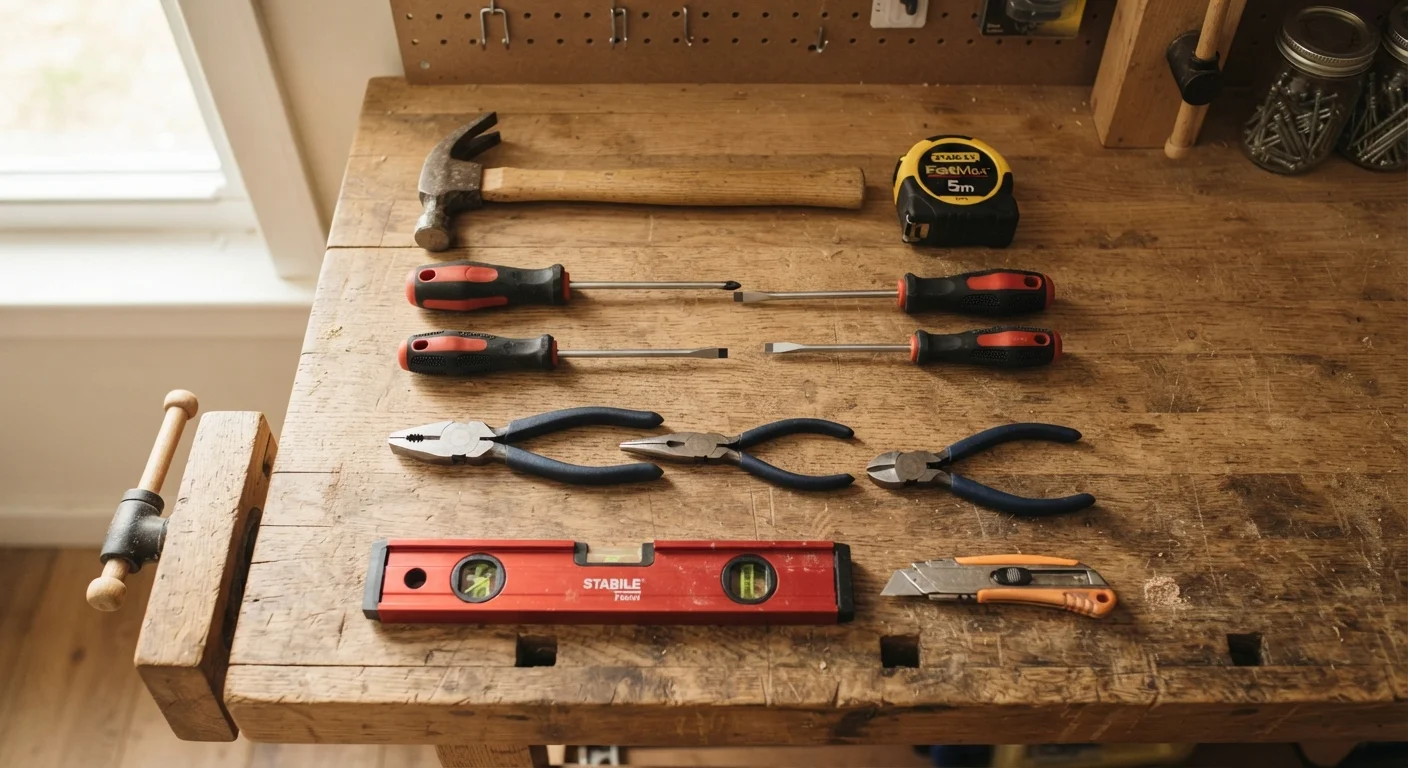
The following tools cover the vast majority of household repairs - patching drywall, fixing loose hinges, unclogging drains, assembling furniture, and more.
Fastener
Any hardware used to mechanically join materials together - screws, nails, bolts, and nuts are all fasteners. Choosing the right type and size for the material matters for a secure hold.
Torque
The rotational force applied when tightening a bolt or screw. Over-torquing can strip threads or crack fittings; under-torquing leaves connections loose.
Pilot hole
A small hole drilled before driving a screw or bolt, used to guide the fastener and prevent wood from splitting. Common in trim and cabinetry work.
Plumb
Perfectly vertical, as confirmed by a level or plumb bob. A wall-mounted fixture that is plumb runs straight up and down with no lean.
Score
To make a shallow cut along a surface - typically drywall or tile - to guide a clean break along the line rather than cutting all the way through in one pass.
Measuring and Marking
Tape measure: A retractable steel tape, typically 25 feet, used to measure distances accurately before cutting or drilling. Always measure twice before acting. Look for a wide blade (1 inch or more) that stands out without support - useful when measuring alone.
Combination square: A ruler with a sliding head used to mark 90° and 45° angles on wood or drywall. Invaluable when installing shelves, cutting trim, or ensuring a patch sits flush.
Fastening and Driving
Screwdrivers (flathead and Phillips): Flathead blades fit slotted screws; Phillips heads (the cross-shaped tip) fit the most common screws in household fixtures and hardware. Using the wrong size damages the screw head, making removal much harder. Keep at least two sizes of each.
Adjustable wrench: A single wrench that opens to fit many bolt and nut sizes. Useful for plumbing connections, furniture assembly, and appliance hookups. Turn it so the force is on the fixed jaw, not the movable one, to avoid slipping.
Hammer: A claw hammer drives nails and pulls them out. The smooth face prevents marking surfaces; strike squarely to avoid bending nails. A 16-ounce weight handles most tasks without fatigue.
Cutting and Shaping
Utility knife: A retractable blade for scoring drywall, cutting caulk lines, opening packaging, and trimming materials. Change blades regularly - a dull blade requires more force and is actually more likely to slip.
Hacksaw: A fine-toothed blade for cutting metal pipe, bolts, or plastic. Keep the cut line straight using a guide, and let the blade do the work - no need to push hard.
Gripping and Prying
Needle-nose pliers: Thin, tapered jaws reach into tight spaces to grip wire, small fasteners, or retaining clips. Commonly needed for plumbing repairs - something you'll run into if you use our guide to fixing running toilets and leaky faucets.
Pry bar (or flat bar): A flat steel lever for removing baseboards, pulling nails, or separating glued surfaces. Place a scrap of wood behind the bar to protect walls and distribute force.
Leveling
Spirit level: A tool with a sealed liquid vial used to confirm surfaces or fixtures are perfectly horizontal or vertical. Critical for shelving, picture hanging, and any installation where an off-angle result would be obvious or functional.
When Hand Tools Aren't Enough
Some repairs look straightforward but involve systems - electrical, gas, or load-bearing structures - where hand tools and good intentions are not sufficient substitutes for professional training. If a repair requires touching your breaker panel, gas supply line, or any structural framing, stop and contact a licensed contractor or tradesperson. Unpermitted or unsafe work can void homeowners insurance and create liability when you sell.
Building Skill Alongside Your Toolkit
Owning a tool and knowing how to use it safely are two different things. Start with smaller repairs to build confidence - a loose cabinet hinge or a stuck door latch - before attempting anything more involved. Many local hardware stores and community centers offer free or low-cost workshops on basic repair skills.
If you rent rather than own, your repair responsibilities differ significantly. It's worth understanding those boundaries clearly; our article on repairs as a renter vs. an owner explains the typical rules. For tasks involving electrical panels, gas lines, or structural elements, always consult a licensed professional - those areas carry real safety and code requirements that go beyond hand-tool work.
A modest, well-maintained hand tool kit genuinely expands what you can handle independently, reduces reliance on service calls, and helps you make smarter decisions about when to call in a pro.