

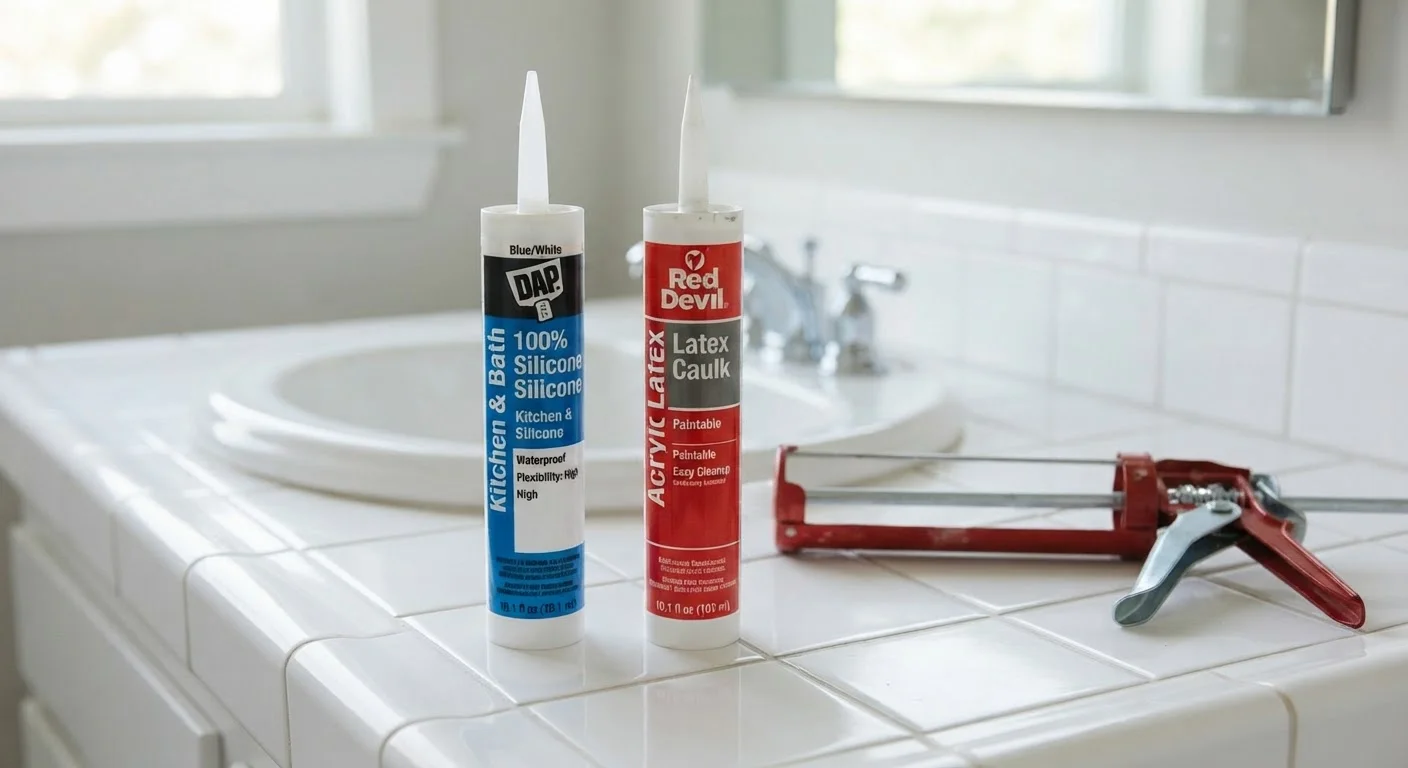
Key Takeaways
Option A
Silicone Caulk
The flexible, waterproof workhorse for wet and outdoor areas.
Best for: Best for areas with constant moisture exposure, temperature swings, or movement - such as showers, tubs, and exterior gaps.
Option B
Latex (Acrylic) Caulk
The paintable, easy-to-apply choice for interior trim and drywall.
Best for: Best for interior joints, baseboards, window and door trim, and anywhere you need a finish that accepts paint.
If you're sealing a shower surround or bathtub edge
Silicone Caulk
Silicone forms a fully waterproof, mold-resistant seal that holds up to daily soaking and humidity better than any latex formulation.
If you're filling gaps along baseboards, crown molding, or window trim
Latex (Acrylic) Caulk
Latex sands and paints smoothly, blending invisibly with the surrounding trim once your topcoat dries.
If you're caulking an exterior gap around siding or an outdoor window frame
Silicone Caulk
Silicone remains flexible through freeze-thaw cycles and UV exposure that cause latex to crack and pull away over time.
If you're a first-time DIYer who needs an easy, forgiving application
Latex (Acrylic) Caulk
Latex is simpler to tool, wipe clean with a damp cloth while wet, and correct if you make a mistake - lowering the skill barrier significantly.
How Each Caulk Is Made - and Why It Matters
Silicone caulk is polymer-based, giving it exceptional elasticity and a chemical resistance that holds up against water, UV light, and temperature swings from well below freezing to well above 200°F. It cures by reacting with moisture in the air, forming a rubbery seal that never becomes fully rigid.
Latex caulk - often labeled acrylic latex or painter's caulk - is water-based. It dries rather than cures, shrinking slightly as it loses moisture. That shrinkage is why latex can crack in joints that move, but it also means the caulk accepts paint without peeling. For painted surfaces, this is a major practical advantage.
Understanding this chemistry upfront helps you match material to conditions rather than guessing at the hardware store.
| Criterion | Silicone Caulk | Latex (Acrylic) Caulk |
|---|---|---|
| Water resistance | Excellent - fully waterproof | Moderate - not for wet immersion |
| Flexibility after cure | Very flexible, rubber-like | Somewhat rigid, can crack with movement |
| Paintability | Generally not paintable (check label) | Fully paintable once dry |
| Cleanup method | Mineral spirits required | Warm water while wet |
| Best interior use | Showers, tubs, kitchen sinks | Trim, baseboards, drywall gaps |
| Best exterior use | Windows, siding, door frames | Limited - degrades with weathering |
| Ease of application | Moderate - must work quickly | Easy - more working time |
| Mold resistance | High (especially mold-rated formulas) | Lower in consistently damp spots |
Where to Use Silicone Caulk
Silicone is the right call anywhere water is the primary threat. That includes the perimeter of a bathtub, the base of a shower surround, around faucet bases, and where countertop backsplashes meet the wall. It also handles kitchen sink perimeters well - a spot that sees constant splashing and cleaning chemicals.
Outdoors, silicone outlasts latex significantly. Gaps around window frames, door thresholds, and siding penetrations benefit from silicone's ability to flex without cracking as wood and masonry expand and contract seasonally.
One limitation worth knowing: most silicone formulations cannot be painted. If aesthetics matter and the surface will be painted, look for paintable silicone hybrids (sometimes labeled "siliconized acrylic") rather than pure silicone.
If you've had silicone fail prematurely, surface preparation is almost always the culprit - the substrate must be bone dry and free of old caulk residue. See why caulk keeps cracking for a deeper look at application mistakes that shorten seal life.
Where to Use Latex Caulk
Latex caulk earns its place on any job where paint is the final finish. Baseboards, door casings, crown molding, ceiling corners, and gaps in drywall are all well-suited to latex. The material feathers easily with a wet finger, dries in one to two hours, and accepts a coat of paint without any adhesion issues.
Interior window trim is another strong use case, provided the window isn't prone to condensation pooling at the sill. Light moisture exposure - a bit of cleaning spray, occasional condensation - is manageable. Standing water or direct spray is not.
Watch for 'Siliconized Acrylic' Labels
Many caulks marketed in the trim and painting aisle are actually silicone-latex hybrids, labeled siliconized acrylic or acrylic with silicone. These offer improved water resistance over plain latex while still accepting paint - a useful middle ground for bathroom trim or areas with occasional moisture. They are not a substitute for pure silicone in submerged or continuously wet applications, but they're a step up from standard painter's caulk.
Latex caulk is also the go-to for small cracks in plaster or drywall before painting. Its water-based nature means it bonds well to porous wall materials and sands flush once dry, making it genuinely useful as a finishing material, not just a gap filler.
Side-by-Side: Practical Considerations
90%+
Of caulk failures linked to wrong product selection or poor surface prep
According to general guidance from professional trade organizations, the vast majority of premature caulk failure stems from avoidable application errors rather than product defects.
30+ years
Potential lifespan of properly applied silicone in a dry, stable joint
Manufacturer technical data sheets for quality silicone sealants commonly cite service life of several decades under ideal conditions, though real-world results vary.
Cost is often comparable between the two types, though specialty silicones - mold-resistant formulas or high-temperature variants - tend to run higher per tube. For most DIYers on a budget, the larger cost driver is buying the wrong type and having to redo the job.
Application technique also differs. Silicone must be tooled quickly because it begins skinning over within minutes. Latex gives you more working time and wipes clean with a damp cloth while still wet. Cured silicone requires a razor blade or silicone remover to strip; cured latex is easier to cut away cleanly.
One important rule: never apply latex caulk directly over old silicone. Latex won't bond to silicone's slick surface and will peel away within weeks. Always remove the old material down to bare substrate before recaulking, regardless of which type you're using.