

Key Takeaways
Why Uniformity Isn't the Goal
Most organization advice assumes everyone in a household shares the same habits, tolerances, and aesthetic preferences. In reality, shared homes - whether housing roommates, multigenerational families, or couples with different organizational styles - rarely work that way. Insisting on a single system often creates resentment rather than order.
A more practical goal is a home that functions reliably without constant negotiation. That means designing around how people actually behave, not how you'd like them to behave. If one person habitually drops keys and mail on any available surface, a designated drop zone near the door doesn't require them to change - it simply gives that habit a home.
This approach also matters for budgets. Expensive organizational overhauls tend to fail in shared homes because they require buy-in to maintain. Simpler, cheaper systems that align with existing behavior are far more durable. For renters especially, damage-free approaches are essential - see our guide to organizing without permanent fixtures for reversible options that work within those constraints.
Core Practices for Shared-Space Organization
These approaches work precisely because they don't depend on everyone agreeing on aesthetics or habits - they create structure around the spaces people share most.
Assign personal zones within shared rooms rather than managing items collectively.
When individuals have clear ownership of a specific shelf, drawer, or cabinet section, disputes over misplaced or crowded items drop significantly. Responsibility is concrete rather than vague. People are also more likely to maintain a space they think of as theirs.
Establish 'agreed minimums' for shared surfaces rather than dictating appearance.
Shared surfaces like kitchen counters and dining tables become flashpoints when expectations are unclear. Agreeing on a minimum standard - such as 'counters cleared of dishes by bedtime' - gives everyone a concrete target without policing personal style.
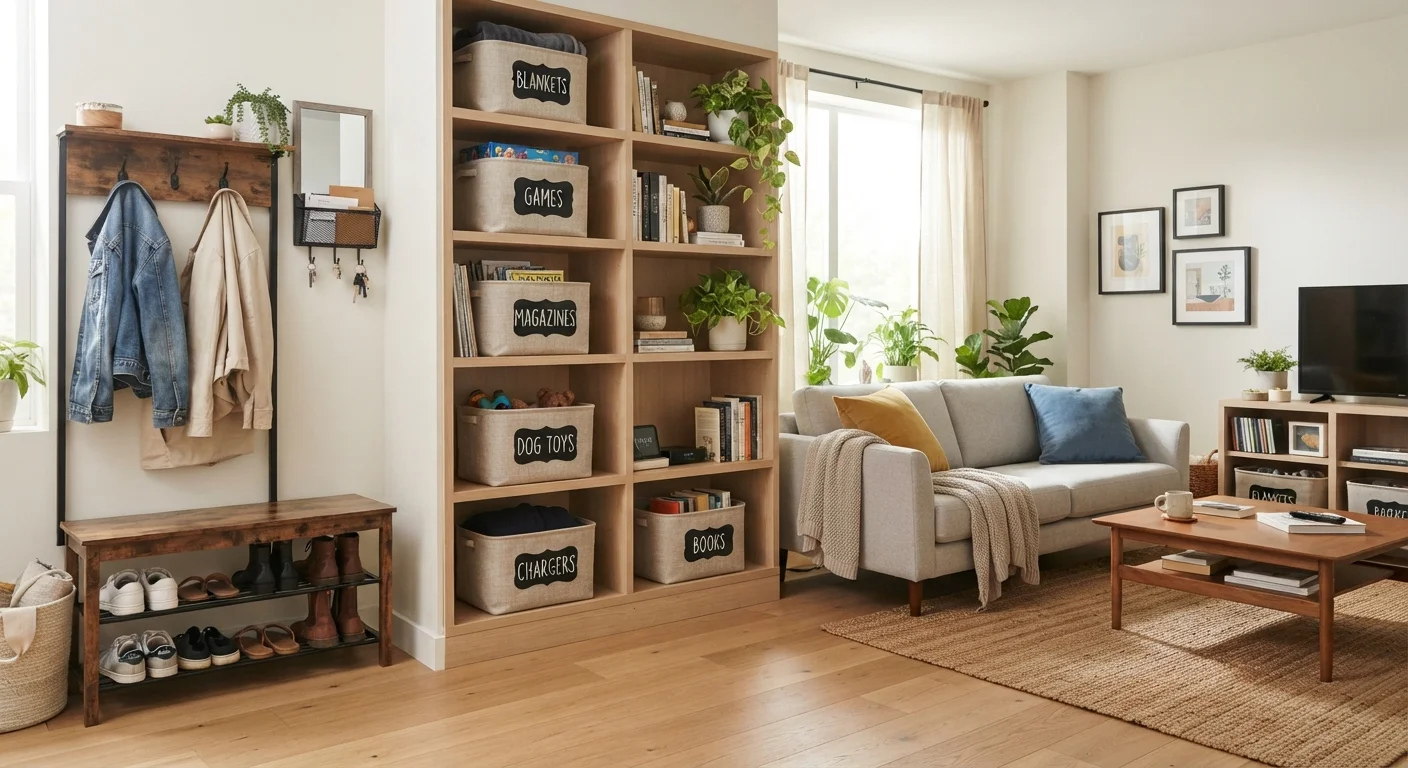
Use containers and labels to make 'right place' obvious without explanation.
When a labeled bin exists for a category of items, returning things becomes automatic rather than a judgment call. Clear systems reduce the mental load of maintaining order. They also help new or younger household members participate without extensive instruction.
Separate 'high-traffic' storage from 'long-term' storage to reduce daily friction.
Combining everyday items with things used rarely causes congestion and frustration. When frequently needed items are easy to reach and rarely-used items are stored elsewhere, both categories stay more organized. This also makes it easier for multiple people to access shared spaces simultaneously.
Build a 'default yes' policy for personal spaces and a 'ask first' policy for shared ones.
Ambiguity about which spaces are truly shared creates ongoing tension. Making an explicit agreement that each person controls their personal area without comment, while shared zones require brief consultation before major changes, removes a common source of conflict.
Quick Actions You Can Take Today
You don't need a weekend overhaul or household consensus to start improving shared spaces. A few targeted changes can make an immediate, visible difference.
Start With the Room That Causes the Most Friction
Rather than tackling the whole house at once, identify the one shared space that generates the most daily tension - often the kitchen, bathroom, or entryway. Fixing that single space first builds momentum and demonstrates that the system works, which makes it easier to get other household members engaged. A small success in a visible area goes further than a comprehensive overhaul no one maintains.
Keeping Systems Running Long-Term
Even well-designed systems drift when life gets busy. The key to longevity in shared homes is building maintenance into the routine rather than relying on periodic cleanouts.
Brief, regular check-ins - even informal ones - tend to work better than annual overhauls. A 10-minute shared reset each week, where everyone returns items to their designated zones, prevents slow accumulation. For households that resist structured conversations, a shared notes app or whiteboard can surface small issues (a drawer getting overcrowded, a shelf running out of space) before they become bigger problems.
It also helps to revisit systems when household composition changes. A storage arrangement that worked with two people may not serve three. Building flexibility into the original system - using containers that can be added or removed rather than fixed built-ins - makes adaptation much easier and cheaper. For more on building habits that prevent clutter from quietly returning, see clutter-prevention habits worth building.
Shared Spaces in Rental Homes
If you're renting, some storage solutions - like wall anchors, permanent shelving, or adhesive hooks on certain surfaces - may be restricted by your lease. Before installing anything, check your rental agreement or ask your landlord. Many effective organization systems require no permanent modifications at all; freestanding furniture, tension rods, and removable adhesive products can accomplish most of the same goals without risking your security deposit.
If your household is navigating a significant space change, the strategies in our downsizing organization framework may also apply - many shared-space principles translate directly to smaller homes.
25%
Of US adults live with non-family housemates
Pew Research Center data indicates roughly one in four adults shares a home with someone outside their immediate family, making shared-space strategies broadly relevant.
~$30
Average cost of a basic shared-zone container setup
A simple system of labeled bins, baskets, and drawer dividers sourced from dollar stores or discount retailers can typically be assembled for under $30 per shared space.