

Key Takeaways
The Real Reason Budgets Break Early
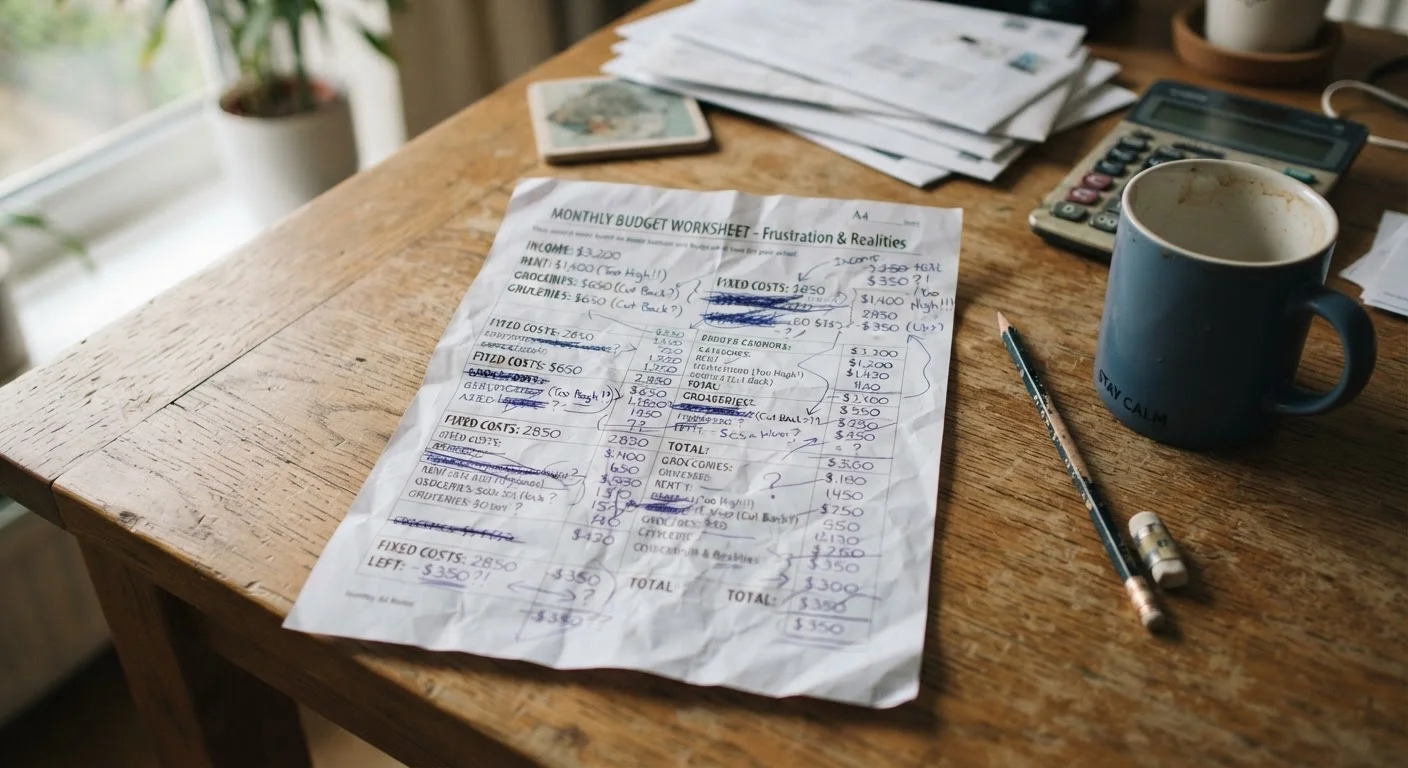
Budgets rarely fail because someone lacks willpower. They fail because they were built on flawed assumptions from day one. A budget that looks balanced on paper can still collapse the moment real life intervenes - an unexpected car expense, a forgotten annual bill, or a grocery run that runs $80 over estimate.
Understanding exactly where early budgets break down gives you a structural advantage. The mistakes below are not character flaws - they're design errors. And design errors can be fixed. If you're starting from scratch, see our step-by-step household budget guide before you build your first one.
Building the budget from memory instead of actual spending data.
Why it happens: Most people guess at their monthly expenses rather than reviewing bank and card statements. Memory consistently underestimates spending, especially on food, fuel, and subscriptions.
Ignoring irregular but predictable expenses like insurance premiums, registration fees, and annual subscriptions.
Why it happens: These costs don't appear every month, so they're easy to forget during planning. When they hit, they feel like surprise expenses - even though they're entirely foreseeable.
Setting spending limits so strict there's no margin for normal human behavior.
Why it happens: New budgeters often overcorrect, treating budgeting as a punishment rather than a management tool. Cutting every discretionary dollar feels disciplined but backfires quickly.
Treating the budget as a one-time document rather than a monthly revision.
Why it happens: Many people spend hours on the initial setup, then assume it's done. Life changes - income, bills, and priorities shift - but the budget doesn't.
Failing to account for the income side with the same precision as expenses.
Why it happens: People with variable income - gig work, hourly shifts, freelance - often budget against their best recent paycheck rather than a realistic average or their lowest expected month.
How to Stabilize a Budget That's Already Slipping
If your budget has already wobbled in week two or three, that's not a signal to quit - it's data. A broken budget tells you exactly what your plan didn't account for. Revisit each category where you overspent and ask whether the limit was realistic or aspirational.
~80%
Of budgets abandoned within the first month
Financial planning research consistently finds that most people who attempt a monthly budget stop tracking it before the end of the first cycle, often due to unrealistic initial targets.
3x
Improvement in accuracy using real spending data
Studies on household financial planning suggest budgets anchored in actual transaction history are significantly more likely to remain intact than those built on estimated figures.
The most effective recovery move is a mid-month check-in rather than waiting until the end of the period to assess damage. Catching a $60 overage on week two gives you two weeks to compensate. Catching it on day 30 gives you nothing. Many people also benefit from choosing a budgeting framework that matches their actual habits - our comparison of popular budgeting frameworks like 50/30/20 and zero-based budgeting breaks down which structure fits different income patterns and lifestyles.
For a deeper look at one-on-one matchups between methods, the zero-based vs. 50/30/20 comparison walks through real-life scenarios. And if you're losing steam because you believe budgeting means sacrificing everything enjoyable, it's worth reading through common budgeting myths that keep people stuck.
Don't Rebuild From Zero Each Month
Starting an entirely new budget every month discards hard-won data from the previous cycle. Instead, carry forward your actual spending figures as the baseline and revise only what needs changing. Rebuilding from scratch is a time cost that discourages consistency.
Budgets are living documents. Treating the first version as final is a mistake in itself. The goal in month one isn't perfection - it's enough self-knowledge to build a plan you can actually sustain. For broader money-saving strategies, including building an emergency buffer, explore our saving money hub.
This article is for general informational and educational purposes only and does not constitute personalized financial advice. Consult a qualified financial professional for guidance specific to your situation.