

Key Takeaways
Option A
Zero-Based Budgeting
The meticulous, dollar-by-dollar method for maximum control.
Best for: People who want to account for every dollar of income and are willing to invest regular time in tracking spending.
Option B
The 50/30/20 Rule
The streamlined percentage-based framework for no-fuss planning.
Best for: People who want a simple, low-maintenance structure that guides broad spending without detailed category tracking.
If you have irregular income or a tight budget with little breathing room
Zero-Based Budgeting
Assigning every dollar intentionally helps you adapt quickly when income fluctuates and prevents any spending from slipping through the cracks.
If you have stable income and want a low-effort structure to follow
The 50/30/20 Rule
Fixed percentages require minimal monthly setup and still guide you toward savings and debt payoff without constant category-level tracking.
If you frequently overspend in specific categories like dining or entertainment
Zero-Based Budgeting
Line-item visibility makes it harder to ignore problem spending areas and prompts deliberate trade-off decisions each month.
If you're new to budgeting and just getting started
The 50/30/20 Rule
Its simple three-bucket design lowers the barrier to entry, making it far less likely you'll abandon the habit in the first month.
If you're trying to aggressively pay down debt or build an emergency fund fast
Zero-Based Budgeting
You can deliberately redirect dollars from low-priority categories toward debt payments or savings in a way that broad percentages don't easily support.
How Each Method Actually Works
Understanding the mechanics of each framework is the first step to knowing which one suits your situation. They start from the same place - your monthly income - but take very different paths from there.
Zero-Based Budgeting
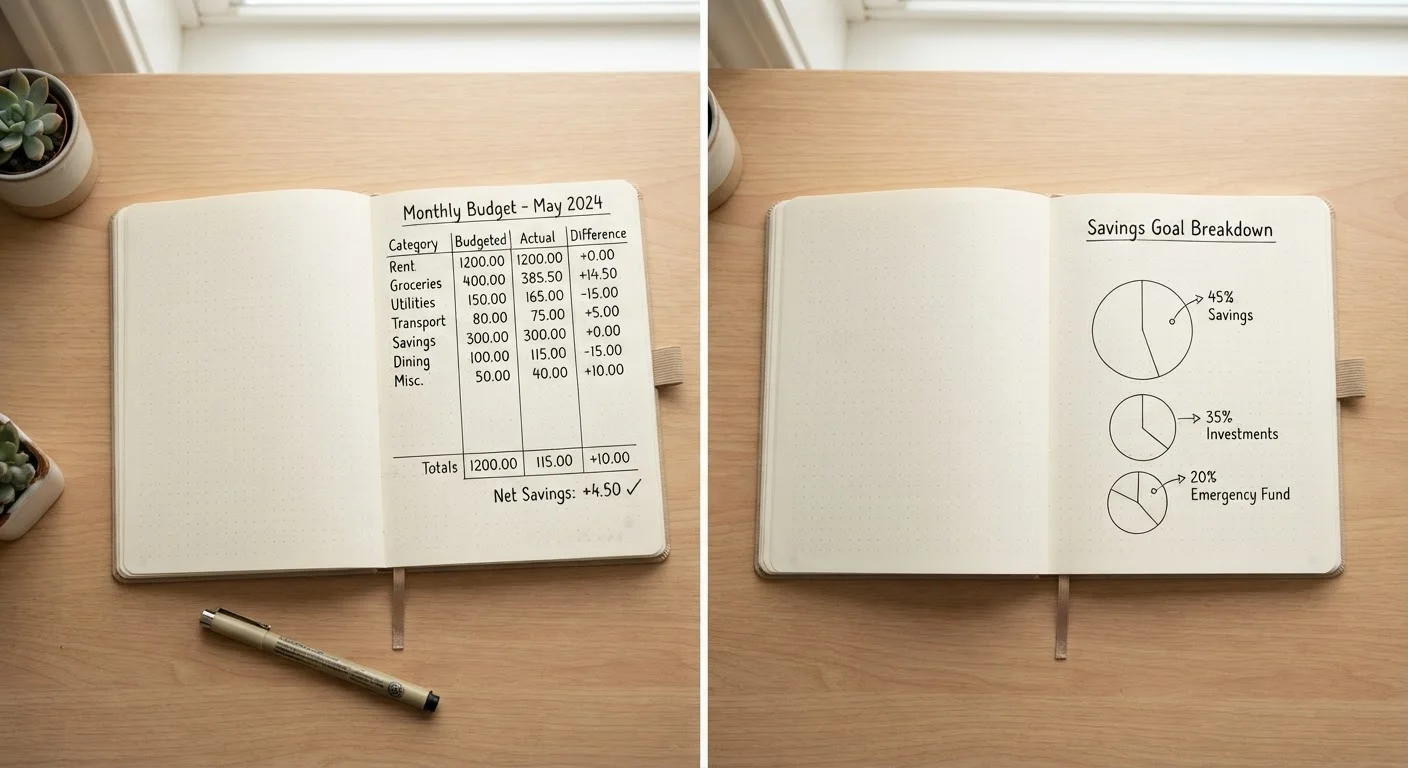
With zero-based budgeting (ZBB), you list every anticipated expense for the month and assign income to cover each one until you reach zero dollars remaining. That doesn't mean spending everything - savings, debt payments, and investments count as expense categories too. The goal is that income minus all assigned categories equals zero, meaning no dollar is left without a purpose. At the end of each month, you reset and build the budget from scratch again based on actual upcoming needs. This monthly rebuild is what gives ZBB its power and its reputation for being time-consuming.
The 50/30/20 Rule
The 50/30/20 rule, popularised by Senator Elizabeth Warren and her daughter Amelia Warren Tyagi in their book All Your Worth, divides after-tax income into three categories: 50% toward needs (housing, utilities, groceries, insurance), 30% toward wants (dining out, subscriptions, hobbies), and 20% toward savings and debt repayment. You can learn more about the mechanics in our 50/30/20 rule overview. Once you know your income, the math is minimal - no detailed line items required.
| Criterion | Zero-Based Budgeting | 50/30/20 Rule |
|---|---|---|
| Setup time | 30-60 min per month | Under 15 minutes |
| Ongoing maintenance | Weekly check-ins needed | Minimal, monthly review |
| Works with irregular income | Yes, with adjustments | Harder to apply accurately |
| Spending visibility | Granular, category-level | Broad, bucket-level only |
| Beginner-friendly | Steeper learning curve | Very accessible |
| Flexibility for debt payoff | High - redirect any category | Fixed 20% savings bucket |
| Risk of budget drift | Lower with regular tracking | Higher within wants bucket |
Where Each Framework Struggles
No budgeting method is without flaws. Knowing the limitations ahead of time helps you plan around them rather than abandon the budget when friction appears.
The challenges of zero-based budgeting
ZBB demands a meaningful time commitment - realistically 30 to 60 minutes at the start of each month, plus regular check-ins during the month to make sure you're staying within each category. For people with irregular income (freelancers, gig workers, tipped employees), estimating the right numbers at the start of the month adds another layer of difficulty. There's also a learning curve: new budgeters often forget irregular annual expenses like car registration or holiday gifts, which can blow up an otherwise solid plan.
The challenges of the 50/30/20 rule
The biggest limitation is that the percentages assume a comfortable income. In high cost-of-living cities, keeping housing, transportation, and groceries within 50% of take-home pay can be genuinely impossible for many households. The 30% wants bucket can also feel uncomfortably loose - it provides no guardrails on which wants you're spending on, making it easy to drift into consistent overspending without noticing. Finally, the 20% savings figure may not be aggressive enough for someone carrying significant high-interest debt.
A Note on Income Assumptions
Both frameworks are typically calculated on after-tax (take-home) income, not gross income. Using gross income will inflate your category targets and make the budgets appear more manageable than they actually are. Always start with the amount that actually lands in your bank account each pay period. If you receive benefits, side income, or irregular bonuses, decide in advance how you'll categorise those dollars before they arrive.
For a broader look at how these methods compare to other popular approaches, see our guide to comparing popular budgeting frameworks.
Choosing the Right Framework for Your Situation
The honest answer is that both methods work - and neither works if you don't use it consistently. The right choice depends on three practical factors: the stability of your income, the amount of time you can realistically commit, and how tightly you need to control spending right now.
If you're living paycheck to paycheck or actively trying to cut costs, ZBB's granular structure gives you the clearest picture of where money is actually going. Small daily habits - reviewing your budget app before an impulse purchase, logging a grocery receipt, reallocating $20 from entertainment to an upcoming car repair - compound into real savings over time. This is the framework that tends to reward deal-seeking shoppers most directly, because every dollar saved in one category is explicitly available for something else. See how this mindset connects to budget buying strategies that stretch each dollar further.
If you have stable income and your finances are in reasonable shape, the 50/30/20 rule offers a sustainable, low-friction structure. It's also easier to introduce to a partner or household who resists detailed budgeting, since there are fewer categories to argue over.
Some people blend both: they use the 50/30/20 percentages as guardrails but add line-item categories within the wants bucket to stay accountable. That hybrid approach captures the simplicity of percentage budgeting with some of the control of ZBB. You might also compare ZBB against other category-based methods - our zero-based vs. envelope budgeting comparison walks through the distinctions.
This article is for general informational and educational purposes only and does not constitute personalised financial advice. Consider consulting a qualified financial professional for guidance specific to your circumstances.