

Key Takeaways
The Envelope System
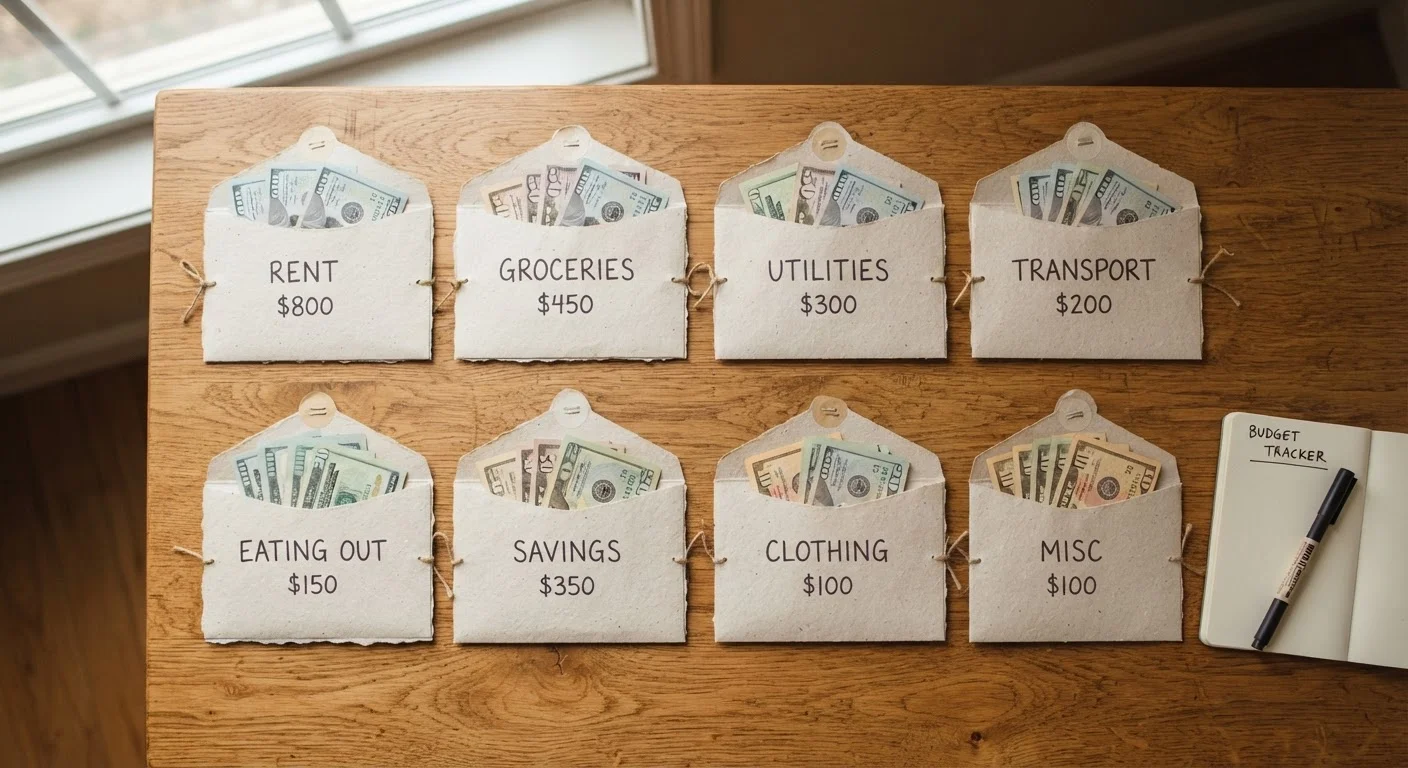
The envelope system is a cash-based budgeting method where you divide your take-home pay into physical envelopes, each labeled for a specific spending category - groceries, gas, dining out, and so on. Once an envelope is empty, spending in that category stops for the month. The physical act of handing over cash creates a natural spending brake that digital payments often lack.
Some practitioners use a hybrid approach: digital sub-accounts or budgeting apps that replicate envelope logic without requiring physical cash. These are often called 'virtual envelope' systems.
Why Physical Cash Changes Spending Behavior
There is a well-documented psychological difference between handing over a $20 bill and tapping a card. Behavioral researchers have described this as the "pain of paying" - physical cash makes the cost of a purchase feel more tangible in the moment. The envelope system exploits this tendency deliberately.
When you pull out your grocery envelope and can see exactly how much remains, you make different choices at the store than you would if the money were invisible inside a checking account. This visibility is the core mechanism. It doesn't require willpower so much as it requires information - and the envelopes provide that information in the bluntest possible way.
Before adopting any budgeting method, it helps to know where your money is currently going. Our guide on tracking spending before you budget walks through practical ways to build that baseline picture.
Start With Just Three Envelopes
If the idea of managing eight to ten categories feels overwhelming, begin with the three areas where you most commonly overspend - often groceries, dining out, and entertainment. Running a simplified system consistently beats running a complex one that gets abandoned by week three.
How to Set Up Your Envelopes
The setup process has three steps: identify your categories, set spending limits, and fund the envelopes on payday.
Step 1: Choose Your Categories
Focus on variable, discretionary expenses where overspending is most common. Typical categories include groceries, gas, dining out, household supplies, personal care, entertainment, and clothing. Fixed obligations - rent, minimum loan payments, insurance premiums - are usually better left in your bank account on auto-pay since they don't fluctuate.
Step 2: Set Realistic Limits
Use at least one month of actual spending data to set category amounts. Guessing low is a common mistake that causes people to abandon the system in week two. If you genuinely spent $380 on groceries last month, budgeting $200 will create friction that isn't about the system - it's about an unrealistic target.
Step 3: Fund and Use
On payday, withdraw your total discretionary budget in cash and distribute it across your envelopes. Spend only from the relevant envelope. When grocery shopping, bring only the grocery envelope. When the envelope empties, the category is closed until next month - or you consciously move cash from a lower-priority envelope as a deliberate trade-off.
What About Security and Convenience?
Carrying large amounts of cash does carry some risk - loss or theft isn't reimbursable the way a debit card dispute might be. Many practitioners keep only the current week's cash in their wallet and leave the rest of the month's envelopes stored at home. Adjust the approach to your comfort level and local circumstances.
Adapting the System for Modern Life
Living entirely on cash is impractical for many households. Online purchases, automatic bill pay, and contactless payments are embedded in daily life. The envelope system doesn't require all-or-nothing adoption.
A common hybrid: use physical envelopes for three or four high-leak categories - typically groceries, dining, and entertainment - while keeping everything else digital. This captures most of the behavioral benefit without forcing a complete shift in how you transact.
If you rarely carry cash at all, virtual envelope apps apply the same category logic using digital sub-accounts or spending limits. The psychological effect is somewhat weaker without physical cash, but the structural discipline remains. For a direct comparison of how envelope logic stacks up against zero-based approaches, see our article on zero-based vs. envelope budgeting.
For deal-seeking shoppers in particular, the envelope method pairs well with planned purchasing. When you know your grocery envelope holds $350 for the month, you shop differently - planning meals around what's on sale rather than buying on impulse. Our budget buying strategies hub covers complementary frameworks for making that discipline work at the store level.
~18%
Average reduction in discretionary spending with cash payments
Multiple behavioral economics studies have found consumers tend to spend measurably less when using cash versus cards, though exact figures vary by study design and context.
1 in 3
U.S. adults who report overspending their budget monthly
Surveys by financial literacy organizations consistently find a significant share of American households exceed their self-reported monthly spending targets.
Common Pitfalls and How to Avoid Them
The envelope system fails most often for predictable reasons, and all of them are fixable.
- Unrealistic category amounts: Setting totals based on aspiration rather than history. Fix this by spending one month tracking actual outflows before you set envelope limits. See our guide on where your money actually goes.
- Raiding envelopes too freely: Moving cash between envelopes without acknowledging the trade-off erodes the system's accountability. Keep a written note of every inter-envelope transfer so the decision stays visible.
- Forgetting irregular expenses: Annual subscriptions, car registration, holiday gifts, and medical copays don't appear monthly but they will arrive. Create a dedicated "sinking fund" envelope or sub-account that accumulates a small amount each month toward these predictable surprises. An emergency fund works alongside - not instead of - this kind of planning; our article on emergency funds and budgets explains the distinction.
- Using the envelope system in isolation: The method handles spending control but doesn't address income gaps, debt repayment strategy, or savings goals on its own. Pair it with a broader framework. Comparing popular budgeting frameworks offers a useful starting point for that broader picture.
This article is for general informational and educational purposes only and does not constitute personalized financial advice. Consult a qualified financial professional for guidance specific to your situation.