

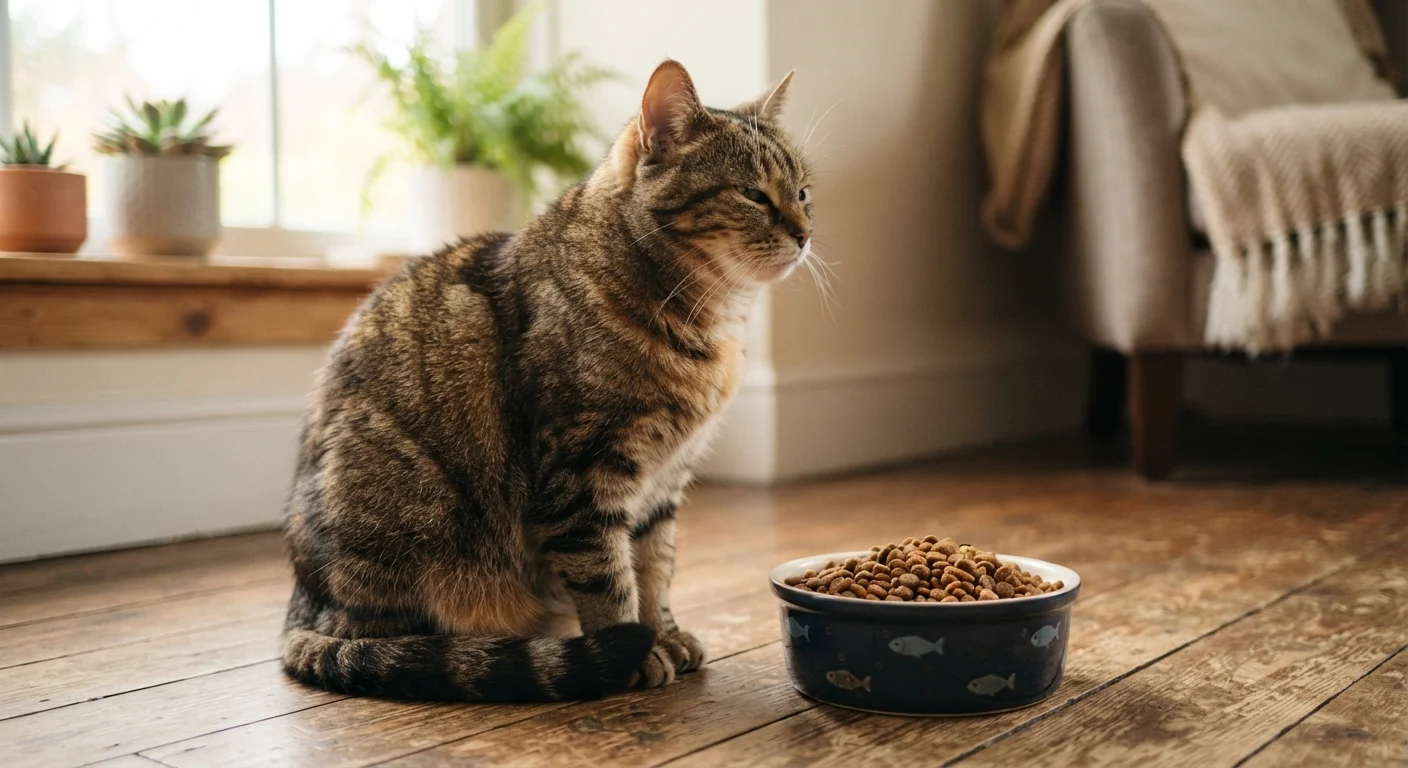
Key Takeaways
It's Usually Not What You Think
Most cat owners blame food refusal on pickiness. The reality is more layered. Cats are obligate carnivores-animals whose bodies are biologically wired to require specific nutrients found only in animal tissue. Their relationship with food is driven by scent, texture, temperature, and instinct as much as taste. When a cat turns down a bowl, it's often communicating something concrete rather than expressing preference for something pricier.
Understanding the actual causes of food refusal helps you make smarter, more cost-effective decisions-rather than cycling through expensive options hoping something sticks. The mistakes below are the most common drivers of refusal, and nearly all of them are fixable without spending more money.
Common Mistakes That Cause Cats to Refuse Food
Each of the following errors is well-documented in feline behavioral and veterinary literature. Recognizing which one applies to your situation is the first step toward a solution.
Switching foods too quickly without a transition period.
Why it happens: Owners often switch brands when a food goes on sale or stock runs low, assuming cats will simply adjust. Cats' digestive systems and taste preferences are sensitive to abrupt changes.
Serving food straight from the refrigerator.
Why it happens: Canned food is often stored cold and served immediately, but cats are drawn to prey-temperature meals-roughly body temperature. Cold food has reduced aroma, which is a primary driver of feline appetite.
Using a narrow or deep bowl that forces the cat's whiskers to touch the sides.
Why it happens: Owners choose bowls based on aesthetics or convenience without realizing cats experience whisker fatigue-discomfort caused by repeated stimulation of sensitive facial whiskers against bowl edges.
Assuming a cat that ate the food once will always accept it.
Why it happens: A cat may eat a new food enthusiastically at first, leading owners to stock up. But cats can develop aversions, especially if a meal coincided with feeling ill-a phenomenon called conditioned taste aversion.
Free-feeding dry kibble all day and then offering wet food the cat ignores.
Why it happens: Constant access to kibble keeps cats in a low-level state of satiation. When wet food is introduced, cats may sniff and walk away-not because the food is wrong, but because they aren't meaningfully hungry.
Ignoring that the food may not meet a cat's unique nutritional requirements.
Why it happens: Some owners feed cats dog food, homemade diets, or budget options that lack taurine, arachidonic acid, or adequate animal protein-nutrients cats cannot synthesize on their own. Cats may instinctively avoid nutritionally incomplete foods.
For a broader look at feline behavior and what science says about how cats learn and respond to their environment, see what research shows about cat training and behavior.
When to Stop Troubleshooting and Call Your Vet
When Refusal Means See a Vet
A cat that skips one meal isn't necessarily in danger. But if your cat refuses food for more than 24-48 hours, loses weight unexpectedly, or shows other symptoms like lethargy or vomiting, contact your veterinarian promptly. Prolonged food refusal in cats can lead to a serious liver condition called hepatic lipidosis. This is general health information-not a substitute for professional veterinary care.
Most food-refusal cases resolve once owners address a practical trigger-bowl shape, food temperature, or feeding schedule. But refusal that persists, or that comes alongside changes in weight, coat condition, energy level, or litter box habits, is a different matter. Cats are skilled at masking illness, which means food refusal is sometimes the first visible sign of an underlying problem. Cats also have fundamentally different health vulnerabilities compared to dogs-a distinction worth understanding if you're managing multiple pets. See how cat and dog health needs differ for context.
This article provides general educational information about cat feeding behavior and is not a substitute for veterinary medical advice. Always consult a licensed veterinarian for concerns about your cat's health or diet.