

Key Takeaways
Why Enrichment and Training Belong Together
Dog training doesn't have to mean dedicated 20-minute sessions in the backyard with a clicker in hand. Some of the most effective behavior-shaping happens during everyday enrichment - the low-pressure activities that let dogs use their instincts while quietly practicing the same skills you'd reinforce in a formal lesson.
The overlap matters practically: enrichment burns mental energy, which tends to make dogs calmer and more receptive. A dog that's had a 10-minute sniff game before a training session typically focuses better than one that's been crated all morning. That's not coincidence - canine cognitive research consistently shows that olfactory work and problem-solving reduce stress indicators in dogs.
For budget-conscious owners, the appeal is obvious. These activities cost nothing. They use items already in the home, time you'd spend with your dog anyway, and the kibble already portioned for meals. They also build on reward-based training principles, meaning every successful sniff or recall is a small win the dog files away.
Use Meals, Not Extra Treats
Most of these activities work best with a portion of your dog's regular daily kibble rather than additional treats. Swapping enrichment activities for bowl feeding keeps caloric intake stable and eliminates the need to buy anything extra. If you're already thinking about food budget, see our guide on stretching your pet food budget for complementary strategies.
8 Free Enrichment Activities That Reinforce Good Behavior
Scatter Feeding at Mealtimes
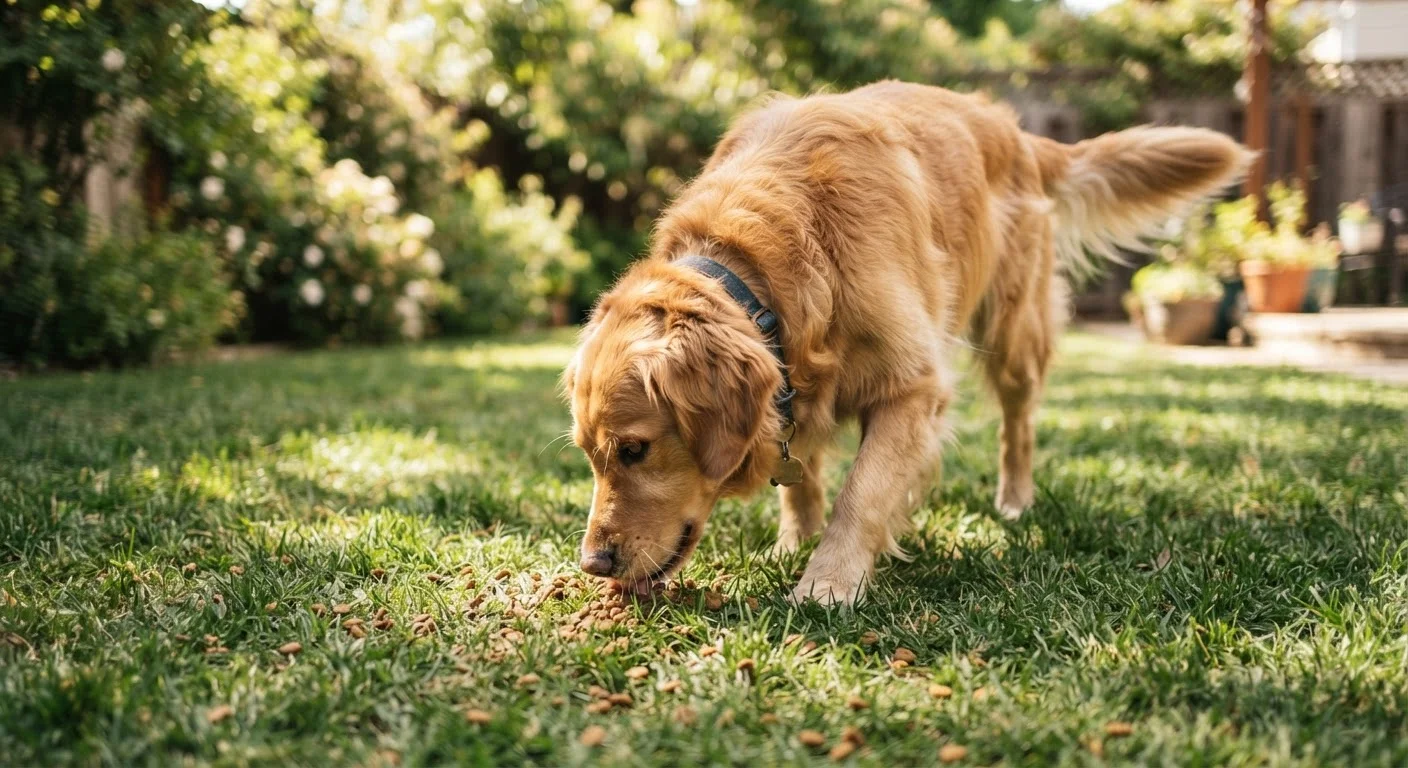
Instead of placing kibble in a bowl, toss it across a patch of grass or a snuffle mat made from a rubber mat and cut fleece strips. The dog has to use its nose to locate every piece - a foraging behavior that's deeply satisfying neurologically. It also teaches patience and independence, since the dog is self-rewarding through effort rather than demanding attention. Use this to reinforce a calm sit-and-wait before the scatter begins.
Scatter feeding turns every meal into a nose-work session that reinforces calm waiting behavior.
Muffin Tin Shell Game
Place a few pieces of kibble under some of the cups of an upside-down muffin tin, then cover all cups with tennis balls. The dog has to nose or paw off each ball to check for food. This builds problem-solving skills and impulse control - the dog learns that methodical searching pays off better than frantic pawing. Start with all cups baited and gradually reduce the number of rewards to increase difficulty.
A muffin tin and tennis balls teach impulse control through a foraging puzzle that costs nothing.
Towel Roll Sniff Game
Lay a bath towel flat, scatter kibble across it, then roll it loosely into a log shape. Hand it to your dog. The challenge is unrolling it carefully enough to get the food without losing pieces. It targets nose work, gentle mouth use, and sustained focus - all skills that transfer directly to impulse control in other contexts. A knotted version increases difficulty for dogs who unroll it quickly.
Rolling kibble into a towel creates a slow-feeding puzzle that sharpens focus and gentle handling.
Recall Races in the Backyard
Two people stand at opposite ends of a yard and take turns calling the dog by name and cue word - typically "come" - with enthusiasm and a small food reward on arrival. The dog sprints back and forth, reinforcing a rock-solid recall response in a high-energy, fun context. Because it feels like a game, the dog rehearses coming when called without any of the pressure that can build in formal sessions. Even solo owners can run this with a single long recall across a hallway.
Recall races make coming when called feel like the best game in the yard - no equipment needed.
Cardboard Box Foraging
Place several flattened or open cardboard boxes in a room, hide kibble or small pieces of the dog's regular food under or between them, then release the dog to search. This simulates a light nose-work task and introduces the concept of searching an area systematically - a skill used in formal nose-work sport at far higher levels. Dogs quickly learn that calm, focused searching beats running randomly. Rotate hiding spots each session to prevent shortcuts.
Cardboard box foraging introduces area-search skills using packaging you'd otherwise recycle.
Name and Eye-Contact Games
Sit on the floor with a small pile of kibble. Say your dog's name once. The instant they make eye contact, mark the moment with a short word like "yes" and deliver a piece of food. This is foundational attention training - the dog learns that their name predicts something good and that looking at you is always worth doing. It takes two to three minutes and is one of the highest-value behaviors you can build, since attention underlies nearly every other cue.
Teaching a dog their name means something reliably is foundational to every cue that follows.
Sniff Walks With Autonomy
On a standard leash walk, designate stretches where the dog leads the pace and chooses what to smell. Research into canine behavior consistently supports that olfactory exploration is cognitively tiring and stress-reducing. Beyond enrichment, this reinforces loose-leash walking during your-led portions because the dog has an established pattern: sometimes you direct, sometimes they do. Alternating control builds cooperation rather than constant pulling toward every interesting scent.
Giving dogs structured sniff time on walks reduces pulling and provides meaningful cognitive exercise.
Hide-and-Seek With Owners
Ask your dog to sit and stay, then hide somewhere in the house - behind a door, in a closet, around a corner. Call them once. When they find you, reward with enthusiastic praise and a treat from your pocket. This reinforces sit-stay duration, strengthens recall under mild distraction, and builds the dog's confidence searching independently. It also teaches the dog that losing visual contact with you doesn't predict anything alarming - a useful emotional baseline for dogs prone to mild separation anxiety.
Hide-and-seek reinforces stay and recall simultaneously while building a dog's calm independence.
Adjust Difficulty to Your Dog's Stage
Puppies, senior dogs, and dogs recovering from illness or injury may need simpler versions of these activities - fewer hiding spots, shorter sessions, or lower physical demands. Always observe your dog's body language: disengagement, stress signals, or frustration mean the task is too difficult or the session too long. Two minutes of successful engagement beats ten minutes of mounting frustration. When behavioral challenges go beyond what enrichment addresses, consulting a certified professional dog trainer or veterinary behaviorist is worthwhile.
Making It a Habit Without Burning Out
The goal isn't to run through all eight activities every day - it's to weave one or two into routines that already exist. Mealtime scatter feeding replaces pouring kibble in a bowl. A two-minute sniff walk happens at the start of the daily walk you're already taking. Recall practice fits naturally into the last few minutes before coming inside.
If you're weighing whether this kind of home-based work is enough, our comparison of home training versus group classes walks through what each approach covers well and where the gaps tend to appear. Enrichment activities fit best as a complement to structured learning, not a full replacement - especially for dogs working through reactivity, fear, or other complex behavioral patterns.
For a broader framework on how these pieces connect, the complete guide to pet behavior and training at home covers learning theory, common challenges, and how to sustain progress over time.