

Key Takeaways
Start here
Why Central America Works for Budget Travelers
Next
Country-by-Country Cost and Experience Breakdown
Then
Infrastructure, Safety, and Practical Logistics
When you're ready
How to Structure a Region-Wide Trip
Before you go
Before You Book: Key Considerations
Why Central America Works for Budget Travelers
Central America compresses extraordinary geographic variety - volcanoes, Caribbean coastline, Maya ruins, cloud forest - into a region you can cross by land in days. For budget travelers, that density matters: you can shift from highland markets to coastal villages without expensive flights between experiences.
Daily costs in much of the region remain among the lowest in the Western Hemisphere. A hostel dorm, three local meals, and intercity bus transport can cost less than $25-35 in Guatemala or Nicaragua on a careful budget. That's a fundamentally different economic reality than you'd find in Western Europe or much of Southeast Asia's more-developed tourist circuits. If you're comparing region-wide affordability across Latin America, the South American budget destination breakdown offers useful contrast.
CA-4 Agreement
A regional agreement allowing travelers to move between Guatemala, Honduras, El Salvador, and Nicaragua on a single 90-day entry stamp, without obtaining a separate visa for each country.
Chicken bus
A repurposed US school bus used for local public transit across Central America. It's the cheapest way to travel between towns, though journeys are slow and crowded.
Tourist shuttle
A private minibus service connecting major tourist hubs, sold through hostels and agencies. Faster and more comfortable than chicken buses, but costs significantly more.
Dry season
Roughly November through April in Central America, when rainfall is minimal and travel conditions are generally easier - but prices and crowds tend to be higher.
Travel medicine consultation
A pre-trip appointment with a healthcare provider specializing in travel health, used to assess which vaccinations and preventive medications are recommended for your specific destinations.
Medical evacuation insurance
A type of travel insurance that covers the cost of emergency transport to adequate medical facilities, which can be extremely expensive without coverage in remote or underserved areas.
Country-by-Country Cost and Experience Breakdown
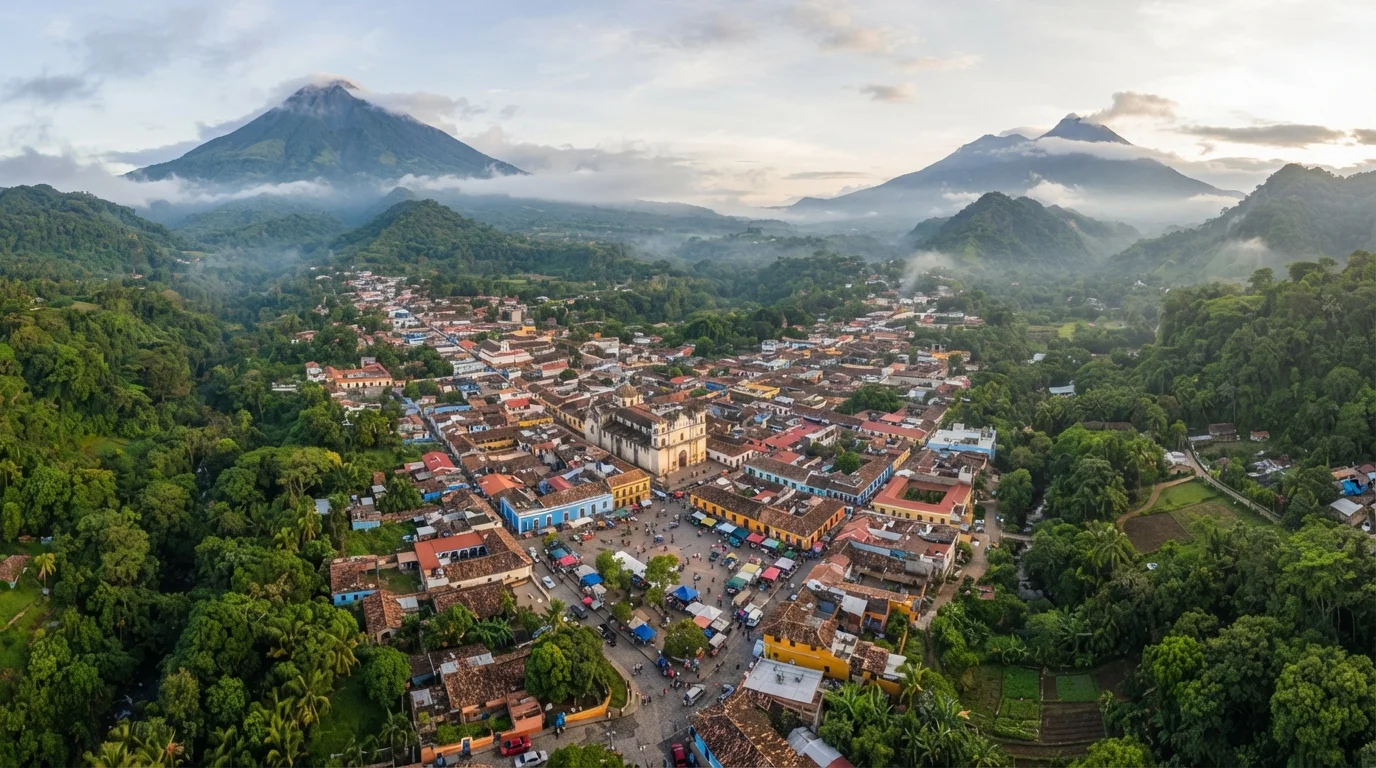
Guatemala anchors most budget itineraries. Antigua is polished and tourist-friendly; Lake Atitlán offers stunning scenery with a range of price points across its lakeside villages. The Western Highlands provide authentic market culture at low cost. Spanish schools are plentiful and inexpensive. The trade-off: tourist infrastructure in some areas raises prices for popular activities.
Nicaragua is arguably the region's deepest budget option. Granada and León are architecturally rich colonial cities where guesthouses and local restaurants remain genuinely cheap. Volcano boarding, island-hopping on Ometepe, and Pacific surf towns all remain accessible at low cost. Infrastructure is less developed than Guatemala, which means more patience required.
Honduras is undervisited relative to its assets. The Bay Islands - particularly Utila - are among the world's most affordable dive certification locations. Copán Ruinas hosts one of Mesoamerica's most significant Maya sites. Safety concerns in certain urban areas, especially Tegucigalpa and San Pedro Sula, mean most travelers stick to specific tourist corridors. Route planning matters here more than anywhere else in the region.
Belize sits in a different cost bracket. It's English-speaking, USD-denominated, and culturally tied to the Caribbean rather than Latin America. The barrier reef, cave systems, and jungle lodges are exceptional - but daily costs can run 2-3 times what you'd spend in Guatemala. Belize rewards travelers with a targeted, focused itinerary rather than extended stays on a tight budget.
Infrastructure, Safety, and Practical Logistics
Transport ranges from cheap and slow (local chicken buses) to faster and pricier (tourist shuttles). Chicken buses - repurposed US school buses - cover most of Guatemala and Honduras for very little money but require time and local knowledge. Tourist shuttles cost more but connect key hubs door-to-door with less hassle.
The CA-4 agreement gives US passport holders 90 combined days across Guatemala, Honduras, El Salvador, and Nicaragua without a separate visa for each. Belize operates independently of this agreement. Entry requirements can change; verify current rules through official government sources before booking anything.
Carry Small Bills at Border Crossings
Border fees, unofficial facilitation requests, and small purchases at crossing points almost always require exact local currency or small-denomination USD. Large bills frequently can't be changed at the crossing itself. Prepare a small cash envelope for each border before you arrive.
Safety conditions vary meaningfully. Honduras warrants the most caution - US State Department advisories should be consulted and updated before travel. Guatemala and Nicaragua have well-worn tourist routes that see significant foot traffic from independent travelers. Rural areas across all countries involve more uncertainty. Travel insurance that covers medical evacuation is worth serious consideration for this region.
How to Structure a Region-Wide Trip
Most travelers enter through Guatemala City or Cancún (crossing overland into Guatemala) and work south through the isthmus, or fly into Belize City and travel from there. A north-to-south overland route - Guatemala → Honduras → Nicaragua - is a classic budget path that minimizes backtracking.
Build flexibility into your timeline. Border crossings between Guatemala and Honduras, or Nicaragua and Costa Rica, can take anywhere from one hour to most of a day depending on traffic, staffing, and which crossing you use. Budget travelers who treat these transitions as fixed and scheduled frequently encounter problems.
Three to four weeks gives you enough time to do two or three countries meaningfully without rushing. Trying to cover all five or six countries in two weeks produces a highlights reel with little depth and more transport cost. For help thinking through the logistics before committing, the practical starting point for budget trip planning covers how to build a realistic itinerary from scratch.
Before You Book: Key Considerations
Health precautions for Central America may include vaccines for hepatitis A, typhoid, and in some areas, malaria prophylaxis - requirements and recommendations differ by country and region within each country. Consult a travel medicine specialist or your healthcare provider well before departure, not the week before you leave.
Water safety varies. Tap water is not reliably safe to drink in most of Central America; budget for bottled or filtered water and factor that into daily cost estimates. Food safety at street stalls and markets is generally fine in high-traffic tourist areas but warrants more caution in smaller towns.
The pre-trip planning checklist is worth running through before any booking is finalized - it covers visas, health advisories, local currency, and total cost estimation in a systematic way. For flight and accommodation strategy specific to the region, the Flights & Lodging hub provides applicable guidance on timing and booking approach.
Travel conditions, entry requirements, safety advisories, and prices change. Verify all entry, health, and safety information through official government and embassy sources before making any travel commitments. This article is for general orientation purposes only.