

Key Takeaways
Refundable vs. Non-Refundable Airfare
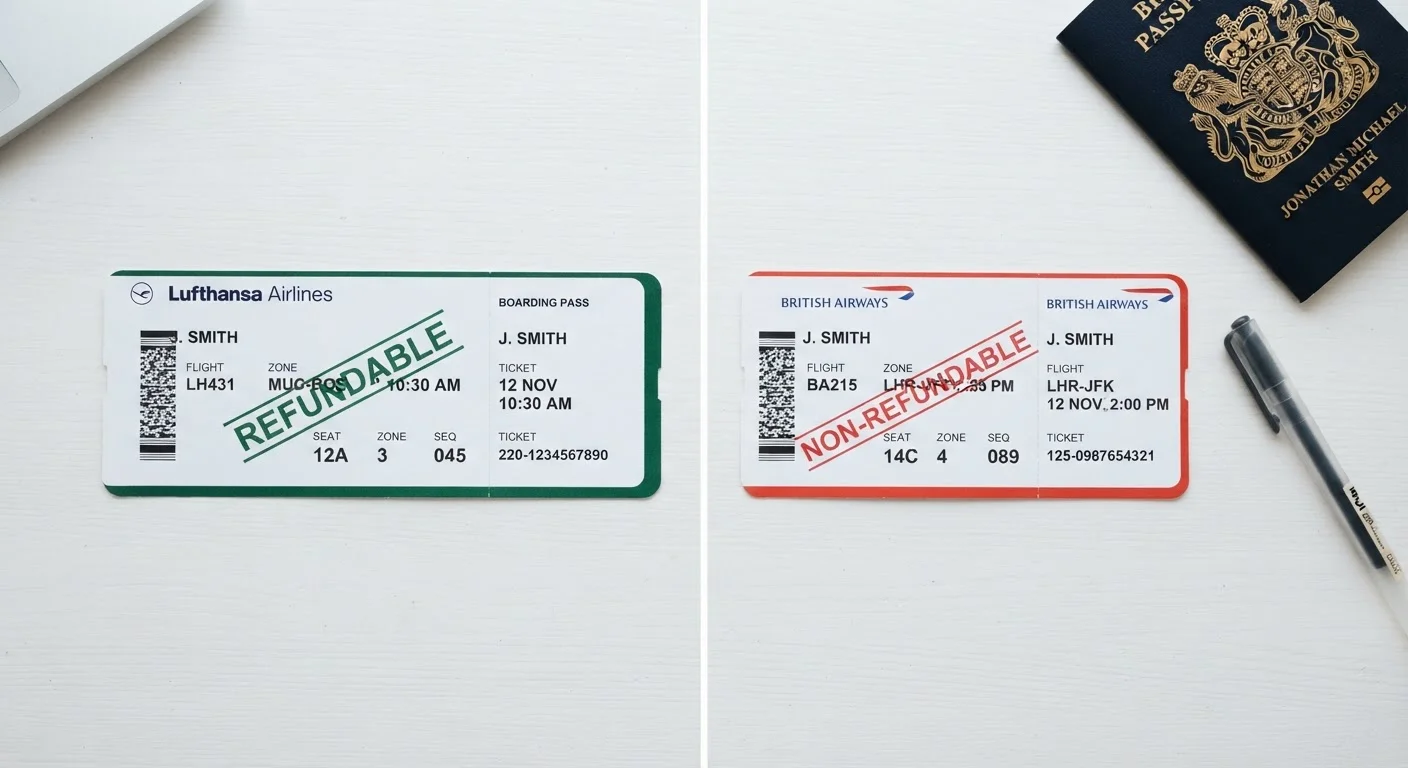
A refundable airfare ticket allows you to cancel your flight and receive your money back - usually to your original payment method - under the conditions stated in the fare rules. A non-refundable ticket does not return cash when cancelled; instead, you may receive a travel credit, or nothing at all, depending on the airline and fare class. The price difference between these two ticket types can be significant, often hundreds of dollars on the same route.
Fare rules are governed by each airline's contract of carriage and the specific fare basis code attached to your ticket. These rules - not the price - determine what happens when plans change.
The Core Difference: Cash Back vs. Credit vs. Nothing
When you buy an airline ticket, you're not just purchasing a seat - you're agreeing to a specific set of rules about what happens if your plans change. Those rules are what the refundable vs. non-refundable label actually refers to.
A refundable ticket means the airline will return the fare amount to your original payment method if you cancel within the terms of the fare rules. These tickets cost more - sometimes substantially more - because you're paying for that flexibility as a built-in feature.
A non-refundable ticket means the airline keeps the fare if you cancel. In many cases, however, airlines will issue a travel credit - value you can apply toward a future booking - rather than leaving you with nothing. Whether you receive a credit, and how much, depends entirely on the airline's policy and your fare class. Some of the lowest-tier fares (often called basic economy) may offer neither a refund nor a credit upon cancellation.
Understanding fare classes and booking terminology before you purchase is the first step to knowing which category your ticket falls into.
24 hrs
Mandatory refund window after booking
U.S. Department of Transportation rules require airlines to allow penalty-free cancellation within 24 hours of purchase for flights booked at least 7 days before departure.
$200-$600+
Typical premium for refundable over non-refundable fare
The price gap varies widely by route and carrier; domestic routes often show smaller premiums, while international itineraries can see much larger differences.
12 months
Common expiration window for airline travel credits
Many U.S. carriers issue credits valid for approximately one year from the original booking date, though policies vary by airline and have changed periodically.
The 24-Hour Rule and Airline Cancellation Protections
One protection that applies regardless of ticket type is the U.S. Department of Transportation's 24-hour cancellation rule. If you book a ticket at least seven days before departure and cancel within 24 hours of purchase, the airline must offer a full refund - no questions asked, no fee deducted. This window is genuinely useful for budget travelers: it lets you lock in a price without full commitment while you confirm logistics.
Beyond the 24-hour window, a second important scenario applies: if the airline cancels or significantly changes your flight, you are entitled to a full refund even on a non-refundable fare. Many travelers accept automatic rebooking or credits without realizing cash refunds are available in these situations. Always ask explicitly for the refund option.
Travel Credits Are Not Refunds
A travel credit is airline-issued value restricted to future bookings with that carrier. It cannot typically be transferred, cashed out, or used on a partner airline. Credits also come with expiration dates - often 12 months from the original booking - so they carry their own risk for travelers whose schedules are uncertain. When evaluating a non-refundable fare, factor in whether you'd realistically use a credit before it expires.
Change Fees, Basic Economy, and What's Actually Changed
A major shift occurred in the U.S. airline industry starting around 2020: most large carriers eliminated change fees for standard domestic economy, premium economy, and higher cabin fares. This narrowed one of the practical advantages of paying for refundable tickets - if you can change a non-refundable ticket without a penalty and only pay any fare difference, the cost of flexibility drops significantly.
The catch is basic economy. These fares - the cheapest on most carriers - typically still prohibit changes or carry change fees. They may also restrict seat selection, carry-on baggage, and boarding priority. The hidden costs embedded in low base fares can erode any initial savings if your plans shift even slightly.
Always read the fare rules - not just the price - before confirming a basic economy purchase. The fare rules link is typically available on the booking confirmation screen before payment.
When Paying for Flexibility Actually Makes Sense
For budget travelers, refundable fares are rarely the right choice - the premium can be $200 to $600 or more on domestic routes, an amount that makes little sense if your trip has a 90% chance of happening as planned.
There are situations, though, where the math changes. If you're booking an expensive international itinerary months in advance and your travel window is uncertain, the refundable premium may be smaller relative to the total ticket price. Similarly, travelers with medical situations or unstable work schedules might find refundable fares genuinely useful rather than simply expensive.
For most budget travelers, a more practical route is combining a standard non-refundable fare with a travel insurance policy that includes trip cancellation coverage. This separates the cost of protection from the ticket itself and often provides broader coverage - including for reasons an airline credit wouldn't address, such as illness or a family emergency.
Fare timing also plays a role in total cost. Understanding why airfare prices fluctuate helps you weigh whether locking in a non-refundable fare early - or waiting - makes more sense for your specific route. And small adjustments in timing, explored in our piece on how shifting departure dates affects fares, can sometimes reduce the price gap enough that a refundable fare becomes comparatively reasonable.