

Key Takeaways
Dynamic Airfare Pricing
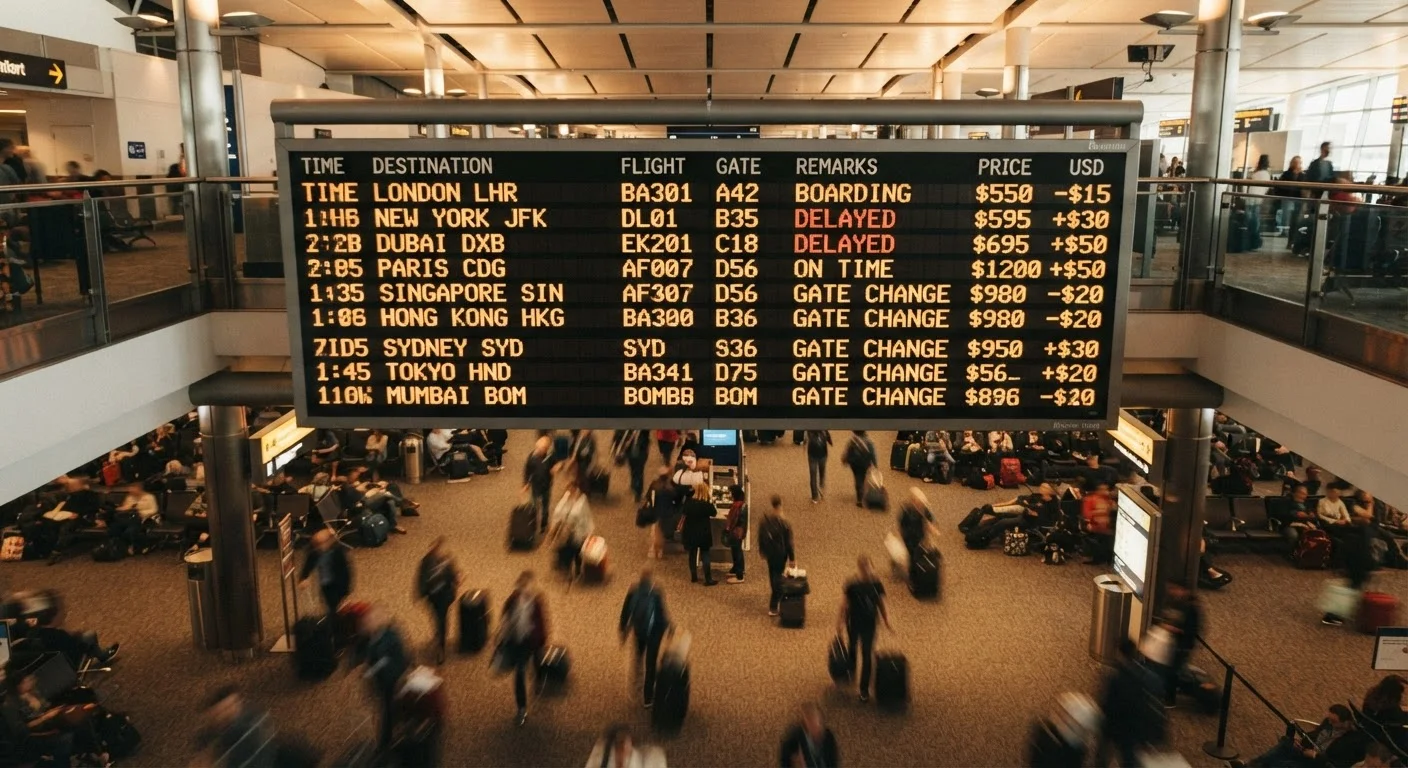
Dynamic airfare pricing is the practice airlines use to continuously adjust ticket prices based on real-time supply and demand, rather than publishing fixed fares. The same seat on the same flight can cost dramatically different amounts depending on when you search, how many seats remain, and who else is competing for them. This is why fares can change multiple times in a single day.
Airlines use automated Revenue Management Systems (RMS) that sort seats into fare 'buckets,' each with its own price and availability rules. When lower buckets sell out, the system opens higher-priced buckets - a process invisible to the passenger.
The Engine Behind Every Price You See
When a fare quote changes between your morning search and your evening checkout, it rarely means the airline is targeting you. It means an automated system has recalculated based on new information - who bought seats since your last look, what a competing airline just did, or how close the departure date has gotten.
Airlines divide every flight's cabin into fare buckets: discrete inventory categories each carrying a different price, a limited seat count, and its own rules for changes or cancellations. The cheapest bucket might contain only two or three seats. Once those sell, the next bucket opens - at a higher price. This stepped structure is why fares often jump in chunks rather than drifting upward smoothly.
Revenue Management Systems (RMS) govern this process automatically. They weigh historical booking patterns for that route, current search volume, competitor pricing, days remaining to departure, and seasonal demand curves. The result is a price that can shift multiple times per day without any human touching it.
20-30%
Jet fuel share of airline operating costs
According to data reported by the International Air Transport Association (IATA), fuel costs represent a significant and variable portion of what airlines spend to operate flights.
~500
Fare changes per route per day (estimated)
Industry analyses of airline pricing systems have documented that fares on competitive domestic routes can update hundreds of times daily as inventory and demand signals shift.
1-3 months
Common advance-purchase window for domestic U.S. fares
Multiple fare-tracking studies have suggested this window often captures competitive pricing on domestic routes, though outcomes vary significantly by route and season.
The Four Factors That Move Fares Most
1. Route competition. The number of airlines flying a given city pair is the single most reliable predictor of base fare levels. A nonstop between two major hubs served by three carriers will generally price lower than a thin regional route where one airline holds near-monopoly status. This is why flying into a secondary airport sometimes costs significantly more, despite shorter distances.
2. Remaining seat inventory. As seats in lower fare buckets sell out - especially in the final weeks before departure - the price displayed to new buyers reflects only what's left in higher-priced buckets. A flight that looks expensive two weeks out may simply have exhausted its cheaper inventory months ago.
3. Fuel costs and operating expenses. Jet fuel typically represents 20-30% of airline operating costs, according to figures reported by the International Air Transport Association. When fuel prices spike, airlines often adjust base fares or add fuel surcharges, particularly on international long-haul routes. Taxes, airport fees, and government-mandated charges form a pricing floor that applies regardless of demand.
4. Seasonal and event-driven demand. Peak travel periods - major holidays, school breaks, large regional events - compress available inventory quickly and push pricing systems into higher buckets faster than off-peak periods. The same route can carry vastly different prices in July versus February.
For a practical look at how these forces interact with timing, see the anatomy of a cheap flight.
Search Across Multiple Departure Dates
If your travel window has any flexibility, use a calendar or flexible-date view when searching fares. Even shifting departure by one or two days can place you in a lower-demand period where cheaper fare buckets are still available. This approach costs nothing and often reveals meaningful price differences without requiring you to monitor fares obsessively.
What Budget Travelers Can Actually Do With This Knowledge
Understanding pricing mechanics doesn't mean you can outsmart the system - airlines have more data than any individual traveler. But it does help you make calmer, more deliberate decisions instead of reacting to every fare fluctuation.
Interpret price changes accurately. A fare increase usually means lower buckets sold out, not that you missed a special deal. A fare drop often signals that demand softened or a competitor cut prices - not that waiting always pays off.
Focus on route competition first. Before obsessing over timing, check whether your route has multiple carriers competing. On thin routes, no amount of timing optimization overcomes a structural lack of competition.
Account for the full cost. The displayed fare is only part of what you'll pay. Baggage fees, seat selection charges, and change penalties can significantly alter the true cost comparison between tickets. Hidden fees deserve as much attention as the base fare itself.
Use flexible-date tools strategically. If your schedule has any give, searching across a range of dates lets you see where demand is lower - and where cheaper fare buckets may still be open. For structured approaches to this, see strategies for finding lower fares without spending hours monitoring prices.
Finally, consider what flexibility in your ticket type is worth. Refundable versus non-refundable fares come with meaningfully different protections - understanding those rules before booking can prevent costly surprises later.