

Key Takeaways
Why Your Car's Sounds Matter
A car in good working order runs with a familiar rhythm. When something changes - a new squeal, a rattle on rough roads, a knock at idle - your vehicle is communicating. The challenge is knowing which sounds warrant a same-day call to a mechanic and which are lower priority.
Noise diagnosis requires context: where the sound originates, when it occurs (braking, turning, accelerating, idling), and how it sounds (high-pitched, metallic, rhythmic). If you're new to reading vehicle symptoms systematically, our practical troubleshooting primer lays useful groundwork. The list below covers the most common car noises drivers encounter and what they typically indicate.
Grinding When You Brake
A grinding or metal-on-metal scraping sound during braking almost always means your brake pads have worn through their friction material and the metal backing plate is now contacting the rotor. This is one noise you should not delay acting on - continued driving accelerates rotor damage significantly, turning a pad replacement into a costlier rotor replacement as well.
In some cases, a grinding noise after a vehicle has sat overnight can simply be surface rust on the rotors, which typically clears after a few stops. If the grinding persists beyond that, have the brakes inspected promptly. Uneven wear patterns can complicate the diagnosis; see our guide to uneven brake pad wear for more detail.
Metal-on-metal brake grinding means pads are gone - every mile driven risks rotor damage.
Clicking or Popping During Turns
A clicking or popping sound that appears specifically when turning - especially at low speeds - is a classic symptom of a worn CV (constant velocity) joint. CV joints are part of the drivetrain on front-wheel-drive and all-wheel-drive vehicles, and they're protected by rubber boots. When a boot cracks and loses its grease, the joint wears rapidly.
The clicking tends to become louder as the joint degrades. Catching it early - while the boot is cracked but the joint is still functional - can sometimes mean a less expensive boot replacement rather than a full axle shaft replacement.
A clicking turn is a classic CV joint warning - catching it early often means a cheaper repair.
Knocking From the Engine
A rhythmic knocking sound from the engine - often described as a low-pitched "rod knock" - typically indicates worn engine bearings or issues with lubrication. This is a serious symptom. Engine bearings support the crankshaft and connecting rods; when oil pressure drops or oil is severely degraded, these bearings wear and the resulting metal play creates the knocking sound.
Check your oil level and condition immediately. Low or dirty oil is a common contributor. If the knock persists after an oil top-up, or if the oil level is fine, don't delay - continued operation risks significant internal engine damage. A "pinging" or "detonation" knock under acceleration can also indicate the engine is running on fuel that's too low in octane for its requirements.
Engine knocking tied to lubrication is serious - check oil immediately and seek diagnosis.
Squealing Under the Hood at Startup
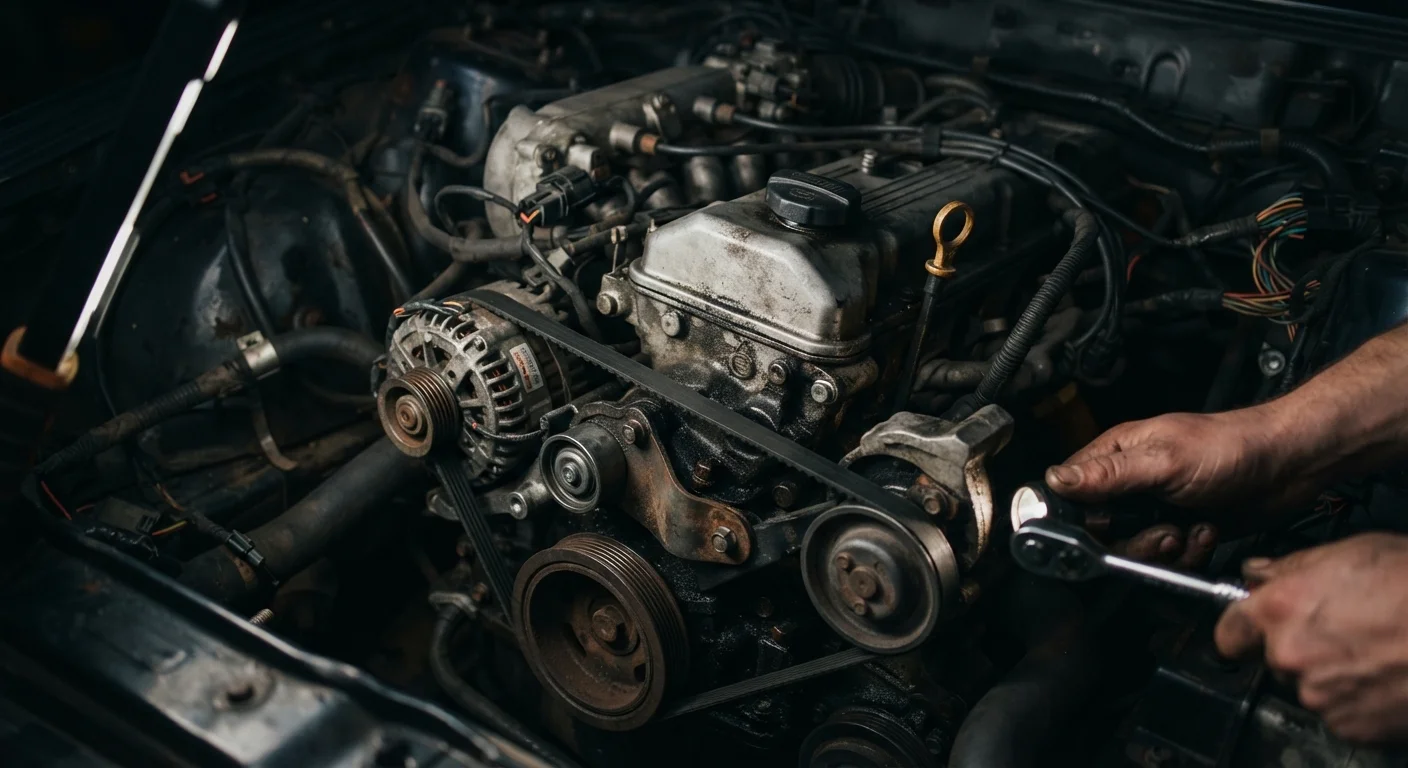
A high-pitched squeal that appears when you start the car and fades after a few moments often points to a slipping or glazed serpentine belt. The serpentine belt (also called a drive belt) runs the alternator, power steering pump, air conditioning compressor, and other accessories. When it's worn, cracked, or misaligned, it can slip on the pulleys and produce a distinctive squeal.
Belt squealing in cold or damp weather can be more pronounced, but if it's consistent or worsening, inspection is warranted. A serpentine belt failure can leave you without charging power or cause the engine to overheat - neither outcome is minor. Belts are among the overlooked maintenance items that drivers defer until failure.
A persistent startup squeal often means a worn serpentine belt - don't wait for it to snap.
Rattling From Underneath the Car
A loose rattle from beneath the vehicle - especially noticeable over bumps or at low speeds - commonly comes from the exhaust system. Heat shields (thin metal plates protecting surrounding components from exhaust heat) can corrode and loosen over time. A loose catalytic converter heat shield is a very frequent culprit and produces a tinny rattle.
Other under-car rattles can originate from loose exhaust hangers, a deteriorating catalytic converter (an internal rattle at startup), or suspension components. While a loose heat shield is often a minor fix, a rattling catalytic converter deserves attention - it can affect emissions performance and, in some cases, restrict exhaust flow enough to impact engine efficiency.
An under-car rattle is often a loose heat shield - minor, but don't assume without checking.
Humming That Changes With Speed
A droning or humming noise that varies directly with vehicle speed - getting louder as you accelerate and quieter as you slow down - is a strong indicator of a failing wheel bearing. Wheel bearings allow the wheels to rotate smoothly; when the internal bearing races wear, they produce a characteristic growl or hum.
You can sometimes isolate which side is affected by gently weaving at highway speeds: if the sound shifts when you veer slightly left or right, it may help identify the loaded bearing. However, proper diagnosis requires a mechanic. A failed wheel bearing can eventually lead to dangerous handling instability, so this noise shouldn't be monitored indefinitely. Speed-related vibration alongside the hum may also be present; our guide to highway-speed shaking addresses related symptoms.
A hum that tracks your speed is a textbook wheel bearing symptom - have it checked promptly.
When to Act and When to Watch
Not all noises demand an emergency stop, but none deserve permanent dismissal. As a general rule: noises related to braking, steering, or engine lubrication should be treated as urgent. Rattles and squeaks tied to exhaust or heat shields are usually less critical but still worth addressing before they escalate.
Describe the Noise Before You Call
When you contact a shop, be ready to describe the noise in specific terms: what it sounds like (grinding, clicking, humming), where it seems to come from (front left, under the hood, beneath the car), and exactly when it happens (only when braking, only during turns, constantly at idle). This information helps a mechanic narrow down the diagnosis before they even lift the hood, saving time and potentially reducing diagnostic fees.
Before your shop visit, note whether any dashboard warning lights are on. Our guide to warning lights can help you connect a light to the noise and give your mechanic a fuller picture. And if ignored maintenance is behind the sounds you're hearing, overlooked maintenance items covers the small parts that quietly compound into big repair bills.