

Key Takeaways
The Small Parts That Silently Drain Your Budget
Most drivers know to change their oil and rotate their tires. What catches people off guard are the maintenance items that sit quietly in the background - inexpensive to service, but devastatingly costly when ignored. These aren't obscure components; they're parts your vehicle depends on every day. They just don't announce themselves until something goes wrong.
If you're working with a tight budget, the math here is straightforward: a few dollars spent proactively almost always beats hundreds - or thousands - spent reactively. The service intervals in your owner's manual exist precisely to help you stay ahead of these failure points. Below are the items that most commonly slip through the cracks.
Spark Plugs
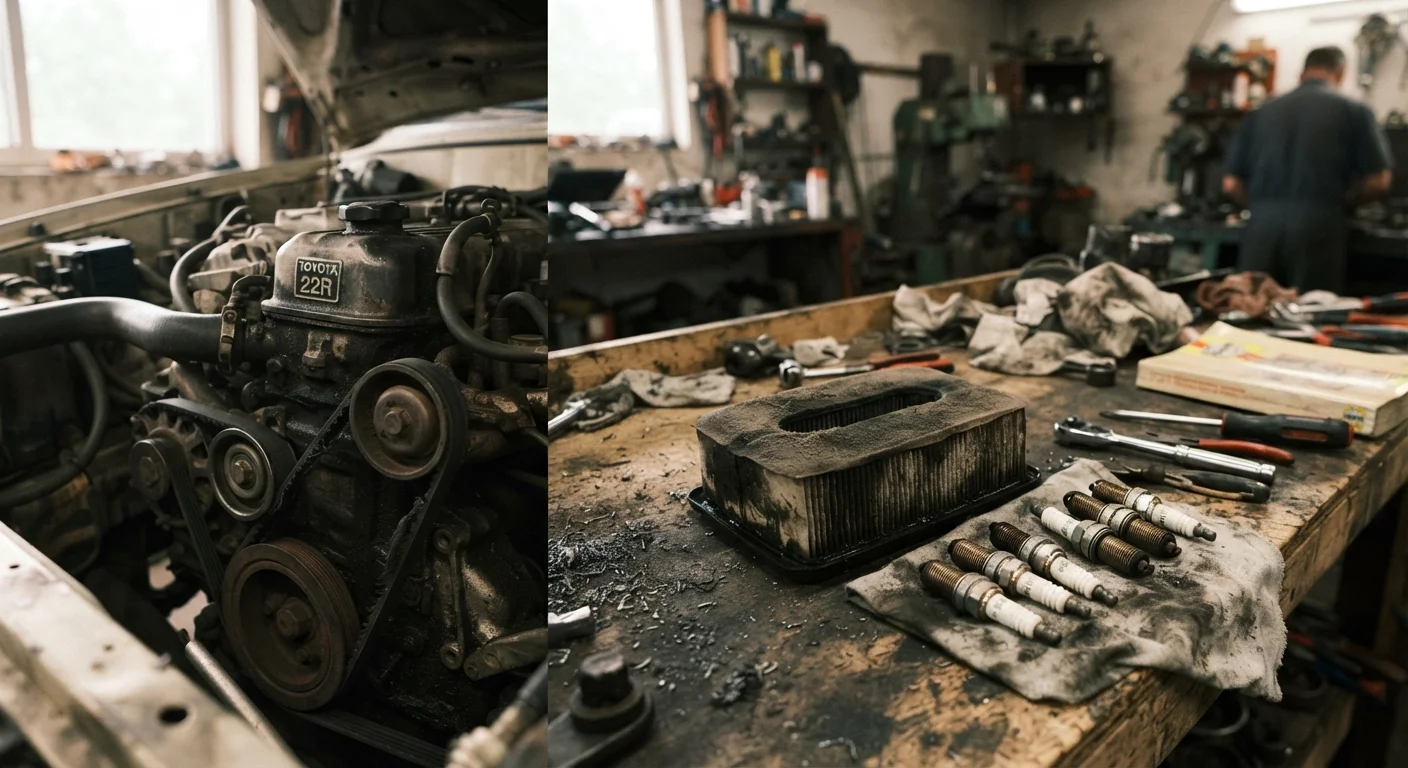
Spark plugs ignite the air-fuel mixture in your engine's cylinders. When they wear out - typically between 30,000 and 100,000 miles depending on plug type - combustion becomes inconsistent. You may notice rough idling, sluggish acceleration, or a drop in fuel economy before any warning light appears.
The real cost of ignoring them isn't the plugs themselves; it's the misfires that can damage your catalytic converter, a repair that can run into the hundreds of dollars. A set of spark plugs is generally an accessible DIY job on most engines. For fuel economy context, the maintenance items that affect MPG most includes spark plug intervals prominently.
Worn spark plugs can damage your catalytic converter - a far more expensive fix.
Serpentine Belt
The serpentine belt drives your alternator, power steering pump, air conditioning compressor, and - in many engines - the water pump. It's a single continuous belt that keeps multiple critical systems running simultaneously.
Belts degrade gradually through cracking, fraying, and glazing. Most manufacturers recommend inspection around 60,000 miles and replacement before 100,000 miles, though heat and age accelerate wear. When a serpentine belt snaps unexpectedly, your engine can overheat within minutes and leave you stranded. Replacement is relatively low-cost compared to the towing fees and potential engine damage that follow a sudden failure.
A snapped serpentine belt can overheat your engine within minutes of failure.
PCV Valve
The PCV valve routes combustion gases from the crankcase back into the intake manifold for reburning rather than releasing them into the atmosphere. When it sticks or clogs, pressure builds inside the engine, forcing oil past gaskets and seals.
The result: oil leaks, sludge buildup, and accelerated engine wear - all from a part that typically costs just a few dollars. Many PCV valves can be checked and swapped without tools. This is one of the most cost-effective maintenance items a driver can address, yet it rarely appears on quick-service checklists.
A clogged PCV valve costs a few dollars to fix but can cause oil leaks and engine sludge.
Coolant System Hoses
Radiator and heater hoses carry coolant between your engine and radiator. Over time, rubber hoses become hard, brittle, or soft and spongy - all signs of imminent failure. A burst coolant hose causes rapid overheating and can result in a warped cylinder head, one of the more expensive engine repairs possible.
Hoses should be visually inspected at every oil change. Squeeze them gently when the engine is cold - a healthy hose has firm, consistent resistance. If you notice bulging near clamp ends, cracks, or any visible seepage, replacement is urgent. This check takes under two minutes and costs nothing. If your car exhibits unusual temperature behavior, the car troubleshooting hub can help you interpret what you're seeing.
A burst coolant hose can warp a cylinder head - one of the costliest engine repairs.
Brake Fluid
Brake fluid is hygroscopic, meaning it absorbs moisture from the air over time. As water content increases, the fluid's boiling point drops - a problem that becomes dangerous during hard or repeated braking, when fluid can vaporize and cause a sudden loss of pedal pressure.
Most manufacturers recommend flushing brake fluid every two years or around 30,000 miles, but many drivers skip this entirely. Testing strips that check moisture content are widely available and inexpensive. Because brake performance is directly tied to safety, this is one item worth prioritizing even on a tight budget - and one where skipping professional help is not advisable if you're unfamiliar with bleeding brake lines.
Moisture-saturated brake fluid can vaporize under hard braking, reducing pedal response.
Cabin and Engine Air Filters
These two filters serve different purposes but both degrade quietly. The engine air filter prevents dirt and debris from entering the intake - a clogged one forces the engine to work harder, reducing power and efficiency. The cabin air filter keeps dust, pollen, and pollutants out of the passenger compartment and protects your HVAC blower motor.
Engine air filters can often be replaced at home in under ten minutes. The step-by-step engine air filter walkthrough covers the process without requiring special tools. Replacing both filters on schedule - typically every 15,000 to 25,000 miles depending on driving conditions - costs a fraction of what a stressed blower motor or reduced fuel economy will cost over time.
Replacing both air filters on schedule costs far less than a stressed blower motor or lost MPG.
Staying Ahead Without Overextending Yourself
None of the items on this list require advanced mechanical skill to inspect, and several can be replaced at home in under 30 minutes. The challenge isn't complexity - it's awareness. Once you know what to look for, a monthly visual check of these components becomes second nature.
Build Maintenance Into Your Monthly Budget
Vehicle upkeep is a predictable expense that often blindsides drivers because it's irregular. Setting aside a small fixed amount each month - even $20 to $30 - creates a buffer for scheduled maintenance before it becomes an emergency. The spending categories most households forget to budget for includes vehicle maintenance as a commonly overlooked line item.
If you're unsure which tasks are within your skill set, the guide to DIY maintenance limits is a useful starting point. And if your vehicle is past the 100,000-mile mark, these checks become even more critical - the high-mileage maintenance guide covers what changes at that threshold. Catching problems before they compound is the single most effective thing a budget-conscious driver can do.
This article is for general informational purposes only. Always consult your vehicle's owner's manual and, when in doubt, a qualified mechanic before performing or deferring any vehicle maintenance.