

Key Takeaways
Transmission Slipping
Transmission slipping occurs when your vehicle's transmission unexpectedly shifts out of a gear, fails to stay in the intended gear, or loses the power connection between the engine and the wheels. The driver typically feels this as a brief loss of acceleration, a sudden engine rev without a corresponding increase in speed, or an unexpected gear change mid-drive. It is a mechanical symptom - not a single fault - that can stem from several underlying causes.
In automatic transmissions, slipping often involves inadequate hydraulic pressure failing to fully engage clutch packs or bands; in manual transmissions, worn clutch friction material is the more common culprit.
What Transmission Slipping Actually Feels Like
Most drivers first encounter transmission slipping not through a warning light, but through an unsettling sensation. The engine revs climb - you can hear and feel it - but the car doesn't accelerate in proportion. It's as if the engine briefly disconnects from the drivetrain, spins freely, then catches back up.
Other common sensations include:
- Delayed engagement: A pause after shifting from Park to Drive or Reverse before the car begins moving.
- Unexpected gear changes: The transmission shifts up or down at an unusual moment, often with a slight lurch or shudder.
- Loss of pull under load: Trying to accelerate uphill or while merging onto a highway produces a weak, disconnected response instead of firm thrust.
- Gear hunting: The transmission cycles back and forth between gears without settling, especially at steady highway speeds.
These symptoms may be subtle at first - easy to write off as a quirk or a fluke. That tendency to dismiss early signs is worth resisting. As noted in our guide on intermittent car problems, symptoms that come and go are often more serious than they initially appear.
Check Your Transmission Fluid First
Before assuming the worst, check your transmission fluid level and condition. On vehicles with a dipstick, healthy fluid should be a clear reddish color and smell slightly sweet. Dark, burnt-smelling fluid is a sign it needs changing. Consult your owner's manual for the correct checking procedure, as some modern vehicles require a dealer or shop to check fluid via a different method.
The Mechanical Reasons Behind the Slip
Transmission slipping isn't a single problem - it's a symptom that several mechanical failures can produce. Understanding the main causes helps you have a more informed conversation with a mechanic.
Low or Degraded Transmission Fluid
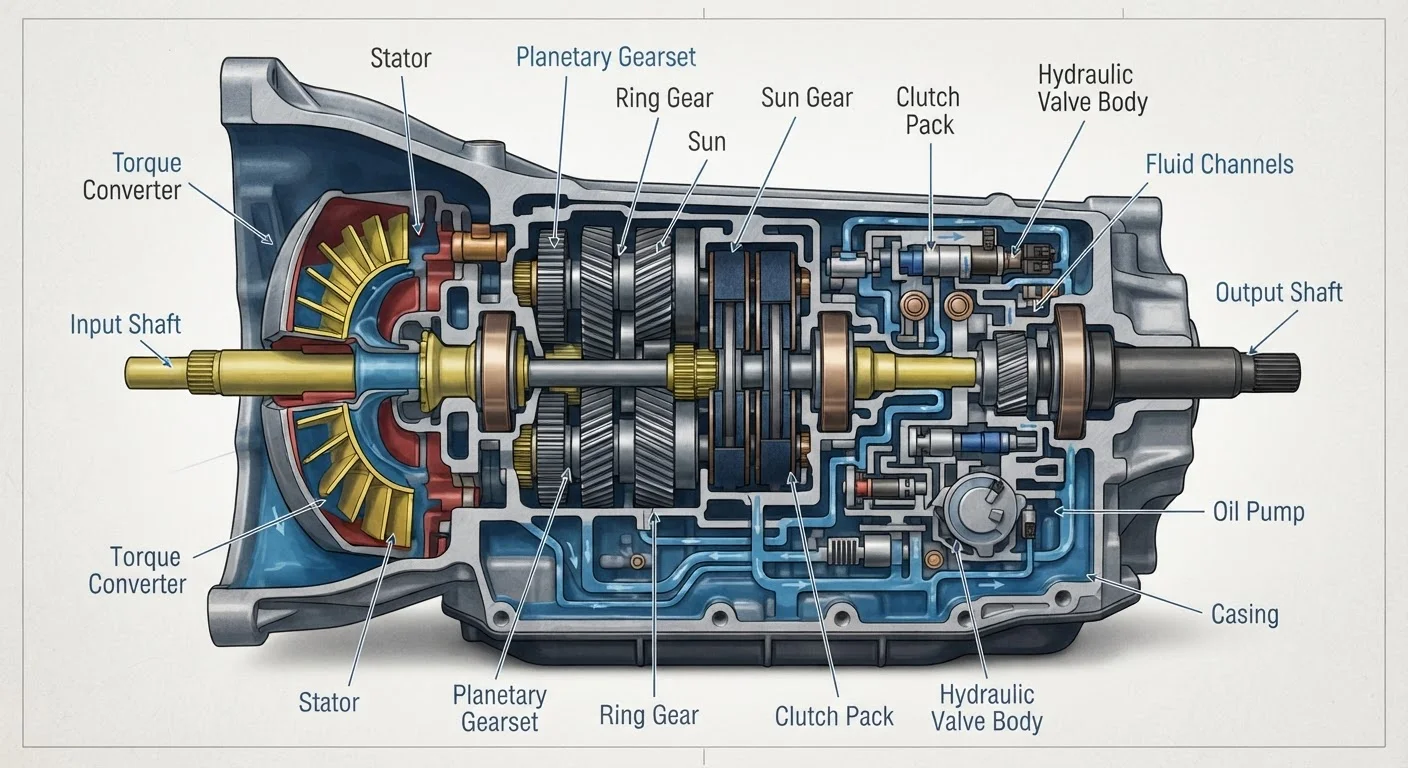
Automatic transmissions use fluid under pressure to engage clutch packs and bands - the internal components that lock gears into place. When fluid is low due to a leak, or when it has broken down from age and heat, hydraulic pressure drops and those components can't engage completely. The result is a partial, slipping connection rather than a solid one.
Worn Clutch Packs or Bands
Inside an automatic transmission, clutch packs are sets of friction discs that clamp together to hold a gear. Bands serve a similar clamping function. Both wear down over time. Once friction material wears thin, they can no longer maintain a firm grip, even with adequate fluid pressure.
Faulty Transmission Solenoids
Solenoids are electrically controlled valves that regulate fluid flow inside the transmission. A failed solenoid can send fluid to the wrong place - or fail to send it at all - causing erratic shifting or slipping without any mechanical wear being involved.
Torque Converter Problems
The torque converter transfers engine power to the transmission in vehicles with automatic gearboxes. A worn torque converter clutch can cause a shudder or slip, especially at highway speeds when it should be locked up.
Manual Transmission: Clutch Wear
In manual transmissions, slipping almost always points to a worn clutch disc. The friction material that grips the flywheel thins over time, allowing the clutch to slip rather than fully engage when the pedal is released.
~$1,800-$3,500
Typical automatic transmission rebuild cost range
Repair cost estimates from automotive service industry sources reflect wide variation based on vehicle make, model, and extent of internal damage.
30,000-60,000 miles
Typical clutch lifespan in a manual transmission
Clutch longevity varies considerably with driving habits; aggressive city driving and frequent towing can shorten service life significantly.
Why Prompt Attention Matters
Transmission problems have a compounding quality: small issues that go unaddressed tend to accelerate wear on surrounding components. A leak that started as a slow drip can lead to fluid starvation; clutch material that starts slipping generates heat, which degrades fluid faster and stresses other internal parts.
If you notice symptoms alongside unusual sounds - grinding, whining, or clunking during gear changes - it may indicate multiple systems under stress. Our overview of common car noises explains what sounds like these typically signal.
It's also worth being cautious about self-diagnosis. Well-meaning assumptions about what's causing a transmission slip - and DIY fixes based on those assumptions - can occasionally make matters worse. Our article on car troubleshooting myths covers some of the most common misguided repairs drivers attempt.
The most reliable path is having a qualified mechanic perform a proper diagnosis, including a fluid inspection, a scan for transmission-related fault codes, and a road test. This gives you an accurate picture of what's actually happening before any money is spent on parts or labor.
This article is for general informational purposes only. Transmission repair and diagnosis should be performed by a qualified automotive professional. Do not attempt transmission disassembly without appropriate training and equipment, as improper repairs can cause additional damage or create safety hazards.