

Key Takeaways
Why DIY Maintenance Makes Financial Sense - With Clear Limits
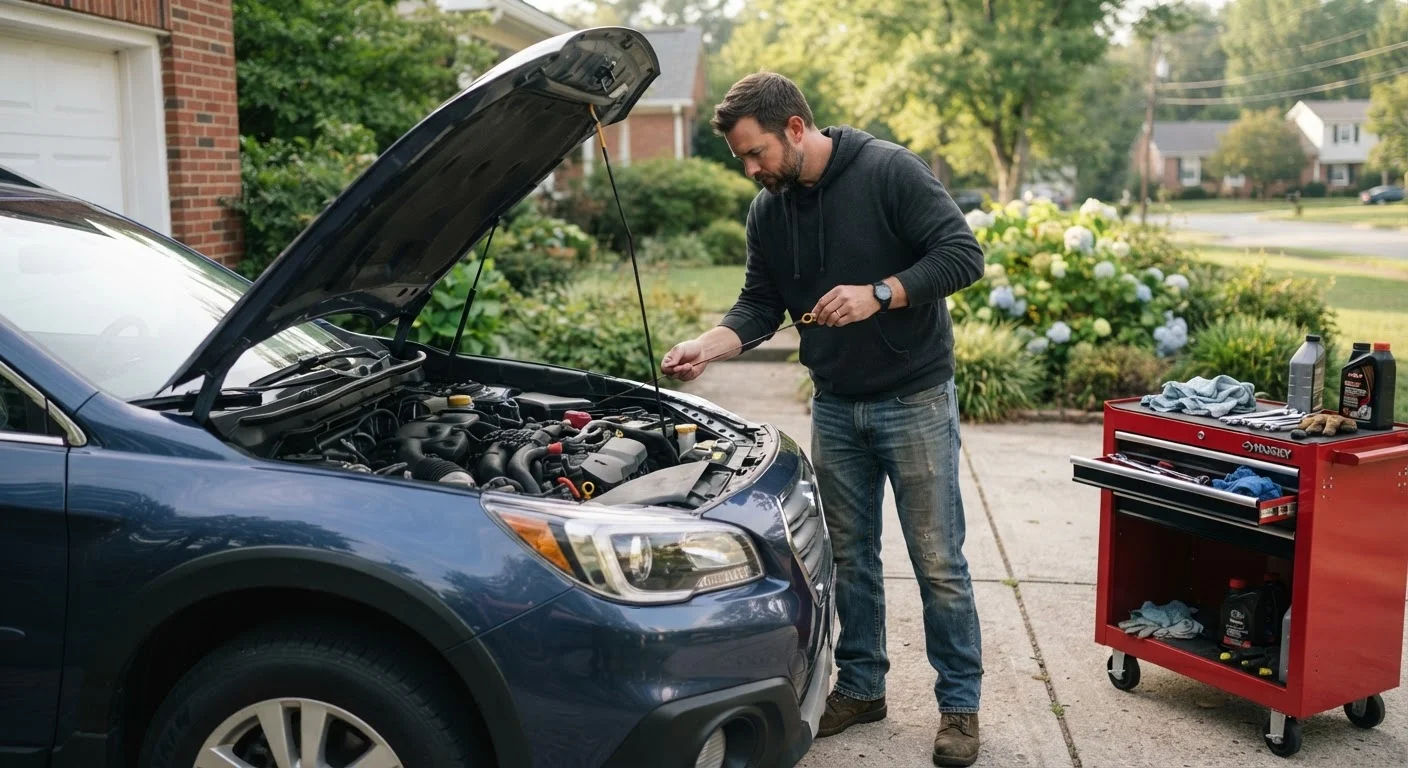
Labor costs typically account for the largest share of any repair bill. For straightforward maintenance tasks - oil changes, cabin air filter swaps, wiper blade replacements - you're often paying a shop primarily for time, not expertise. Handling those yourself keeps money in your pocket without requiring specialized training.
The catch is overreach. Attempting brake caliper rebuilds, transmission fluid flushes on complex dual-clutch systems, or anything involving the airbag system without proper training and tools can turn a small problem into a dangerous and expensive one. The goal isn't to replace your mechanic entirely - it's to handle the tasks you can do reliably and hand off the rest confidently. Our car troubleshooting hub is a useful starting point for learning to recognize what you're actually dealing with before you pick up a wrench.
Core Practices for Effective Home-Garage Maintenance
The difference between a productive DIY session and a frustrating one usually comes down to preparation and honest self-assessment. These practices apply across virtually every routine maintenance task.
Always read the relevant section of your owner's manual before starting any task.
Manufacturers specify exact fluid types, torque settings, filter part numbers, and service intervals that generic online guides often get wrong. Using the wrong specification - say, the incorrect oil viscosity - can void a warranty or cause engine wear. Your manual is free, specific to your vehicle, and authoritative.
Assess each task against a three-part checklist: Do I have the right tools? Do I understand every step? Can I safely undo a mistake?
Many DIY errors happen not because the person lacks intelligence but because they underestimated the task or lacked one critical tool. If any of these three questions produces a 'no,' that's a signal to either prepare more thoroughly or defer to a professional.
Work on a cold engine whenever the task involves fluids or components near the exhaust.
Engine oil, coolant, and exhaust components retain dangerous heat long after a car stops running. Burns from coolant or contact with a hot manifold are among the most common home-garage injuries. Allowing 30-60 minutes of cool-down time costs nothing and prevents serious harm.
Document what you did, what you used, and when - every time.
A simple maintenance log (even a notes app on your phone) gives you an accurate service history, which matters both for diagnosing future issues and for resale value. It also prevents duplicate work and helps you track intervals accurately instead of guessing.
Use proper jack stands whenever you work under a vehicle - never rely solely on a floor jack.
Hydraulic floor jacks can fail or slip, and the consequences of a vehicle falling while someone is underneath are severe and often fatal. Jack stands are inexpensive and provide the stable, locked support required for any under-vehicle work. This is non-negotiable.
Start with the simplest version of a task and build complexity over time.
Confidence in the garage is earned incrementally. Taking on a fuel injector cleaning before you've mastered an oil change sets up unnecessary risk. Each successfully completed maintenance task builds the mechanical intuition and spatial familiarity needed for harder jobs.
Starting Today: Your Quickest Wins
Not every improvement requires a full Saturday afternoon. Several high-value maintenance habits take under 15 minutes and need nothing more than a clean rag and your owner's manual. Build confidence with these before moving to more involved tasks.
For drivers managing high-mileage vehicles, the complete guide to high-mileage car care covers the additional inspections and fluid considerations that become relevant past 100,000 miles.
Knowing When to Stop: The Most Underrated Skill
Every experienced DIYer has a story about the job that turned into something bigger halfway through. Recognizing that moment - and responding correctly - separates smart home mechanics from expensive ones.
Clear Signs a Job Has Outgrown DIY
Stop and consult a qualified mechanic if you encounter unexpected fluid leaks mid-job, hear unusual sounds when components are reassembled, find fasteners that are seized or stripped, or discover damage that wasn't visible before you started. Pressing forward in these situations tends to compound costs rather than contain them. There is no shame in handing a partially disassembled job to a professional - shops handle it regularly.
If you've already documented symptoms before heading to a shop, you'll save time and communicate more clearly. The pre-mechanic inspection checklist walks you through exactly what to record. And if your workspace itself needs attention before you can work safely and efficiently, organizing your garage from scratch is a practical place to start.
Understanding fluid maintenance boundaries is another area where many drivers trip up - topping off when a flush is needed, or vice versa. The guide to topping off vs. flushing each car fluid lays out the right approach for each system. And don't overlook the often-skipped items that quietly inflate repair bills - small parts like PCV valves and serpentine belts that budget-conscious drivers tend to defer too long.