

Key Takeaways
Start here
Why Garages Become Overwhelming
First action
Step One: Empty and Sort Before You Plan
Plan your layout
Mapping Your Garage Zones
Build your system
Affordable Storage Strategies That Actually Work
Stay consistent
Keeping It Organized Long Term
Why Garages Become Overwhelming
The garage is the default landing zone for anything that doesn't have a home elsewhere - seasonal decorations, sports equipment, half-finished projects, tools, and the items you're "not ready to deal with yet." Unlike other rooms, garages rarely have built-in storage, which means everything piles onto whatever surface is available.
The result isn't laziness. It's a structural problem: no system, no zones, and no clear rules about what belongs there. Once you understand that, a packed garage stops feeling like a personal failure and starts looking like a solvable layout challenge.
Before spending a single dollar, it helps to understand one counterintuitive principle: most garage organization problems are sorting problems, not storage problems. You likely don't need more bins - you need fewer items and a clearer plan for the ones you keep. Our guide on decluttering before spending walks through exactly that philosophy.
Zoning
Dividing a space into dedicated areas based on activity or category, so related items are always stored together and easy to find.
Vertical storage
Using wall height and ceiling space - rather than floor area - to store items, which frees up walking and working space below.
One-in-one-out rule
A habit of removing one item from a space before adding a new one, preventing gradual accumulation from reversing your organizing work.
Pegboard
A rigid board with evenly spaced holes that accept hooks and brackets, used to hang tools and small items on walls with flexible placement.
Overhead storage
Storage systems mounted from ceiling joists that use otherwise wasted ceiling space, typically suited for lightweight or infrequently accessed items.
Step One: Empty and Sort Before You Plan
The most effective garage overhauls begin the same way: pull everything out. Lay it in the driveway or yard and see what you're actually working with. This step feels uncomfortable, but it's the only way to make honest decisions about what stays.
Sort everything into four categories:
- Keep in garage - items that are used regularly and genuinely belong here
- Relocate - items that belong inside the house, basement, or storage unit
- Donate or sell - functional items someone else could use
- Discard - broken, expired, or genuinely useless items
Be honest about the "keep" pile. If you haven't used it in two years and can't name a specific future use, it's a candidate for removal. Also check for anything that shouldn't be in a garage at all - food, medications, and certain chemicals degrade in high-heat or humid environments and can become safety hazards.
Sort before you shop
Resist the urge to buy bins, shelves, or hooks before finishing your sort. Many homeowners discover they need far less storage than they thought once duplicates, broken items, and misplaced belongings are removed. Shopping first almost always results in buying the wrong sizes or too many containers.
Once your keep pile is finalized, you'll have a realistic picture of how much storage you actually need - often far less than you assumed at the start.
Mapping Your Garage Zones
Zoning means grouping items by activity and assigning each group a dedicated area of the garage. This is the step most people skip, and it's why so many organized garages fall apart within months.
Common garage zones include:
- Automotive - fluids, tools, car care supplies (keep near the vehicle access area)
- Lawn and garden - mowers, hand tools, fertilizers, hoses
- Sports and recreation - bikes, balls, gear, camping equipment
- Seasonal storage - holiday decorations, off-season clothing bins
- Workshop - power tools, hardware, workbench supplies
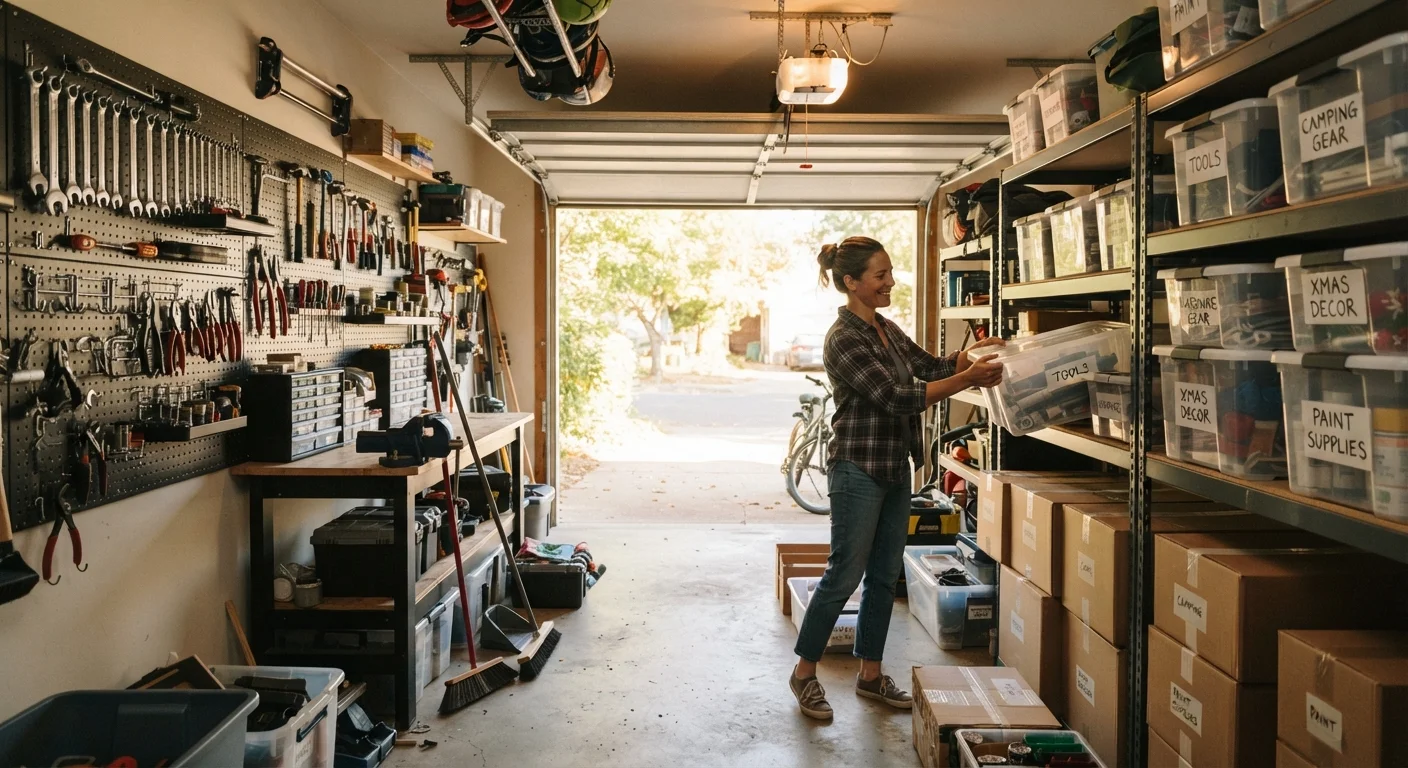
Sketch a rough floor plan of your garage on paper before moving anything back in. Assign the most-used zones to the most accessible areas - zones you access weekly should never be buried behind zones you visit once a year.
If your garage also serves as a workspace for car maintenance, see our overview on DIY car maintenance at home for guidance on what tools and supplies make sense to keep accessible.
Affordable Storage Strategies That Actually Work
Once your zones are mapped, think vertically. Floor space is your most valuable resource; wall space and ceiling height are underused assets that cost relatively little to activate.
Wall Storage
Pegboard is inexpensive and highly adaptable - hooks can be repositioned as your needs change without any additional cost. Freestanding wire shelving units work well along walls and can be reconfigured. For hand tools specifically, a simple stud-mounted horizontal rail with hooks can hold far more than a cluttered shelf.
Ceiling Storage
Overhead platforms or ceiling-mounted racks work well for lightweight seasonal items like holiday bins or luggage. Always verify weight limits and ensure any ceiling-mounted hardware is anchored to joists, not just drywall. If you're uncertain about structural attachment, consult a professional rather than guessing.
Zero-Cost Solutions
Before buying anything, consider what you already own. Repurposed items - glass jars for screws and hardware, old bookshelves repositioned in the garage, tension rods to create vertical dividers - solve real problems at no cost. Our article on repurposing household items for storage offers a full walkthrough of this approach.
Check local codes before mounting overhead storage
Ceiling-mounted storage platforms that attach to roof framing may require a permit in some jurisdictions, particularly in attached garages. Before drilling into joists or adding significant overhead load, verify what your local building department requires. When in doubt, a brief consultation with a licensed contractor is worthwhile.
Keeping It Organized Long Term
The final step is establishing habits that preserve the system you've built. A garage doesn't stay organized on its own - it needs two simple rules applied consistently.
Label everything. Bins, shelves, and zones should be clearly labeled so every household member - including children - knows where things go. Ambiguity is what sends items to the floor instead of their proper home.
One in, one out. Before adding a large item to the garage, identify what it replaces or where it will live. This prevents the slow accumulation that turns a clean garage back into a storage nightmare.
A monthly five-minute walkthrough is worth building into your routine - return anything that has drifted from its zone and take note of what isn't working. Systems that feel slightly inconvenient in practice often just need a minor adjustment rather than a full redo.
If you want to extend your DIY efficiency into other parts of the home, our DIY home repairs hub covers a wide range of practical projects you can tackle yourself. And if your garage door is part of the challenge, common garage door problems outlines which issues homeowners can safely address without a professional.