

Key Takeaways
Vehicle Maintenance Schedule
A vehicle maintenance schedule is a manufacturer-prescribed timetable - usually measured in mileage intervals and time periods - that specifies when routine service tasks should be performed. These tasks range from oil changes and tire rotations to fluid replacements and filter swaps. Following the schedule is the most reliable way to catch wear before it becomes damage.
Most modern vehicles use two schedules: a 'Normal' and a 'Severe' duty schedule. Severe duty applies to frequent short trips, dusty environments, towing, or stop-and-go driving - conditions that accelerate component wear.
Why the Owner's Manual Is Your Most Underused Tool
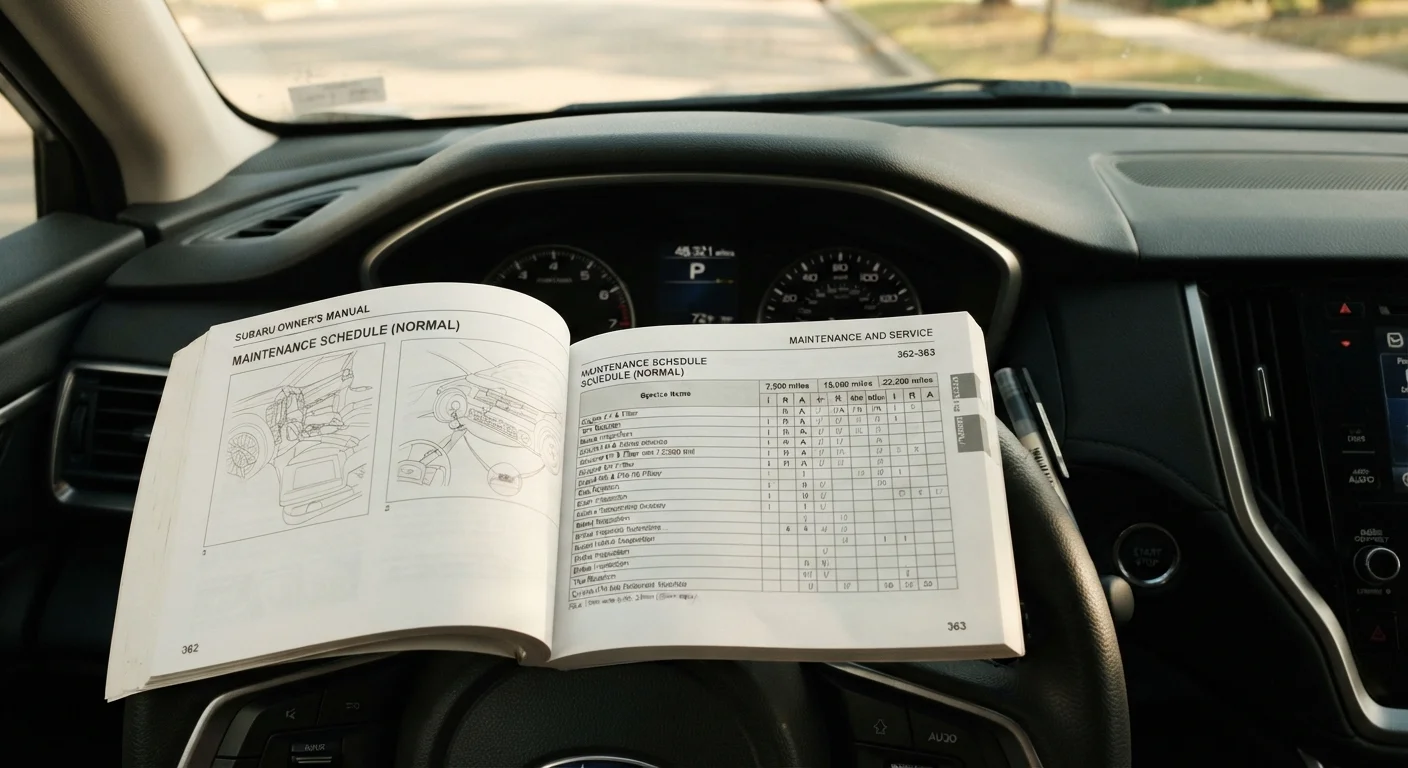
Most drivers glance at the owner's manual once and file it in the glove box permanently. That's a costly habit. Your manual contains a maintenance schedule tailored specifically to your engine, drivetrain, and intended operating conditions - not a generic car, but your car.
The schedule is typically organized by mileage milestones: 5,000 miles, 15,000 miles, 30,000 miles, 60,000 miles, and so on. At each interval, specific components require inspection, replacement, or service. What confuses many drivers is that two schedules often exist side by side - Normal and Severe. The Severe schedule applies more often than people expect: frequent short trips under five miles, dusty or unpaved roads, towing, or extended idling all qualify.
If your daily commute involves stop-and-go city traffic, you're probably on the Severe schedule even if your driving feels ordinary. Misidentifying your schedule means under-servicing your vehicle.
Time Counts, Not Just Miles
Many drivers assume maintenance schedules only apply once they've driven enough miles. In practice, most manufacturer schedules include time-based triggers - for example, 'every 12 months or 7,500 miles, whichever comes first.' If your annual mileage is low, the calendar interval may be what drives your service timing rather than the odometer.
What Each Major Interval Actually Covers
Service intervals aren't arbitrary checkpoints - each one targets specific components that wear at predictable rates. Here's what the most common milestones typically address:
- Every 5,000-10,000 miles: Oil and filter change (interval depends on oil type and engine spec), tire rotation, and visual brake inspection.
- Every 15,000-30,000 miles: Air filter replacement, cabin air filter swap, and fuel system inspection.
- Every 30,000-60,000 miles: Transmission fluid, coolant flush, spark plug inspection or replacement (on many engines), and drive belt checks.
- Every 60,000-100,000 miles: Timing belt replacement (if applicable - timing chains typically last longer), brake fluid flush, and differential fluid on applicable drivetrains.
Keep in mind that time matters as much as mileage. A vehicle driven only 3,000 miles per year still needs annual oil changes because oil degrades chemically even when the car sits.
Staying current on these intervals also supports fuel economy over time. Clean filters, fresh spark plugs, and properly inflated tires all contribute to how efficiently your engine converts fuel into motion.
The Real Cost of Skipping Service
Deferred maintenance rarely saves money - it transfers costs forward, usually with interest. A clogged cabin air filter forces your HVAC system to work harder. Worn spark plugs reduce combustion efficiency. Low transmission fluid generates heat that accelerates internal wear.
The overlooked maintenance items that quietly run up repair bills are often the ones that seem optional until they cause a cascade of secondary failures. Serpentine belts, PCV valves, and coolant condition rarely announce themselves before they cause damage.
Log Every Service, Even DIY Jobs
Each time you perform or pay for a maintenance task, record the date, odometer reading, and exactly what was done. This log is your proof of compliance if a warranty claim is disputed - and it helps you anticipate upcoming service needs before they sneak up on you.
It's also worth understanding that symptoms you dismiss as minor may be linked to deferred service. The car troubleshooting hub is a useful reference when something feels off between scheduled service visits.
Reading the Schedule Without Getting Overwhelmed
A multi-page maintenance schedule can feel daunting, but it becomes manageable once you understand the structure. Start by finding your current mileage, then identify the next milestone. Write down every task listed for that interval - this becomes your next service checklist.
For each item, note whether it's a replacement (new part goes in) or an inspection (check condition, replace only if needed). Many inspection-only items require no parts cost if they pass - just the time to look.
If you want to take on some of these tasks yourself, the guide on DIY car maintenance without overstepping your skills walks through how to assess which jobs fit your comfort level and toolset. Not every interval task requires a lift or specialized equipment.
Finally, keep a simple log - a notebook in the glove box or a notes app - recording the date, mileage, and task completed each time you service the vehicle. This documentation protects you if a warranty question arises and helps you anticipate what's due next.
40%
Of engine damage linked to poor lubrication
According to automotive engineering literature, a significant share of premature engine wear is attributable to inadequate lubrication - often the result of extended oil change intervals or using the wrong oil specification.
Up to 4%
Fuel economy loss from a clogged air filter
The U.S. Department of Energy has noted that a dirty or clogged engine air filter can reduce fuel economy measurably on older carbureted vehicles; on modern fuel-injected engines, it more directly affects acceleration and power output.
2x
Repair cost multiplier for deferred maintenance
Industry service data generally shows that repairs resulting from neglected maintenance cost substantially more than the preventive service would have - often two times or more when secondary component damage is factored in.