

Key Takeaways
Why Uneven Wear Is a Symptom, Not the Problem
When one brake pad wears down faster than its partner on the same axle - or when front pads burn through far quicker than rears - most drivers assume it's just how brakes work. It isn't. Brake pads are engineered to wear at roughly the same rate per axle. Significant variation almost always points to something upstream: a mechanical, hydraulic, or maintenance issue that's forcing one pad to work harder than it should.
The financial stakes matter here. A fresh set of pads can wear to metal in a fraction of its expected service life if the root cause goes unaddressed. You'll also risk scoring the rotors, which turns a modest pad replacement into a much larger job. Understanding what creates uneven wear - and what mistakes accelerate it - puts you in a position to act before that happens. If your brakes are also making noise, our guide on common car noises and their causes can help you connect the symptoms.
Common Mistakes That Cause or Worsen Uneven Pad Wear
The errors below are the most frequent reasons drivers end up with lopsided brake wear - and they're largely preventable once you know what to look for.
Replacing pads without inspecting the caliper first.
Why it happens: New pads solve the immediate symptom - low friction material - so it's tempting to stop there, especially when trying to keep repair costs down.
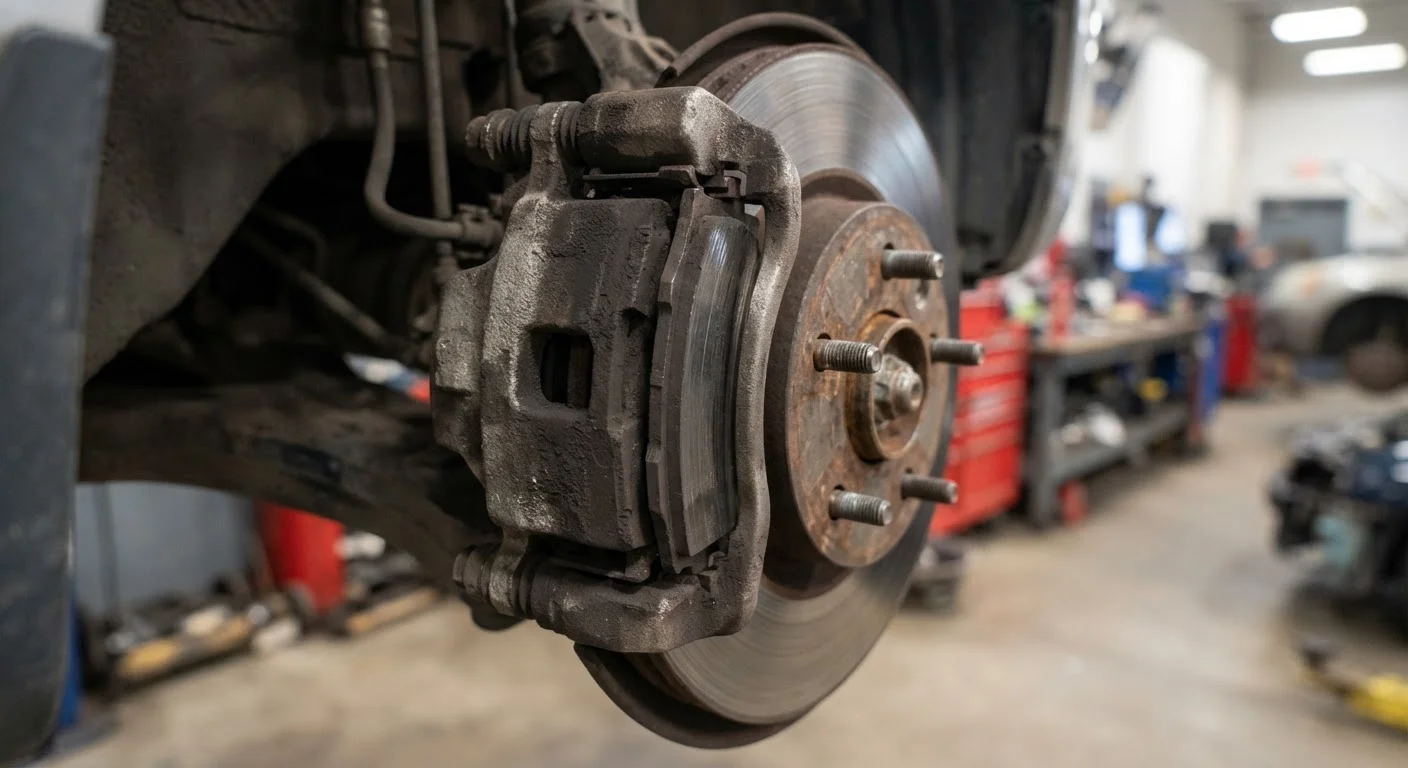
Ignoring seized or corroded caliper slide pins.
Why it happens: Slide pins are easy to overlook because they're hidden behind the caliper bracket and aren't part of a standard quick-service checklist.
Mixing old and new brake hardware on the same axle.
Why it happens: Drivers sometimes replace only the worn pad on one side to save money, assuming the thicker pad on the other side is still serviceable.
Overlooking a warped or deeply grooved rotor.
Why it happens: A rotor that looks intact from the outside may have thickness variation or surface grooves that cause the pad to make inconsistent contact around the full rotation.
Neglecting rear brake adjustment on drum-disc combinations.
Why it happens: Vehicles with rear drum brakes have self-adjusters that can seize, causing the drums to carry less of the braking load and overworking the front disc pads.
Don't Drive on Severely Uneven Brakes
If one pad has worn to metal while the other still has material remaining, driving - even short distances - risks gouging the rotor deeply and compromising stopping power. Metal-on-metal contact can also generate enough heat to damage the caliper piston seal. Have the vehicle inspected before continuing to drive if you hear persistent grinding from one corner.
How to Inspect for Uneven Wear Yourself
You don't need a lift to do a basic brake inspection. With the wheels on, shine a flashlight through the spokes to compare pad thickness on both sides of each axle. Significant thickness differences - or a metallic grinding sound - are immediate red flags. For a more thorough look, remove the wheel and measure pad depth with a simple gauge or a coin.
Make brake inspection a habit every time you rotate tires. Speaking of which, skipping rotations can contribute to uneven braking loads across the axles - see our overview of tire rotation patterns for the timing and sequences that apply to your drivetrain.
~70%
Braking force handled by front brakes
Under normal deceleration, front brakes absorb the majority of braking energy due to forward weight transfer, which is why front pad wear is inherently faster - but should still be even side-to-side.
2-3x
Accelerated wear from a sticking caliper
A caliper that applies constant pressure to one pad can reduce that pad's service life by roughly two to three times compared to a freely floating caliper, according to general brake engineering guidance.
If your pedal feels soft or inconsistent alongside uneven wear, that's a separate hydraulic concern covered in detail in our article on soft vs. spongy brake pedals.
This article is for general informational purposes. Brake system work involves safety-critical components. If you are uncertain about any repair, consult a qualified mechanic before proceeding.