

The Three Core Metrics and What They Mean
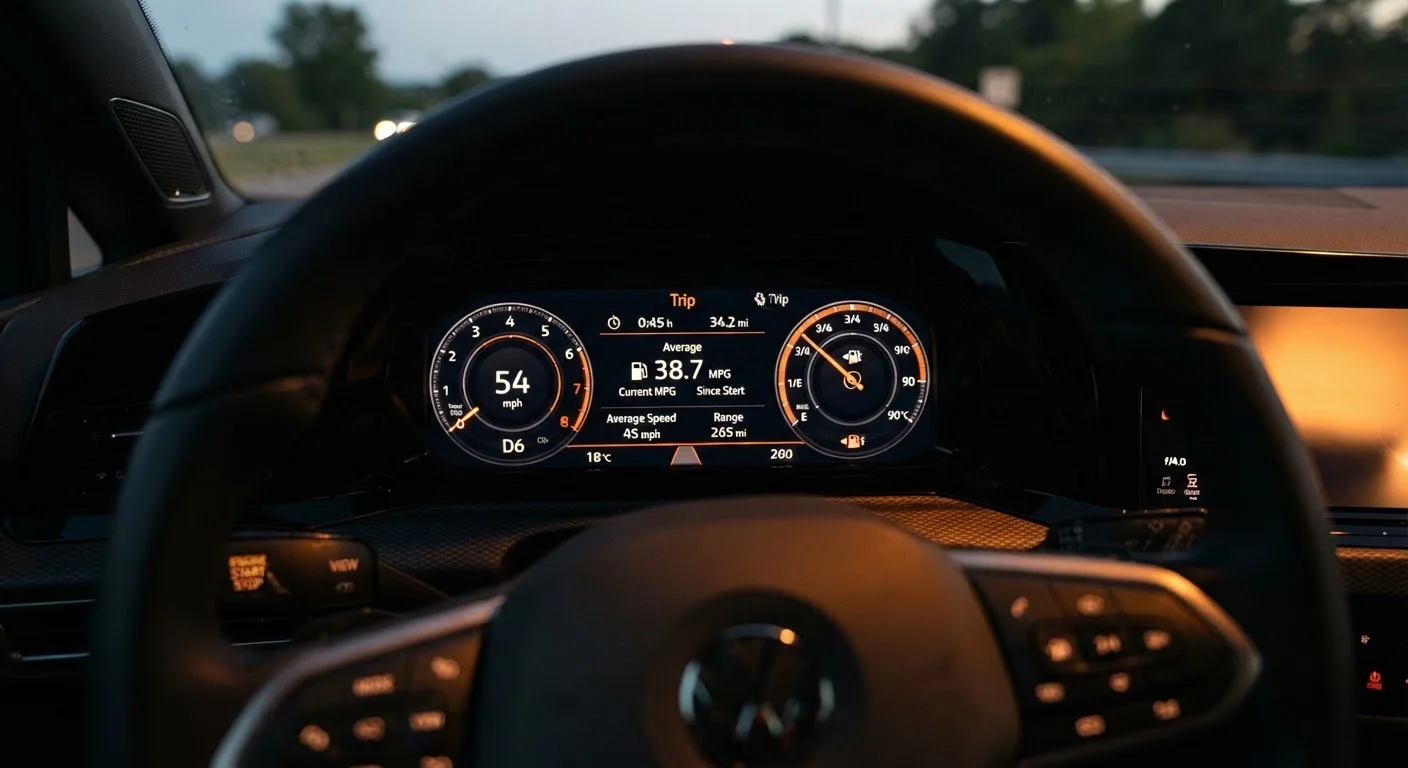
Most modern vehicles display at least three fuel economy metrics through the trip computer: instant MPG, average MPG, and distance to empty (DTE). Some also show fuel flow rate in gallons per hour. Each tells a different story, and conflating them leads to misreading your actual consumption.
Instant MPG is a snapshot - the efficiency calculation the vehicle is running at this exact second. It spikes dramatically during deceleration (when modern fuel-injected engines often cut fuel entirely) and collapses during heavy acceleration. Watching it continuously is distracting and not especially informative; it moves too fast to act on in real time.
Average MPG is the number worth tracking. It smooths out the spikes and reflects your driving pattern over a trip or a tank. This is what determines your actual fuel spend. See our reference guide to MPG and real-world estimates for how this compares to EPA sticker figures.
DTE is useful for planning but not for efficiency monitoring. It recalculates dynamically, so a stretch of stop-and-go traffic will cause it to drop faster than steady highway cruising - even if your tank level hasn't changed proportionally.
How to Use Display Data to Actually Change Your Driving
The display becomes a training tool when you engage with it deliberately rather than glancing at it passively. Here's how to extract real value:
- Reset average MPG at every fill-up. This gives you a clean per-tank figure you can track alongside actual fuel cost - a far more grounded feedback loop than a running average that dates back to last spring.
- Use instant MPG during acceleration. A gentle, progressive throttle input keeps the reading in a higher range. If it drops toward single digits under acceleration, your foot is working harder than necessary. This feedback is especially useful for retraining hard-acceleration habits.
- Watch fuel flow rate while idling. If your vehicle shows gallons-per-hour, sitting in a drive-through for five minutes at 0.3 GPH is a visible, countable cost. It reinforces the decision to shut off the engine during long stationary periods where safe and practical.
- Compare your average to EPA estimates. A consistent gap of more than 15-20% below the combined EPA rating suggests a maintenance or behavioral issue worth investigating - not just variation. Cold weather is one common cause; see why MPG drops in winter for seasonal context.
Eco indicator lights and green-zone gauges follow similar logic - they respond to throttle pressure and speed, signaling whether you're in an efficient operating range. They're simplified proxies for instant MPG and useful as low-distraction coaching, particularly for newer drivers building fuel-conscious habits.
For a deeper look at how city and highway driving affect these readings differently, the breakdown of city vs. highway fuel consumption explains the underlying engine dynamics. And before adjusting habits based on display data, it's worth checking fuel economy myths that cost drivers real money to avoid acting on incorrect assumptions.