

Key Takeaways
Our Verdict
Static and dynamic stretching are not competing methods - they are complementary tools for different moments in a workout. Dynamic stretching primes the body for movement, while static stretching supports recovery and long-term flexibility when used after activity. Understanding this timing distinction is the key to getting the most from either approach.
| Best for | Recommended |
|---|---|
| Those warming up before a workout or active session | Dynamic stretching |
| Those cooling down and improving flexibility post-exercise | Static stretching |
| Those building a balanced, no-equipment home fitness routine | Both approaches used in sequence |
| Those managing joint discomfort or limited mobility | Consult a healthcare professional first |
What Sets These Two Approaches Apart
Stretching is often treated as a single, uniform practice - something you do before or after movement. In reality, static and dynamic stretching work very differently and serve distinct roles in a well-rounded routine.
Static stretching involves holding a position that lengthens a specific muscle or muscle group - typically for 15 to 60 seconds without movement. Think of a seated hamstring reach or a standing calf stretch held at the wall. Dynamic stretching, by contrast, uses controlled, repetitive movement through a joint's range of motion - leg swings, arm circles, or walking lunges - without holding any position at length.
Both are effective. The difference lies in when and why you use each one. For those building a home fitness routine in limited space, understanding this distinction helps you get more from every session without spending anything.
| Static Stretching | Dynamic Stretching | |
|---|---|---|
| Movement type | Held, stationary position | Controlled, repetitive motion |
| Best used | After exercise (cool-down) | Before exercise (warm-up) |
| Primary benefit | Improves flexibility over time | Prepares muscles and joints for activity |
| Equipment needed | None | None |
| Space required | Minimal | Small to moderate |
| Risk if mistimed | May reduce power if done pre-intensity | Low risk when performed with control |
Static Stretching: What the Evidence Shows
Static stretching has a long history in exercise science and remains a well-supported method for improving flexibility over time. Research published in sports medicine literature consistently shows that regular static stretching - performed after exercise - contributes to increased range of motion and may reduce post-exercise muscle soreness.
However, a notable body of research also suggests that performing static stretches immediately before high-intensity activity may transiently reduce muscle force output and power. This doesn't make pre-workout static stretching harmful for everyday movers, but it does suggest that saving deeper holds for after your session is the smarter sequencing choice for most people.
For a home routine, static stretches are particularly useful during a cool-down. Targeting large muscle groups - hip flexors, hamstrings, calves, chest, and shoulders - after activity can support recovery and maintain mobility over time. See our guide to rest and recovery for how stretching fits into your broader recovery strategy.
Pair Breathing With Static Holds
During static stretches, slow, intentional breathing can help deepen the stretch safely and promote relaxation. Exhale as you ease into the position, and focus on breathing steadily throughout the hold. This practice also overlaps with stress-reduction techniques - our overview of breathing methods for stress explores this in more detail.
Dynamic Stretching: Preparing the Body for Movement
Dynamic stretching is the preferred warm-up method recommended by most exercise physiologists and sports medicine practitioners today. Because it moves joints through their full range of motion progressively, it raises local muscle temperature, improves neuromuscular coordination, and signals the body that physical demand is coming.
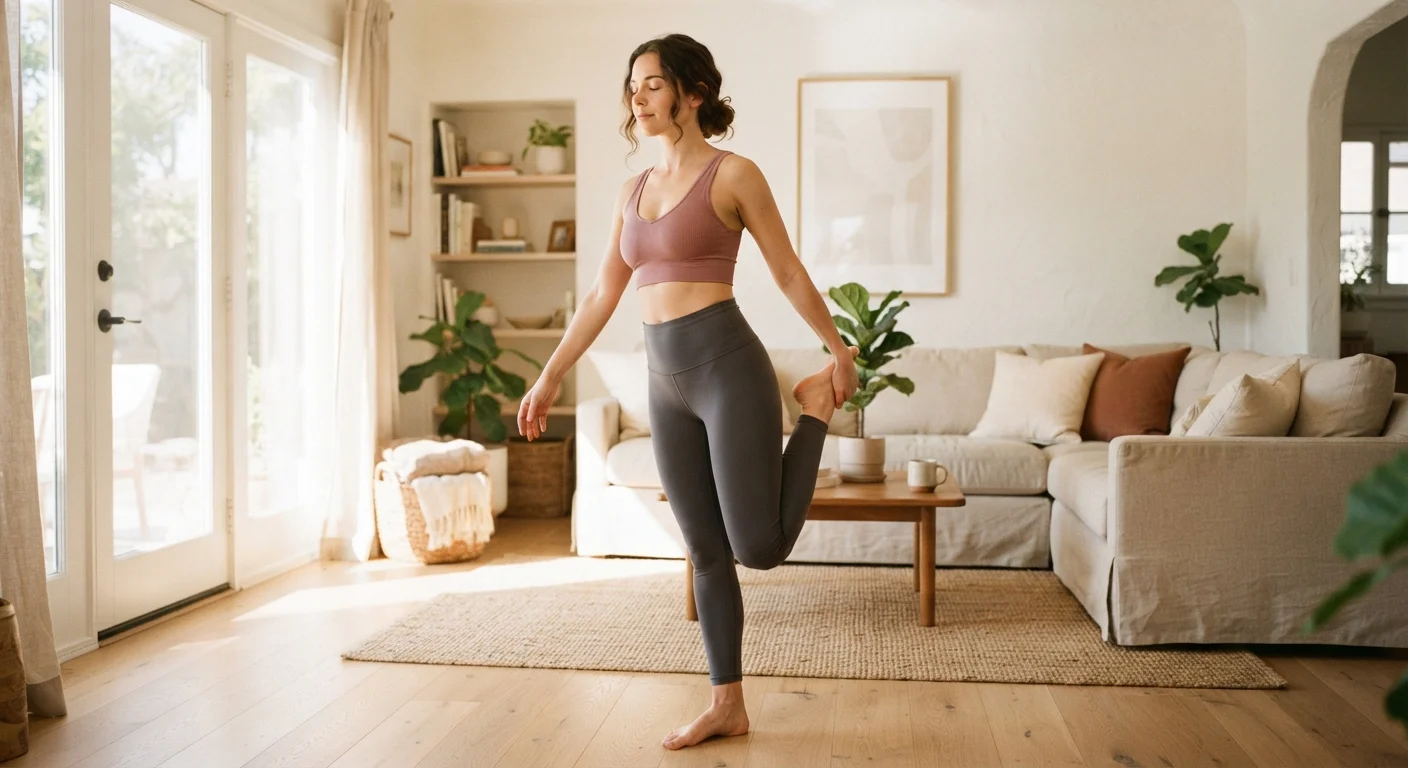
Common examples include hip circles, torso rotations, knee raises, lateral shuffles, and inchworms - all of which can be performed in a very small area. These movements are particularly well-suited to home environments where space may be limited. A five- to ten-minute dynamic warm-up before a strength session, yoga flow, or cardio block helps reduce the risk of strain and primes movement quality.
If you're also exploring strength work at home, combining a dynamic warm-up with resistance training is a natural pairing - the comparison of resistance bands and dumbbells is a useful companion read for structuring those sessions.
Building a Practical Home Stretching Routine
The most effective approach for most home exercisers is a sequenced one: dynamic stretching before activity, static stretching after. This structure costs nothing, requires no equipment, and can be adapted to nearly any schedule or fitness level.
A simple framework might look like this:
- Pre-workout (5-10 min): Leg swings, arm circles, hip rotations, walking lunges, and torso twists to activate major movement patterns.
- Post-workout (5-10 min): Held stretches targeting the muscle groups most used - hip flexors, hamstrings, calves, and upper back - with each hold sustained for 20-45 seconds.
Consistency matters more than duration. Even brief daily stretching, done with intention and proper form, yields more long-term benefit than occasional extended sessions.
For those managing joint pain or working around mobility limitations, individual needs vary significantly. Our home fitness guidance for joint pain offers general information, but always consult a qualified healthcare professional before beginning any new exercise program - particularly if you have an existing condition.
This article is for general informational and educational purposes only. It is not a substitute for professional medical advice, diagnosis, or treatment. Always consult a qualified healthcare provider with questions about your health or before starting a new fitness routine.