

Key Takeaways
Macronutrients
Macronutrients - often called "macros" - are the three main nutrient categories your body needs in relatively large amounts to produce energy and support basic functions: carbohydrates, protein, and fat. Unlike vitamins and minerals, which your body needs in tiny amounts, macronutrients form the caloric foundation of your diet. Every food you eat contains at least one of them, and most contain a combination.
Each macronutrient provides a specific amount of energy per gram: carbohydrates and protein each yield approximately 4 calories per gram, while fat yields approximately 9 calories per gram.
Why Macronutrients Matter
Every meal you eat is essentially a delivery system for energy and building materials. Macronutrients are the primary drivers of that delivery. Understanding what each one does - not just that they exist - gives you a practical foundation for making food choices that actually support how you feel and function day to day.
The concept is simpler than nutrition marketing makes it seem. Your body is not mysterious about what it needs: fuel to move and think, materials to repair and build, and structural support for essential systems. Carbohydrates, protein, and fat each fill one or more of those roles. For a broader look at the full nutritional picture, see our guide to macros versus micronutrients.
4 cal/g
Energy provided by carbohydrates and protein
Per gram values are established nutritional constants used by the U.S. Food and Drug Administration for food labeling purposes.
9 cal/g
Energy provided by dietary fat per gram
Fat's higher caloric density reflects its chemical structure; this figure is used consistently in FDA nutritional labeling standards.
45-65%
Recommended calorie share from carbohydrates
According to the U.S. Dietary Guidelines for Americans, this range represents the Acceptable Macronutrient Distribution Range (AMDR) for carbohydrates in adults.
Carbohydrates: Your Body's Preferred Fuel
Carbohydrates are broken down into glucose, which your brain and muscles rely on as a primary energy source. When you eat carbs, your body converts them quickly into usable fuel - which is why a bowl of oatmeal before a long morning can feel noticeably different from skipping breakfast.
Not all carbohydrates behave the same way. Simple carbohydrates - such as table sugar or refined white flour - digest rapidly, producing quick energy spikes. Complex carbohydrates - found in whole grains, legumes, and vegetables - digest more slowly, providing sustained energy and, importantly, dietary fiber. Fiber supports digestive health and helps you feel full longer, which matters especially when you're trying to stretch a grocery budget.
The idea that carbohydrates are universally harmful is a common misconception. Our article on widespread nutrition myths addresses this and similar misunderstandings with evidence-based context.
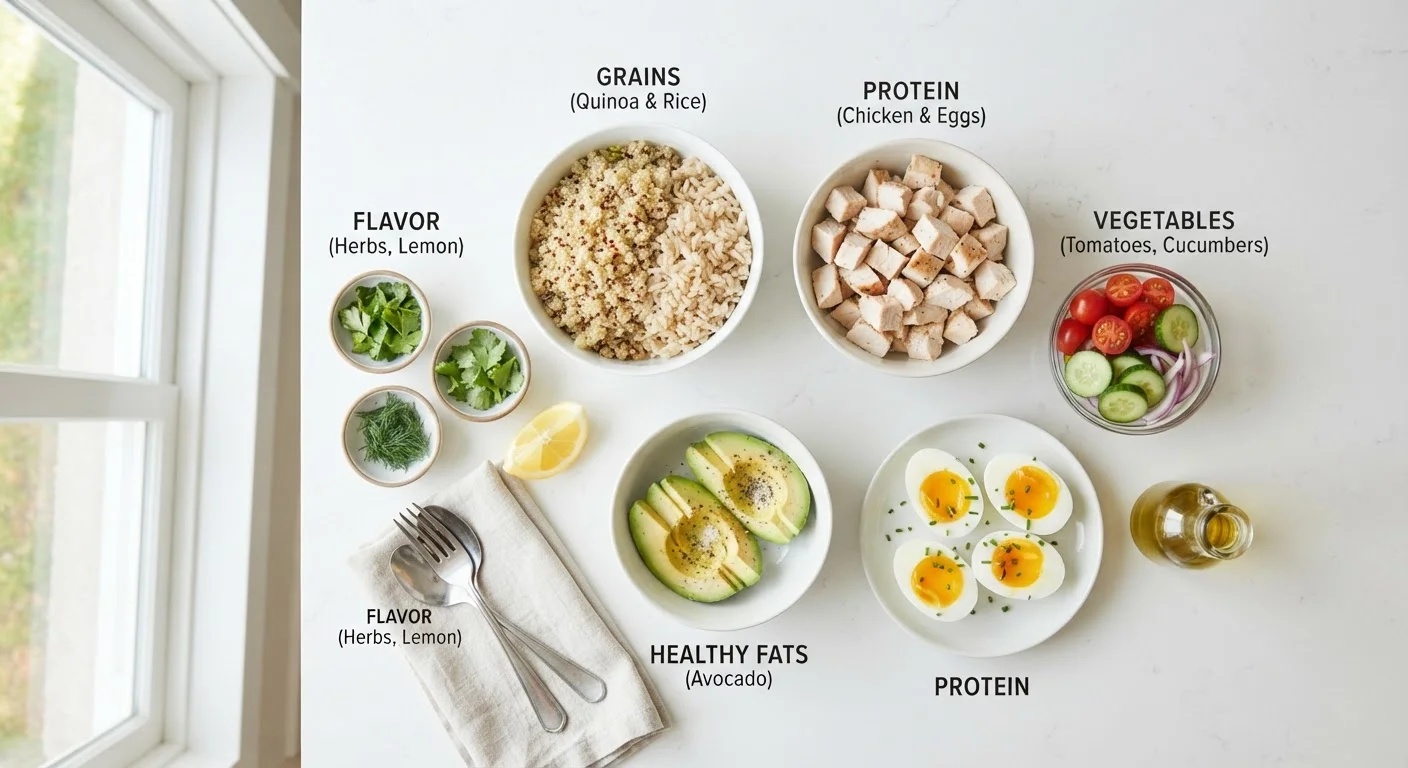
Affordable, high-quality carbohydrate sources include oats, brown rice, dried beans, lentils, sweet potatoes, and whole-wheat bread.
Protein: Building and Repairing the Body
Protein is made up of amino acids - the structural units your body uses to build and repair muscle, skin, organs, enzymes, and immune cells. Of the 20 amino acids your body works with, nine are considered "essential," meaning you must obtain them from food because your body cannot manufacture them.
Animal-based proteins - eggs, meat, fish, dairy - typically provide all nine essential amino acids in adequate proportions and are referred to as "complete" proteins. Many plant-based proteins are lower in one or more essential amino acids, but eating a varied plant-forward diet across the day reliably covers your needs. Beans and rice together, for example, complement each other's amino acid profiles.
Protein also plays a key role in satiety. Foods high in protein tend to keep you feeling fuller for longer, which can make managing overall food intake easier. Budget-conscious options with strong protein content include eggs, canned tuna and sardines, dried lentils, edamame, and plain Greek yogurt.
This article is for general informational purposes only and is not a substitute for personalized medical or nutritional advice. Consult a qualified healthcare professional before making significant changes to your diet.
Fat: Essential, Not the Enemy
Dietary fat has a complicated reputation, but the science is clear: fat is essential. Your body uses fat to produce hormones, build cell membranes, cushion organs, and absorb fat-soluble vitamins - A, D, E, and K - which cannot be utilized without it.
Fats are generally categorized by their chemical structure. Unsaturated fats - found in olive oil, avocados, nuts, and fatty fish - are broadly considered beneficial for cardiovascular health. Saturated fats, found in red meat and full-fat dairy, are a subject of ongoing nutritional research; current dietary guidelines generally suggest consuming them in moderation. Artificial trans fats, once common in processed foods, are widely recognized as harmful and have been largely phased out in the U.S.
Fat is also the most calorie-dense macronutrient at 9 calories per gram, compared to 4 per gram for carbs and protein. This doesn't make it something to avoid - it simply means that fat-rich foods are more energy-concentrated, which can be an advantage or a consideration depending on your individual circumstances. For help reading how fats are listed on packaging, our nutrition label guide can walk you through the fine print.
How the Three Macros Work Together
In practice, your body doesn't process macronutrients in isolation - meals combine all three, and they interact. Fat slows digestion, which can moderate the rate at which carbohydrates raise blood glucose. Protein supports muscle preservation when calories are reduced. Carbohydrates spare protein from being used as fuel when energy intake is adequate, allowing protein to do its structural work instead.
There is no universally correct ratio of macronutrients for everyone. Individual needs vary based on age, activity level, health status, and personal goals. Broad general guidance from U.S. dietary authorities suggests that most adults obtain roughly 45-65% of calories from carbohydrates, 10-35% from protein, and 20-35% from fat - but these are population-level ranges, not personal prescriptions.
If you want to understand the vocabulary that appears on food packaging alongside macro information, our plain-English nutrition terms reference is a useful companion. And for understanding how macronutrient information is displayed on everyday products, see our guide to reading nutrition labels.