

Key Takeaways
Why Weekly Planning Beats Daily Decision-Making
Deciding what to eat at the moment you're hungry is one of the most reliable ways to drift toward less nutritious, more expensive choices. A weekly meal plan shifts those decisions to a calm, intentional moment-giving you space to think about variety, nutrient coverage, and what's already in your kitchen.
Nutrition science supports thinking in weekly patterns rather than meal-by-meal perfection. If Monday's lunch is light on iron, a lentil-rich dinner on Tuesday balances things out. This broader view reduces unnecessary stress about individual meals while still moving you toward a more complete diet over time.
Before you begin planning, it helps to understand what a nutritionally balanced week actually looks like. The goal is to regularly include: quality protein sources (legumes, eggs, dairy, lean meats or fish), fiber-rich carbohydrates (whole grains, starchy vegetables), a wide range of colorful produce for vitamins and minerals, and healthy fats (nuts, seeds, olive oil, oily fish). If you're unsure where your current diet falls short, a nutrition self-assessment can help you spot gaps before you start.
Think in Patterns, Not Perfection
No single meal needs to be nutritionally complete on its own. Aiming for consistent variety over the course of a week is both more realistic and more sustainable than trying to optimize every plate. Small, repeating habits-like always including a vegetable at dinner-compound quickly into meaningful dietary improvements.
Before You Write a Single Meal: Audit Your Pantry
The most cost-effective meal plans start at home, not at the store. Walk through your pantry, fridge, and freezer and note what you already have-especially proteins, grains, canned goods, and frozen vegetables. These items become the anchor points of your week's meals.
This step directly addresses one of the most common budget-eating pitfalls: buying ingredients that duplicate what you have, leading to waste. A pantry-first approach to grocery shopping can meaningfully shrink your weekly food bill without compromising the quality of what you eat.
Once you know your starting inventory, identify two or three "hero" ingredients-versatile staples like dried lentils, canned chickpeas, oats, brown rice, eggs, or frozen spinach-that can appear across multiple meals in different forms. Planning around these reduces shopping complexity and stretches your budget further.
What you will need
How to Build Your Week Meal by Meal
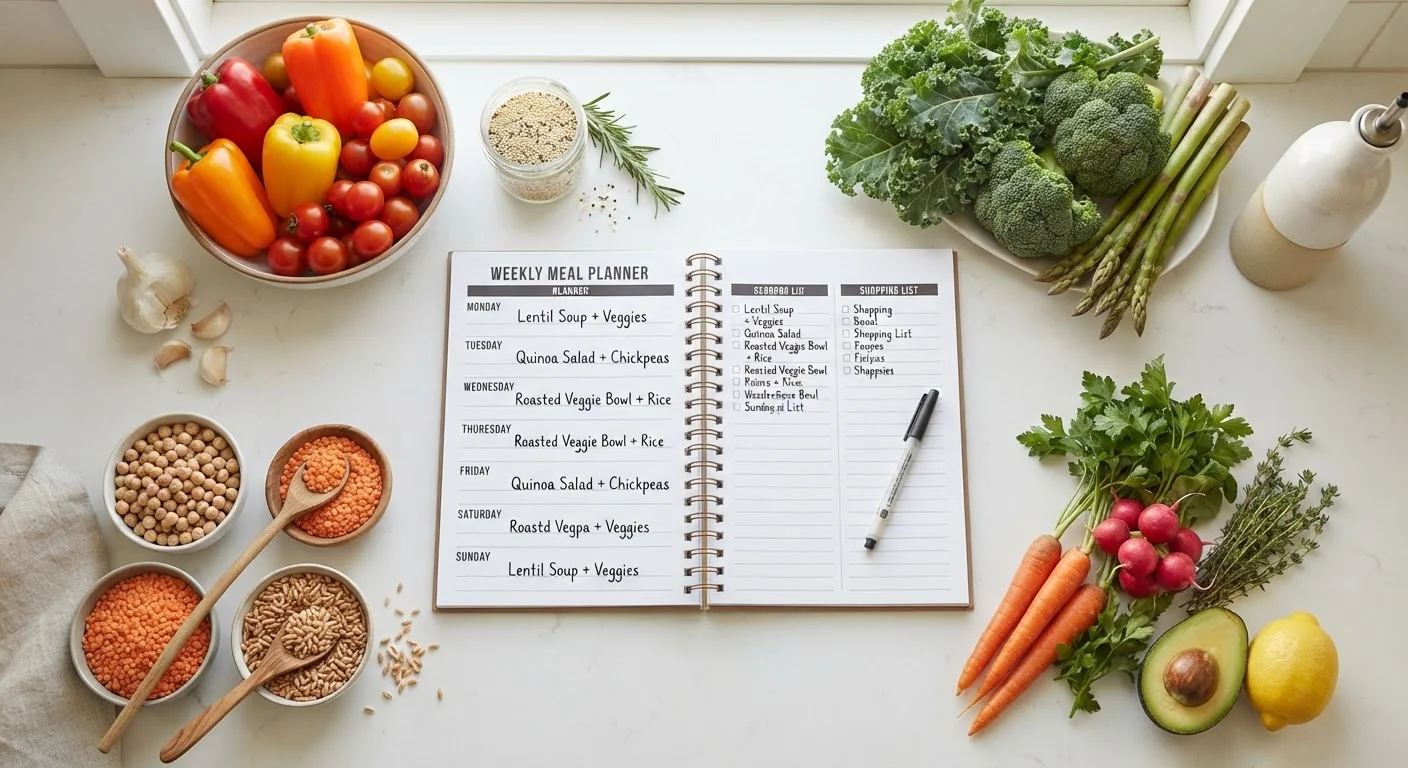
With your pantry audit complete and your hero ingredients chosen, you're ready to draft the plan. Use a simple grid: seven days across the top, three meals and one snack down the side. You don't need every cell filled in detail-rough categories work fine at first.
Assign a protein anchor to each dinner
Start with dinners, since they typically require the most planning. Assign a primary protein source to each of the seven evenings-alternating between plant-based (lentils, beans, tofu, eggs) and animal-based (canned fish, chicken, dairy) options where budget allows. This single decision structures the rest of the meal around it: a grain, a vegetable side, and a fat source.
Plan breakfasts around two or three repeating formats
Breakfast doesn't need to be unique every day. Choose two or three formats that cover your bases-for example, oats with fruit and nuts, eggs with whole-grain toast, or yogurt with seeds-and rotate them. This minimizes shopping complexity while still providing fiber, protein, and micronutrients to start the day.
Build lunches from dinner leftovers
Design dinners with enough volume to yield next-day lunches. Cooking once for two meals dramatically reduces both preparation time and per-serving cost. A grain bowl from Monday's dinner becomes Tuesday's packed lunch with little additional effort.
Schedule one batch-cooking session per week
Pick one day-often the weekend-to cook a large batch of a whole grain (brown rice, farro, barley) and a legume (chickpeas, black beans). These form a flexible base for multiple meals across the week: salads, stir-fries, soups, and wraps. Pre-washing and chopping vegetables during this session further reduces daily friction.
Check nutrient variety across the full week
With your draft plan complete, scan it for color variety in produce (different colored vegetables and fruits tend to supply different vitamins and antioxidants), and confirm that at least a few meals each week include sources of calcium, iron, and healthy fats. If produce variety is thin, swap one repeated vegetable for a different frozen option-frozen vegetables are nutritionally comparable to fresh and cost considerably less.
For a structured approach to identifying spending-friendly weekly meal frameworks, meal planning structured around what you actually spend offers a complementary perspective.
Once your plan is on paper, cross-reference it against your pantry list to build a targeted shopping list. Keeping that list focused on genuine gaps rather than aspirational ingredients is one of the foundational strategies for eating well on a tight budget. If your week's plan looks nutritionally thin in certain areas-few vegetables, little variety in protein-see common nutritional gaps in low-cost diets for straightforward corrections.
This article provides general nutritional information for educational purposes and is not a substitute for personalized advice from a qualified healthcare professional or registered dietitian.