

Key Takeaways
Why Shopping Your Pantry First Matters
Most household grocery overspending doesn't happen because food is expensive - it happens because people buy things they already own, forget about items until they expire, and shop without a clear picture of what's actually at home. A pantry-first approach fixes all three problems before you ever reach the store.
The habit is simple in concept: before writing a grocery list, you take stock of what you already have. In practice, this single step can meaningfully reduce both your weekly spend and the amount of food your household throws away. The U.S. Department of Agriculture has noted that food waste is a significant issue at the household level, with edible food often discarded simply because it was forgotten or mismanaged.
This method pairs naturally with building a structured weekly meal plan, and it sits at the foundation of sound household budgeting. If you want a broader look at how grocery discipline connects to overall spending, budget shopping strategies that apply across every category covers the wider picture.
Start Small If the Habit Feels Overwhelming
If a full pantry audit sounds like too much, begin with just one zone - the dry pantry shelf - and skip the freezer entirely on your first pass. A partial audit is far more useful than no audit at all. Once the shorter version feels automatic, expand it.
What You'll Need Before You Start
This process requires almost no special tools - which is part of why it works for budget-constrained households. Gather what you need, then move through each zone of your kitchen systematically.
What you will need
Notepad or notes app
Records what you currently own so you're not relying on memory at the store.
Permanent marker
Useful for dating opened packages so you know how long something has been in rotation.
Small labels or masking tape
Helps you label shelf zones by category, making future audits faster.
Step-by-Step: Running Your Pantry Audit
Work through the steps below each time you're preparing to grocery shop. Once the habit is established, the full audit typically takes under 20 minutes.
Clear and group your pantry zones
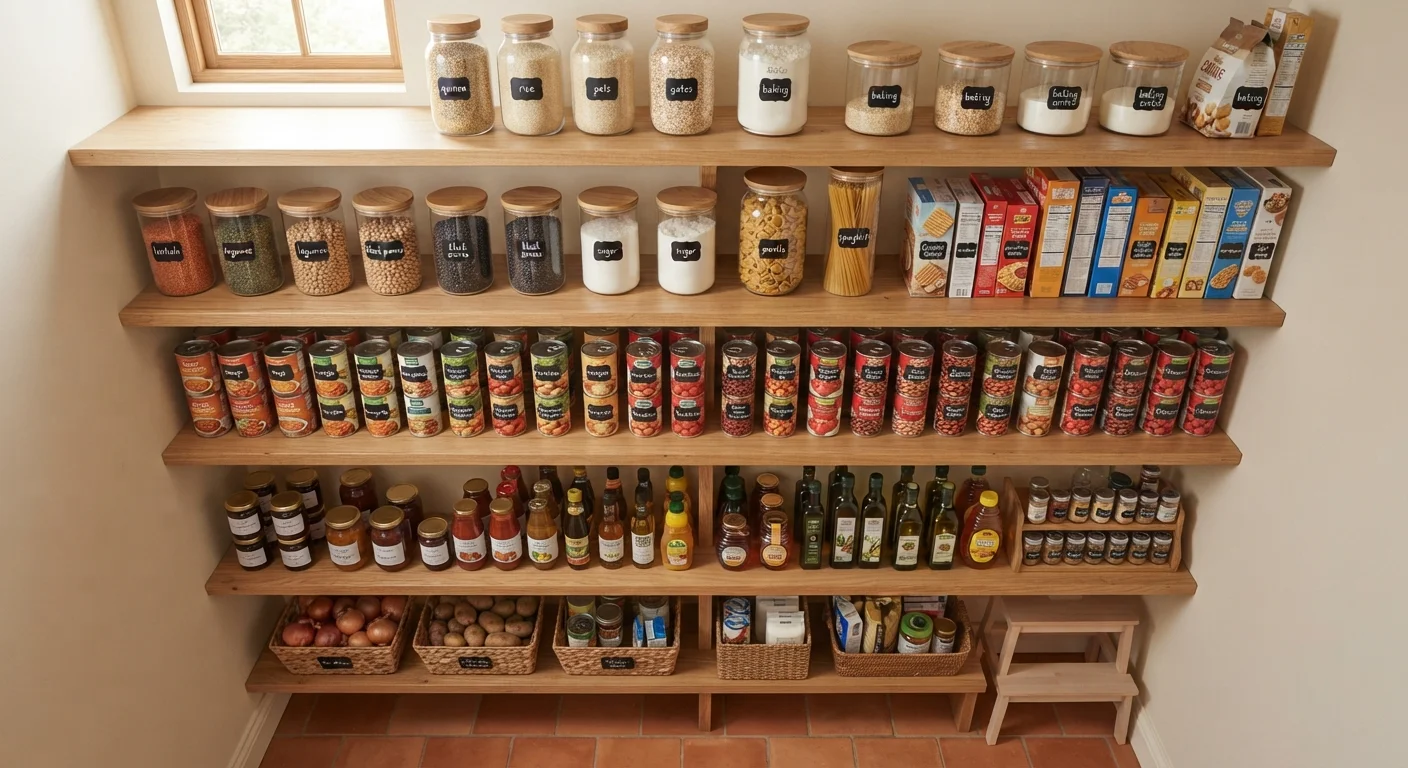
Pull items off shelves one section at a time - pantry, freezer, and fridge - and group them by category: grains and pasta, canned goods, proteins, condiments, baking supplies, snacks, and so on. Grouping reveals duplicates and gaps that aren't visible when everything is scattered.
Check dates and condition
As you group items, look at expiration or best-by dates. Set aside anything that's expired or obviously past its prime. Note which items are approaching their date within the next two to three weeks - these become priority ingredients for your upcoming meal plan.
Record what you have
Write down - or type into a notes app - the items you have and approximate quantities. You don't need a spreadsheet; even a rough category-by-category list on paper works. The goal is an external record so you're not relying on memory when you're standing in the store aisle.
Identify what meals you can build right now
Look at what you've recorded and ask: what complete or nearly complete meals can I make from this? A can of diced tomatoes, dried pasta, and olive oil is a meal. Half a bag of lentils and some canned broth is a meal. Identifying these combinations directly reduces how many ingredients you need to buy.
Build your grocery list from what's missing
Now, and only now, write your shopping list. The list should fill genuine gaps - fresh produce, proteins you're out of, staples that are nearly depleted - not items that caught your eye in a circular or that seem like a good idea in the moment. Cross-reference your planned meals against your pantry record to make sure every item on the list has a specific purpose.
Rotate stock when you get home
After a grocery run, place newly purchased items behind existing ones of the same type - older stock in front, newer in back. This first-in, first-out rotation is the single most effective habit for preventing food from expiring unused at the back of a shelf.
Making the Habit Stick
The pantry audit is only valuable if it becomes a consistent part of your pre-shopping routine. A few practices help it stick without adding friction.
Set a fixed shopping day. When you shop on a predictable schedule - say, every Saturday morning - it's easier to build the audit into the evening before. Irregular shopping trips make the habit harder to anchor.
Keep the list visible all week. Post a running list on the fridge or use a shared notes app. As items run low during the week, they get added immediately rather than recalled from memory the morning of a shop.
Connect the audit to your meal plan. The most effective pantry audits don't just catalogue what you have - they answer the question: what meals can I build from this? If you're not yet planning meals week to week, see our guide to meal planning on a tight budget for a practical framework. For those interested in balancing nutrition alongside cost, weekly meal planning for nutritional balance offers a useful walkthrough.
Over time, a well-maintained pantry also tells you where your bulk-buying instincts are costing you. If you consistently find three open bags of the same dried bean, that's a signal to reconsider stocking up. Bulk buying has a real place in a tight budget - but only when you can actually use what you buy before it goes stale or gets forgotten.
Don't Let Surplus Become a Spending Excuse
A well-stocked pantry can create a false sense that buying more is always smart. Resist the urge to stock up on items you already have in abundance, even when they're on sale. Storage space, expiration timelines, and actual consumption rate all cap the real value of any deal.