

Key Takeaways
Lawn Aeration
Lawn aeration is the process of creating small holes or channels in your soil to reduce compaction and allow air, water, and nutrients to reach grass roots more effectively. The most common method - core aeration - removes small plugs of soil from the ground, physically opening up the root zone. This encourages deeper root growth and improves the overall health and resilience of your lawn.
Core aeration (hollow-tine) is generally more effective than spike aeration because it removes soil rather than simply displacing it, which can worsen compaction around the spike holes.
What Compacted Soil Actually Does to Your Grass
Grass roots need three things to thrive: water, oxygen, and nutrients. When soil becomes compacted - packed down tightly by foot traffic, heavy equipment, or even repeated rainfall - the spaces between soil particles collapse. That collapse is the core problem.
In compacted soil, water runs off instead of soaking in. Oxygen levels drop near the root zone. Fertilizer sits at the surface rather than moving where it can be absorbed. The grass responds predictably: roots stay shallow, growth slows, and the lawn becomes visibly thinner and more vulnerable to drought, disease, and weeds.
Clay-heavy soils compact most readily, but even sandy or loam soils compact over time in high-traffic areas. If water puddles on your lawn after rain, or if pushing a screwdriver into dry soil feels like striking concrete, compaction is likely the culprit - not lack of water or fertilizer. Throwing more of either at a compacted lawn is like pouring water into a clogged drain.
~1 inch
Maximum healthy thatch thickness
University cooperative extension programs generally recommend addressing thatch that exceeds half an inch to one inch, at which point it begins blocking water and nutrient movement.
2-3 inches
Typical core aeration depth
Most core aerator tines penetrate two to three inches into the soil, the depth at which compaction most commonly restricts root growth in residential lawns.
2x per year
Recommended frequency for high-traffic or clay lawns
Lawns with heavy clay content or significant foot traffic may need aeration twice annually, according to general guidance from cooperative extension horticulture programs.
How Core Aeration Works - and Why the Method Matters
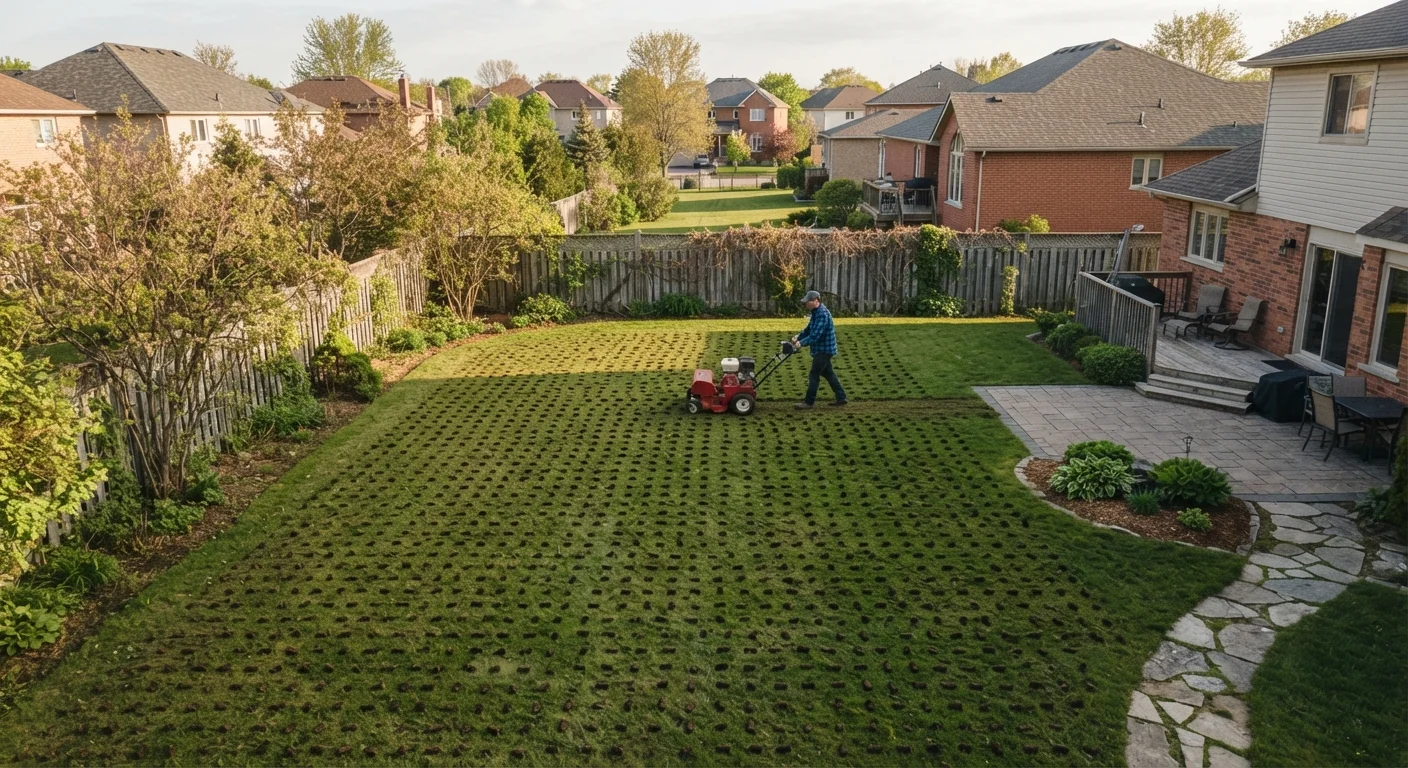
Core aeration uses hollow metal tines to pull small cylinders of soil - typically about half an inch in diameter and two to three inches deep - out of the ground. These cores are left on the surface, where they break down within a week or two. The channels they leave behind allow air, water, and nutrients direct access to the root zone.
Spike aeration, by contrast, simply pokes solid tines into the soil. While it sounds similar, it actually compresses soil sideways around each hole rather than removing any material. For already-compacted soil, this can make conditions marginally worse. Core aeration is the approach most lawn care professionals and university extension programs recommend for genuine compaction relief.
Rent Before You Commit to Buying
Core aerators are available at most equipment rental outlets for a fraction of the cost of purchasing one. For the average homeowner who aerates once a year, renting is almost always the more economical choice. Call ahead to reserve - aerators book quickly during peak fall and spring lawn care weekends.
One pass with a core aerator is a start, but running the machine in two perpendicular directions covers the lawn more thoroughly and creates more channels - particularly useful for heavily compacted areas.
What Happens When You Skip It Year After Year
A single missed aeration season rarely destroys a lawn. But skipping it consistently sets off a slow decline that becomes increasingly expensive to reverse. As compaction deepens, grass roots never push past the first inch or two of soil. That means the lawn depends entirely on surface moisture - one dry week can send it into stress that a well-rooted lawn would handle without issue.
Shallow roots also mean reduced uptake of any fertilizer you apply. You may spend money on lawn treatments that deliver a fraction of their intended benefit simply because the soil can't move them to where roots actually are. See our guide to fertilizer numbers and what they do to understand why soil access matters for nutrient uptake.
Over several years without aeration, thatch - the layer of dead grass material between the surface and the soil - tends to accumulate unchecked. Thatch above about half an inch starts blocking water penetration on its own, compounding the compaction problem. Reviving a severely neglected lawn typically requires multiple seasons of corrective work and costs considerably more than a yearly aeration would have.
When and How Often to Aerate
Timing aeration to your grass type's active growing season gives the lawn the best window to recover and fill in the channels left behind. For cool-season grasses - Kentucky bluegrass, tall fescue, ryegrass - early fall is the prime window, with early spring as a secondary option. For warm-season grasses - Bermudagrass, zoysia, St. Augustine - late spring through early summer aligns with peak growth.
For most residential lawns, once a year is sufficient. Lawns that receive heavy foot traffic, have predominantly clay soil, or show visible signs of compaction may benefit from aerating twice per year. If you're unsure about your soil's current condition, a soil test can reveal compaction indicators alongside nutrient and pH information - giving you a clearer picture before you invest in any lawn work.
After aerating, it's an ideal moment to overseed thin areas and apply fertilizer. Seed and nutrients placed after aeration have direct access to loosened soil, improving germination rates and uptake significantly. For a full seasonal approach to lawn tasks, a year-round lawn care checklist can help you sequence aeration alongside mowing, watering, and fertilizing for your specific grass type.