

Key Takeaways
Why Soil Testing Is the Foundation of a Cost-Effective Garden
Every dollar spent on fertilizer, compost, or pH amendments is a gamble without a soil test. Gardeners who skip this step often end up adding nutrients their soil already has in excess - or correcting a pH problem they inadvertently created themselves. The result is wasted money, underwhelming harvests, and frustrated seasons that could have been avoided.
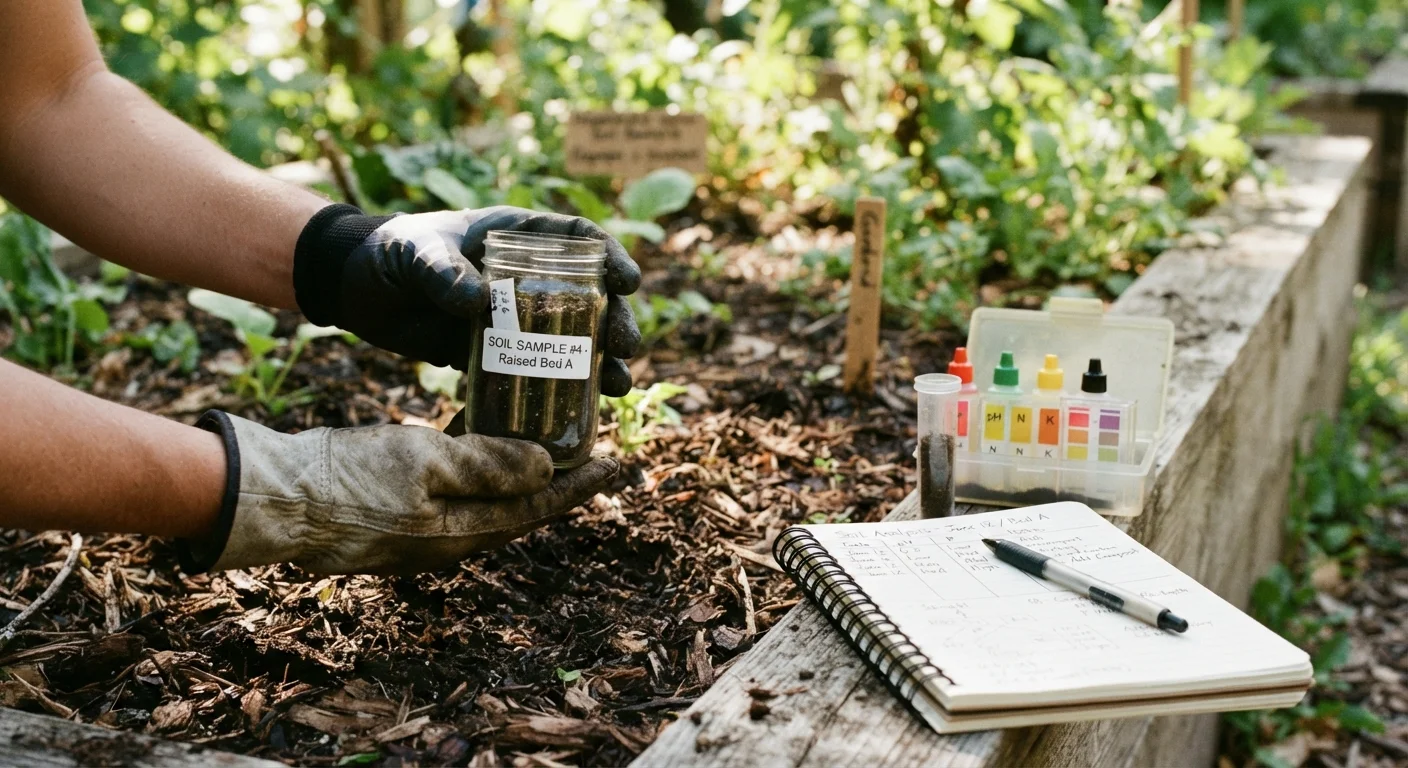
A basic soil test measures your soil's pH level along with available nitrogen, phosphorus, and potassium - the three primary nutrients that drive plant growth. Some tests also flag secondary nutrients like calcium and magnesium. Together, these numbers give you a precise starting point rather than a guess.
For gardeners focused on growing food at home, this matters especially. If you're building a vegetable plot, see our guide to starting a vegetable garden on a tight budget for context on how soil preparation fits into the full setup. The core principle is the same: spend money on what your soil actually needs, not on what looks useful at the store.
Wrong pH Locks Out Nutrients You Already Paid For
Fertilizer applied to soil with the wrong pH is largely wasted - plants simply cannot absorb many nutrients outside their preferred pH range. Before buying any amendment, a soil test confirms whether your soil's pH actually needs correcting. Skipping this step means you may be spending money on products that deliver no benefit.
The Mistakes That Drain Your Garden Budget
Most soil-related spending mistakes follow a predictable pattern: a gardener notices poor plant performance, reaches for an amendment without data, and either misses the actual problem or creates a new one. The mistakes below represent the most common and most costly patterns - each one avoidable with a single test.
Skipping the soil test entirely and guessing at what amendments to buy.
Why it happens: Many gardeners assume their soil is 'probably fine' or that adding a bag of general fertilizer is a safe default. Soil problems are often invisible until plants are already struggling.
Collecting a soil sample from only one spot in the garden.
Why it happens: It feels like extra work to take multiple samples, so most people just scoop from wherever they happen to be standing. But soil composition varies significantly across even a small yard.
Treating all areas of the yard identically despite different soil needs.
Why it happens: It's tempting to simplify by using the same amendment approach for the vegetable garden, the lawn, and any flower beds. These areas often have different histories, drainage patterns, and plant demands.
Ignoring the lab recommendations and applying whatever the store sells most prominently.
Why it happens: Interpreting a soil report feels unfamiliar, and retail fertilizer displays are designed to attract attention. It's easy to default to packaging claims over test data.
Testing once and assuming results are permanent.
Why it happens: Once the initial problem is solved, soil testing feels like a task to check off and forget. But soil chemistry shifts with watering, organic matter breakdown, and plant uptake.
Soil care connects directly to other lawn and garden investments. If your lawn is also underperforming, poor soil compaction may be a parallel factor - our overview of lawn aeration explains how compacted soil limits root development in ways a soil test alone won't catch.
How to Act on Your Soil Test Results Without Overspending
Once your results arrive, the goal is targeted action - not a shopping trip for every product on the label. Extension service recommendations are written to prioritize the most impactful corrections first. If your phosphorus is already adequate, for example, you don't need a high-phosphorus fertilizer even if the packaging claims to support root growth.
Don't Apply Lime or Sulfur Without Test Results
Lime raises soil pH and sulfur lowers it - both are commonly applied by gardeners who assume their soil needs adjusting. Over-applying either product can push pH to extremes that damage plant roots and disrupt soil biology. Always base pH correction on a confirmed test reading, not on assumptions about your region or soil type.
When adding organic matter such as compost, the amount matters as much as the type. Over-amending with compost can raise phosphorus to levels that actually inhibit plant uptake of other nutrients. Test results protect you from that outcome by quantifying what's already present.
If you're evaluating whether raised beds or in-ground planting better fits your budget and soil situation, our article on raised beds vs. in-ground planting walks through the long-term cost differences - including how soil control affects total amendment costs over time.
$20
Typical cost of a basic home soil test
Many state cooperative extension services offer basic pH and nutrient tests in this price range, making it an accessible first step for any budget gardener.
6.0-7.0
Optimal pH range for most vegetables
According to university extension guidelines, most common vegetables absorb nutrients most efficiently within this slightly acidic to neutral pH range.
Treat your soil test results as a standing reference. Keep a copy year over year so you can track whether amendments are working and avoid repeating corrections that have already been addressed.