

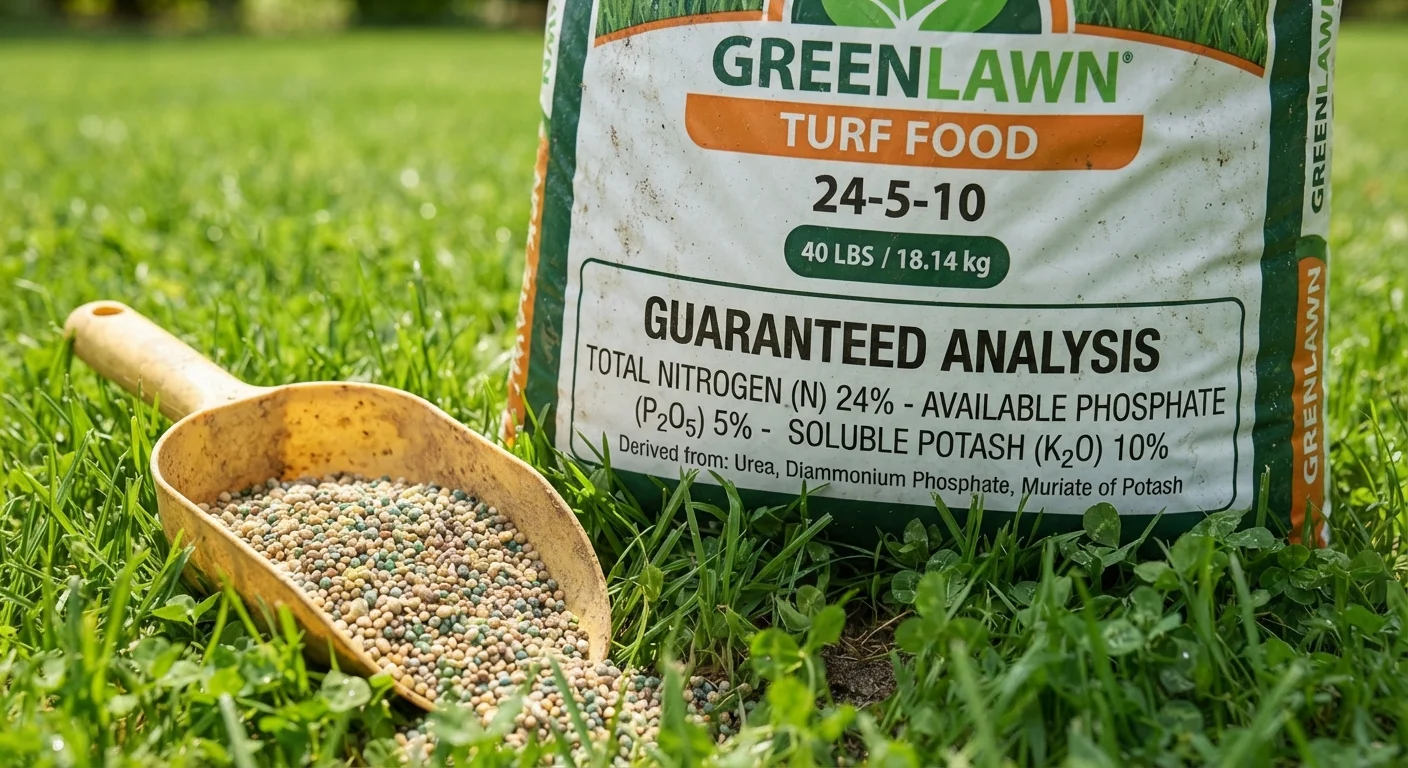
The Three Numbers, Decoded
Every fertilizer bag sold in the US displays three numbers separated by hyphens - something like 28-0-6 or 10-10-10. These numbers represent the percentage by weight of three primary nutrients: nitrogen (N), phosphorus (P), and potassium (K), always listed in that order. Together, this is called the N-P-K ratio.
A bag labeled 28-0-6 contains 28% nitrogen, 0% phosphorus, and 6% potassium. The remaining percentage is filler material - inert carriers that help spread the product evenly. Knowing what each nutrient does lets you choose a product that matches your lawn's actual condition rather than guessing.
Just like learning to read a nutrition panel on packaged food, decoding fertilizer numbers is a transferable skill. Our guide to nutrition label literacy walks through a similar process for food products.
What Each Nutrient Does for Your Grass
Nitrogen (N) is the growth driver. It fuels the production of chlorophyll, which gives grass its green color and powers photosynthesis. A lawn deficient in nitrogen looks pale, grows slowly, and thins out. High-nitrogen formulas are typically used during active growing seasons when you want dense, vigorous turf.
Phosphorus (P) supports root development and helps seedlings establish themselves. Established lawns in healthy soil often need very little additional phosphorus - and many states now restrict or ban phosphorus-containing fertilizers for routine lawn use due to runoff concerns. Check your local regulations before applying any product with a nonzero middle number.
Potassium (K) acts as the lawn's stress manager. It strengthens cell walls, improves drought tolerance, and helps grass survive temperature extremes and foot traffic. Fall applications that include potassium can improve winter hardiness in cool-season grasses.
N-P-K Ratio
The three-number code on fertilizer bags indicating the percentage by weight of nitrogen, phosphorus, and potassium, always listed in that order.
Nitrogen (N)
A macronutrient that drives leaf and shoot growth. It is the primary driver of the green color and density of a lawn.
Phosphorus (P)
A macronutrient that promotes root growth and helps new seedlings establish. Excess phosphorus can contribute to water pollution through runoff.
Potassium (K)
A macronutrient that strengthens grass cell walls and improves tolerance to drought, cold, and heavy use.
Slow-Release Nitrogen
A fertilizer form that breaks down gradually over weeks, reducing the risk of burning grass and providing a more consistent nutrient supply.
Soil Test
A laboratory analysis of a soil sample that reveals existing nutrient levels and pH, helping homeowners apply only what their lawn actually needs.
If you're starting a lawn from scratch, the balance of these nutrients matters even more early on. Our article on grass seed vs. sod covers how your establishment method affects fertilization timing.
Matching the Numbers to Your Lawn's Needs
The single most useful thing you can do before buying fertilizer is get a soil test. Most cooperative extension services offer them for a modest fee, and many county offices provide them free. A soil test tells you the actual nutrient levels and pH of your soil - information that makes the N-P-K numbers on a bag meaningful rather than arbitrary.
Without a soil test, a general rule of thumb for established lawns is:
- Choose a high-nitrogen, low-phosphorus formula for routine feeding during the growing season.
- Use a balanced or potassium-forward formula in fall to prepare cool-season grasses for winter.
- Avoid high-phosphorus products unless a soil test confirms a deficiency or you're establishing new grass.
Also consider whether you want a slow-release or quick-release nitrogen source. Slow-release formulas feed grass gradually over weeks, reducing the risk of burning and the need for frequent reapplication - often a better value over a full season even if the upfront cost is slightly higher. Pair smart fertilization with good soil structure; lawn aeration improves how well nutrients actually reach the root zone.