

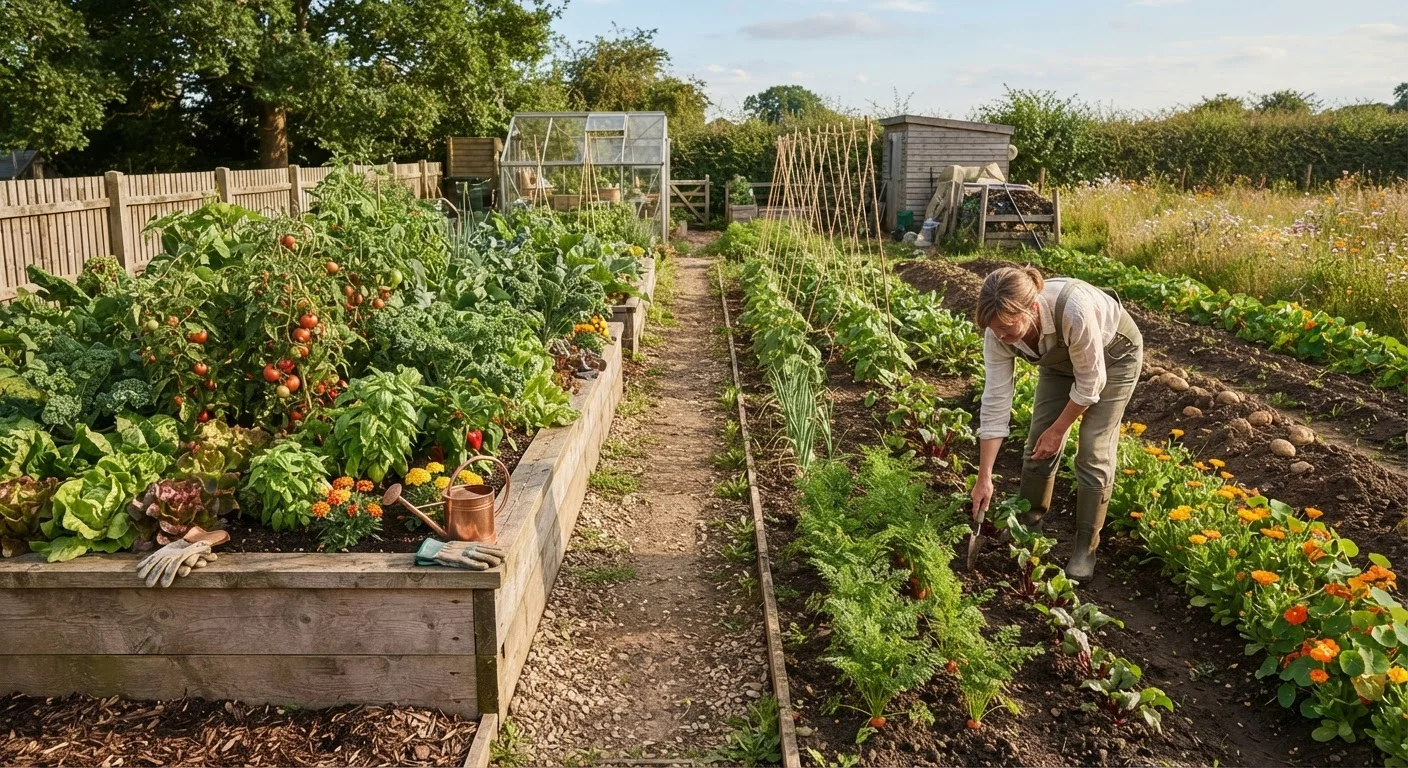
Key Takeaways
Option A
Raised Bed Gardening
The controlled, higher-upfront setup with long-term payoffs.
Best for: Gardeners with poor native soil, limited mobility, or persistent weed and drainage problems who can absorb startup costs.
Option B
In-Ground Planting
The low-barrier, traditional approach that rewards patient soil builders.
Best for: Homeowners with decent existing soil who want to start growing vegetables or flowers with minimal initial investment.
If your yard has compacted clay, rocky, or contaminated native soil
Raised Bed Gardening
Raised beds let you bypass poor native soil entirely by filling with a custom mix. Amending deeply compacted or contaminated ground in-place can cost as much or more over time.
If you want to start a large garden on a tight budget
In-Ground Planting
In-ground plots require little to no material investment to begin. Gradual composting and amendment are far cheaper than purchasing raised bed materials and fill soil.
If weed management is your biggest ongoing frustration
Raised Bed Gardening
Filling raised beds with weed-free soil mix dramatically reduces annual weed pressure compared to in-ground beds where soil-borne weed seeds are always present.
If you plan to garden across a large area of your yard
In-Ground Planting
Scaling an in-ground garden is as simple as expanding your planting area. Scaling raised beds multiplies material and fill costs with every additional bed you build.
If you have good loamy native soil and are willing to test and amend it
In-Ground Planting
Quality native soil that passes a basic soil test is genuinely free infrastructure. Investing in compost and amendments costs far less than building and filling raised beds.
The Real Upfront Cost Difference
This is where the gap between the two approaches is most stark. Starting an in-ground garden plot costs relatively little: clear the area, loosen the soil with a fork or tiller, add compost, and plant. Even factoring in a bag of organic compost and basic seeds, a 4×8-foot in-ground plot can be started for well under $30.
A comparably sized raised bed tells a different story. Lumber, hardware cloth (for gopher protection), corner brackets, and enough quality soil mix to fill an 8-inch-deep bed adds up quickly. A single 4×8 raised bed commonly runs $100-$300 or more depending on material choices - and that's before seeds or transplants. Cedar and composite materials cost more initially but resist rot longer, while untreated pine is cheaper but may need replacement within four to six years.
For budget-conscious gardeners, this upfront difference is significant. The key question isn't what you spend in year one - it's what each approach costs over five or ten growing seasons combined.
| Criterion | Raised Beds | In-Ground Planting |
|---|---|---|
| Startup cost (4×8 area) | $100-$300+ | Under $30 |
| Soil control | Immediate, fully customizable | Gradual, depends on native soil |
| Weed pressure | Low (fresh fill soil) | Higher (existing seed bank) |
| Water needs | Higher (drains faster) | Lower in moderate climates |
| Scalability | Costly to expand | Easy and cheap to expand |
| Structural maintenance | Wood rot, annual inspection | None |
| Long-term soil building | Requires topping-off annually | Self-sustaining with compost |
| Accessibility | Better for limited mobility | Requires bending and kneeling |
Soil Control and Amendment Costs Over Time
Native soil quality is the variable that most determines which setup wins financially long-term. If your yard has decent loamy soil that drains well, in-ground planting can be improved steadily with annual compost additions at modest cost. A soil test is worth taking before committing to either approach - it reveals exactly what amendments you actually need rather than what you guess you might need.
If your native soil is heavy clay, rocky, or has a history of chemical use, the calculation shifts. Amending clay soil deeply enough for root vegetables takes years and repeated inputs. In this scenario, raised beds let you define your own growing environment immediately by filling with a mix of topsoil, compost, and other organic matter - giving plants what they need from the first season.
Over time, raised beds need annual topping-off as the fill settles and organic matter breaks down. In-ground plots, by contrast, can build fertility continuously through composting, cover cropping, and mulching - practices that cost mainly labor. For more on keeping soil covered and suppressing weeds affordably, see our guide on mulch types and depths.
Before You Buy Fill Soil
Not all bagged or bulk garden soil mixes are equivalent in quality. Some contain high proportions of peat or low-grade compost that compress quickly and require heavy topping-off within one season. When sourcing bulk soil for raised beds, ask suppliers about compost content and whether the mix has been tested for contaminants. Many county extension offices can point you toward reputable local suppliers.
Watering, Weeding, and Ongoing Maintenance
Raised beds drain faster than in-ground plots - a benefit in wet climates, but a drawback in hot, dry summers when they require more frequent watering. Pairing raised beds with drip irrigation reduces this burden substantially. Our drip irrigation vs. sprinkler systems guide explains how drip systems reduce water use and suit raised bed geometry well.
Weed pressure is consistently lower in raised beds filled with purchased soil, since you're not working with seed-bank-laden native soil. In-ground gardeners typically spend more time weeding, though deep mulching can dramatically cut this labor. See our overview of non-chemical weed control methods for practical strategies that work at either type of plot.
Raised bed materials also require periodic maintenance. Wood frames should be inspected annually for rot and structural integrity. Composite or galvanized metal frames require less upkeep but represent a larger initial investment. In-ground plots have no structural component to maintain - the "infrastructure" is the soil itself.
4-6 years
Typical untreated pine raised bed lifespan
University cooperative extension guidelines commonly cite untreated softwood lumber lasting four to six years before rot becomes a structural concern in most US climates.
Up to 30%
Potential water savings with drip irrigation
The USDA and various water-conservation programs estimate that drip irrigation systems can reduce garden water use by 20-50% compared to overhead watering, depending on setup and climate.
Which Setup Actually Saves More?
Neither approach is universally cheaper - the answer depends on your starting conditions, how long you plan to garden, and how much your time is worth. In-ground planting wins on initial cost and long-term scalability, especially for homeowners with workable soil. Raised beds win when native soil is problematic, when weed or drainage issues would otherwise require expensive remediation, or when the higher year-one investment is offset by faster, more productive harvests from better-controlled growing conditions.
A practical middle path: start with one or two raised beds in the highest-priority growing spots (sun-drenched areas with the worst soil) while planting in-ground where your native soil is already adequate. This hybrid approach limits your upfront spending while targeting the spots where controlled soil pays off most. Whatever direction you go, the same investment-reduction logic applies to the rest of your outdoor space - understanding real trade-offs before spending is what separates smart garden budgets from expensive ones, whether you're weighing grass seed versus sod or choosing plants for lower-maintenance coverage.