

Key Takeaways
Storage Solutions You Already Own
Before spending money on organizers, bins, or drawer inserts, it's worth walking through your home with fresh eyes. Packaging, containers, and everyday objects you'd otherwise discard often solve the same problems as store-bought storage - sometimes better, because they're already sized for your space.
This approach fits naturally into a broader no-cost organizing mindset. If you haven't yet worked through what to keep and what to let go, start with decluttering before adding storage - organizing clutter just hides the problem. Once you know what you're storing, the ideas below will land more usefully.
Shoe Boxes as Drawer Dividers
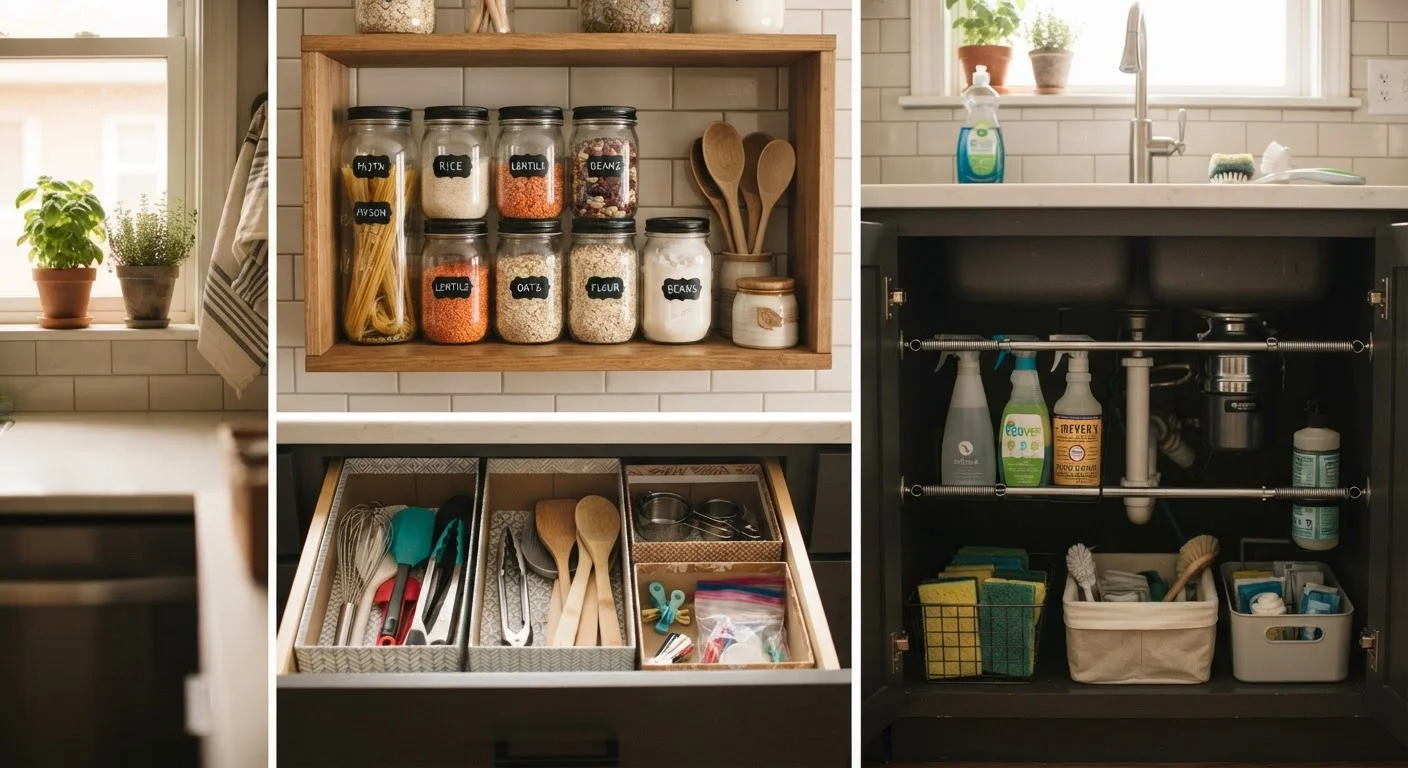
Intact shoe boxes - or lids alone - drop directly into deep kitchen drawers, junk drawers, or dresser drawers to create instant compartments. Cut boxes to fit side by side, and you can separate utensils, office supplies, or cables without any adhesive or tools. Wrap them in leftover wrapping paper or contact paper if you want a cleaner look.
The key insight here: drawer dividers sold at retail do exactly this job, but a shoe box already matches common drawer depths. You're not improvising - you're substituting a functionally equivalent object you already paid for.
A shoe box lid in a kitchen drawer does exactly what a $12 divider set does.
Mason Jars and Glass Jars for Visible Storage
Empty pasta sauce jars, pickle jars, or canning jars work well for storing small, frequently needed items: craft supplies, hardware like screws and nails, dried pantry goods, or bathroom cotton balls. Because glass is transparent, you can see contents instantly without digging - a real functional advantage over opaque bins.
On a countertop or open shelf, a row of matching jars also looks intentional rather than makeshift. Soak labels off in warm soapy water; most adhesive releases cleanly within 20-30 minutes.
Transparent glass jars let you see exactly what's inside - no digging required.
Tension Rods Under the Sink
An adjustable tension rod - the kind sold for curtains - can be wedged horizontally inside an under-sink cabinet to hang spray bottles by their triggers. This frees up the entire cabinet floor for other items. One rod typically holds four to six standard cleaning spray bottles depending on cabinet width.
This is especially useful for renters who can't install cabinet hardware. No drilling, no adhesive, no damage. More damage-free organizing ideas for renters are worth exploring if this situation applies to you.
One tension rod under the sink can reclaim an entire cabinet floor's worth of usable space.
Cardboard Boxes as Pantry Organizers
Cereal boxes cut down to three or four inches tall make excellent dividers inside pantry shelves - corralling sauce packets, snack bags, or small canned goods that tend to tip and scatter. Cut the front panel at a diagonal so you can see and grab contents easily. Sturdy shipping boxes work well for grouping categories together: baking supplies, pasta, canned tomatoes.
The structural logic is the same as any shelf organizer: category grouping reduces the time you spend searching. Category grouping as an organizing method applies just as effectively to pantries as it does to closets.
A cut-down cereal box corrals snack packets just as well as a purpose-made pantry bin.
Pegboards and Hooks from Scrap Wood
If you have scrap plywood and a drill, a simple pegboard-style panel mounted in a garage or utility room gives you flexible, adjustable tool storage without buying a pre-made system. Standard metal S-hooks or screw-in cup hooks cost very little individually. Even a 2×4 screwed horizontally to a garage wall stud can hold a row of hooks for extension cords, garden hoses, or hand tools.
This kind of vertical approach is especially valuable in smaller spaces. For a fuller picture of when vertical storage pays off versus when floor-based storage makes more sense, see our guide on vertical versus floor storage by room. For garages specifically, this step-by-step garage organizing guide walks through the full process.
A horizontal 2×4 screwed to a stud costs almost nothing and holds a surprising amount of gear.
Ice Cube Trays and Egg Cartons for Small Items
Plastic ice cube trays are excellent for organizing tiny items that get lost in drawers: earrings, shirt buttons, small screws, push pins, or SD cards. Egg cartons serve the same purpose for workshop settings - sorting fasteners by size, or separating seeds before planting season. Stack trays in a shallow drawer and they stay put without any additional hardware.
The value of this approach is specificity: when small items each have a designated slot, the time spent hunting for them drops considerably. It's a small habit with a disproportionate payoff.
An ice cube tray in a junk drawer eliminates the loose-screw problem for good.
Making It Stick: Habits That Keep Improvised Storage Working
Repurposed storage only works long-term if you can find things again. Two habits make the difference: labeling every container clearly (masking tape and a marker works fine) and assigning a fixed home to each category. When something doesn't fit, that's a signal to reassess what you're keeping - not to add more containers.
Label Before You Forget
Write the contents on a strip of masking tape before you put anything into a repurposed container. It takes five seconds and saves repeated re-sorting later. If the system changes, the tape peels off cleanly. This single habit is what separates improvised storage that lasts from a system that slowly reverts to chaos.
If you're working with limited square footage - particularly in bathrooms - these same principles apply at a smaller scale. See our bathroom-specific organizing strategies for approaches tailored to tight spaces. And if you're unsure whether to go vertical or keep things floor-level, this room-by-room breakdown can help you decide.