

Key Takeaways
Lower cost per unit on non-perishables
For staples like paper goods, cleaning supplies, and canned foods, per-unit costs in bulk are often meaningfully lower-typically 10-30% depending on the category and retailer.
Fewer shopping trips, less impulse spending
Stocking up reduces how often you visit a store, which cuts both transportation cost and the likelihood of unplanned purchases triggered by in-store browsing.
Buffer against price increases
Buying ahead at a known price insulates you from near-term inflation or supply disruptions on products with stable demand in your household.
Works well when splitting with others
Sharing a bulk purchase with a neighbor or family member preserves the per-unit discount while cutting the upfront cost and eliminating the risk of excess.
Large upfront cash outlay strains tight budgets
Even when per-unit savings are real, a bulk purchase requires more cash today. For households managing week-to-week, this timing problem can outweigh the unit-price benefit.
Perishables often expire before use
Items with shorter shelf lives-produce, dairy, bread, and even some pantry goods-frequently go to waste before a household can consume a bulk quantity, turning savings into losses.
Storage space is a real, hidden cost
Bulk quantities require dedicated storage. If you don't have the space, items may be stored improperly, leading to spoilage, pest exposure, or household clutter with its own costs.
Encourages buying items you didn't need
A visible bulk discount can trigger purchases that wouldn't otherwise happen-spending money to 'save' on something you rarely use is a net negative for any budget.
Bulk isn't always cheaper per unit
Warehouse and club store pricing isn't universally better per unit. Without checking the shelf math, shoppers often assume a saving that doesn't exist.
Our Verdict
Bulk buying is a genuinely effective cost-reduction tool when applied to non-perishable items you use consistently and have verified as cheaper per unit. It becomes a budget liability when it ties up cash, produces waste, or creates a false sense of savings on products you wouldn't otherwise buy. Treat it as one strategy in a broader toolkit, not a reflex.
Households with predictable consumption patterns, adequate storage, and the cash flow to absorb a larger upfront spend on items they buy regularly.
The Core Promise-and the Fine Print
Bulk buying rests on one straightforward idea: buy more at once, pay less per unit. For items with a long shelf life and reliable demand in your household, that math holds up. But the strategy carries hidden costs that the sticker price doesn't reveal-storage space, tied-up cash, and the very real possibility that half a bulk pack expires before you use it.
Before loading up a cart, the most important number to check isn't the package price. It's the unit price. Unit price versus package price is a distinction that consistently trips up shoppers-bulk isn't always cheaper per ounce, sheet, or serving. Verify the shelf label math before assuming the warehouse size is the smarter buy.
Lower cost per unit on non-perishables
For staples like paper goods, cleaning supplies, and canned foods, per-unit costs in bulk are often meaningfully lower-typically 10-30% depending on the category and retailer.
Fewer shopping trips, less impulse spending
Stocking up reduces how often you visit a store, which cuts both transportation cost and the likelihood of unplanned purchases triggered by in-store browsing.
Buffer against price increases
Buying ahead at a known price insulates you from near-term inflation or supply disruptions on products with stable demand in your household.
Works well when splitting with others
Sharing a bulk purchase with a neighbor or family member preserves the per-unit discount while cutting the upfront cost and eliminating the risk of excess.
When Bulk Buying Genuinely Works
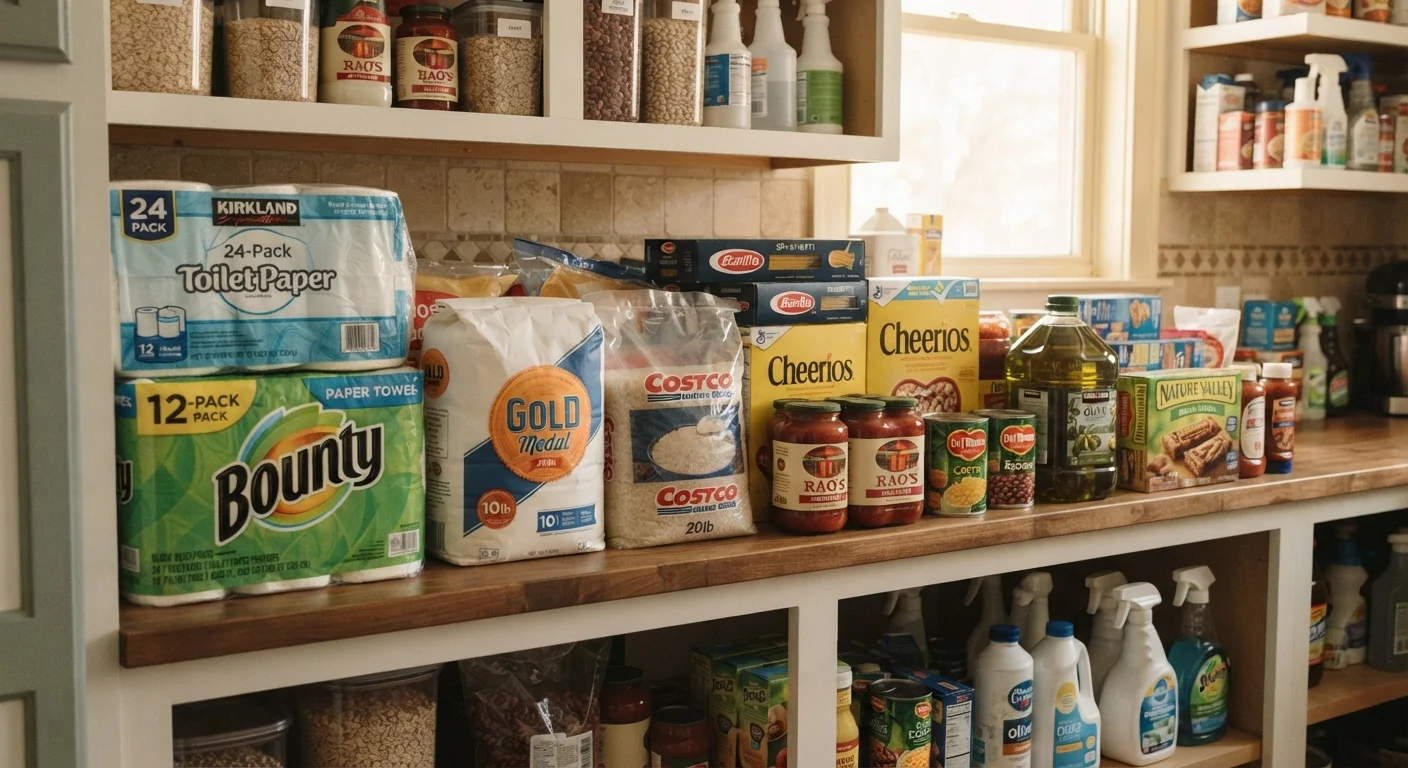
Certain purchase categories are well-suited to stocking up. Non-perishable household staples-laundry detergent, toilet paper, canned goods, dried pasta-have indefinite or very long shelf lives and predictable use rates. Buying these in volume when the per-unit cost is lower is straightforward, verifiable savings.
Pet food is another area where bulk purchasing tends to pay off for households with consistent feeding schedules. As detailed in our guide on stretching your pet food budget, understanding cost-per-serving math is the deciding factor-the same principle applies here as with any bulk category.
Bulk purchases also make more sense when you can split the quantity. Dividing a large pack with a neighbor or family member preserves the per-unit discount while eliminating waste risk and reducing the upfront cash hit for each party.
~30%
Typical per-unit savings on household staples bought in bulk
Industry analysts and consumer advocacy groups generally cite 10-30% per-unit savings as the realistic range for bulk non-perishables, depending on category.
40%
Share of food purchased in US households that goes to waste
According to USDA estimates, approximately 30-40% of the US food supply is lost or wasted, a figure that worsens when bulk perishables exceed household consumption capacity.
When Bulk Buying Backfires
The strategy breaks down in several predictable ways. Perishables are the clearest trap: produce, dairy, bakery items, and even some pantry goods with shorter windows get wasted before they're consumed, turning apparent savings into real losses. Wasted food is wasted money-the discount becomes irrelevant once you're throwing half the package away.
The upfront cash requirement is a less obvious but equally real problem for budget-constrained households. A bulk purchase might save 20% per unit but require $60 upfront versus $15 for a standard size. If that $45 difference would have covered another bill or week of groceries, the timing creates financial strain that offsets any per-unit savings.
Impulse bulk buying-stocking up on items simply because the quantity discount exists-is one of the shopping myths that cost budget-conscious buyers real money. Buying a bulk pack of a condiment you use twice a year because it looks like a deal is a net loss.
Large upfront cash outlay strains tight budgets
Even when per-unit savings are real, a bulk purchase requires more cash today. For households managing week-to-week, this timing problem can outweigh the unit-price benefit.
Perishables often expire before use
Items with shorter shelf lives-produce, dairy, bread, and even some pantry goods-frequently go to waste before a household can consume a bulk quantity, turning savings into losses.
Storage space is a real, hidden cost
Bulk quantities require dedicated storage. If you don't have the space, items may be stored improperly, leading to spoilage, pest exposure, or household clutter with its own costs.
Encourages buying items you didn't need
A visible bulk discount can trigger purchases that wouldn't otherwise happen-spending money to 'save' on something you rarely use is a net negative for any budget.
Bulk isn't always cheaper per unit
Warehouse and club store pricing isn't universally better per unit. Without checking the shelf math, shoppers often assume a saving that doesn't exist.
A Decision Framework Before You Stock Up
A simple pre-purchase checklist reduces costly mistakes:
- Audit what you have. Duplicating existing stock is wasteful. Pantry-first grocery shopping applies directly here-know what's already on your shelves before adding more.
- Confirm the unit price advantage. Calculate cost per unit for the bulk option versus the standard size. If the difference is less than 10%, factor in storage and cash flow before committing.
- Assess realistic consumption rate. How long will it actually take to use this? If the answer is longer than the product's shelf life, pass.
- Check your cash position. A bulk purchase that strains this month's budget creates downstream problems. The pre-buy checklist for large purchases applies here-timing matters as much as the price itself.
Bulk Buying Is a Tool, Not a Default
No single shopping strategy works in every situation. Bulk buying belongs in your toolkit alongside unit-price comparisons, sale-cycle timing, and pantry audits-not as a replacement for them. The goal is always verified savings on items you would buy regardless, not volume for its own sake. For a broader framework, see budget shopping strategies that hold up across every category.