

Key Takeaways
Pet Food Ingredient List
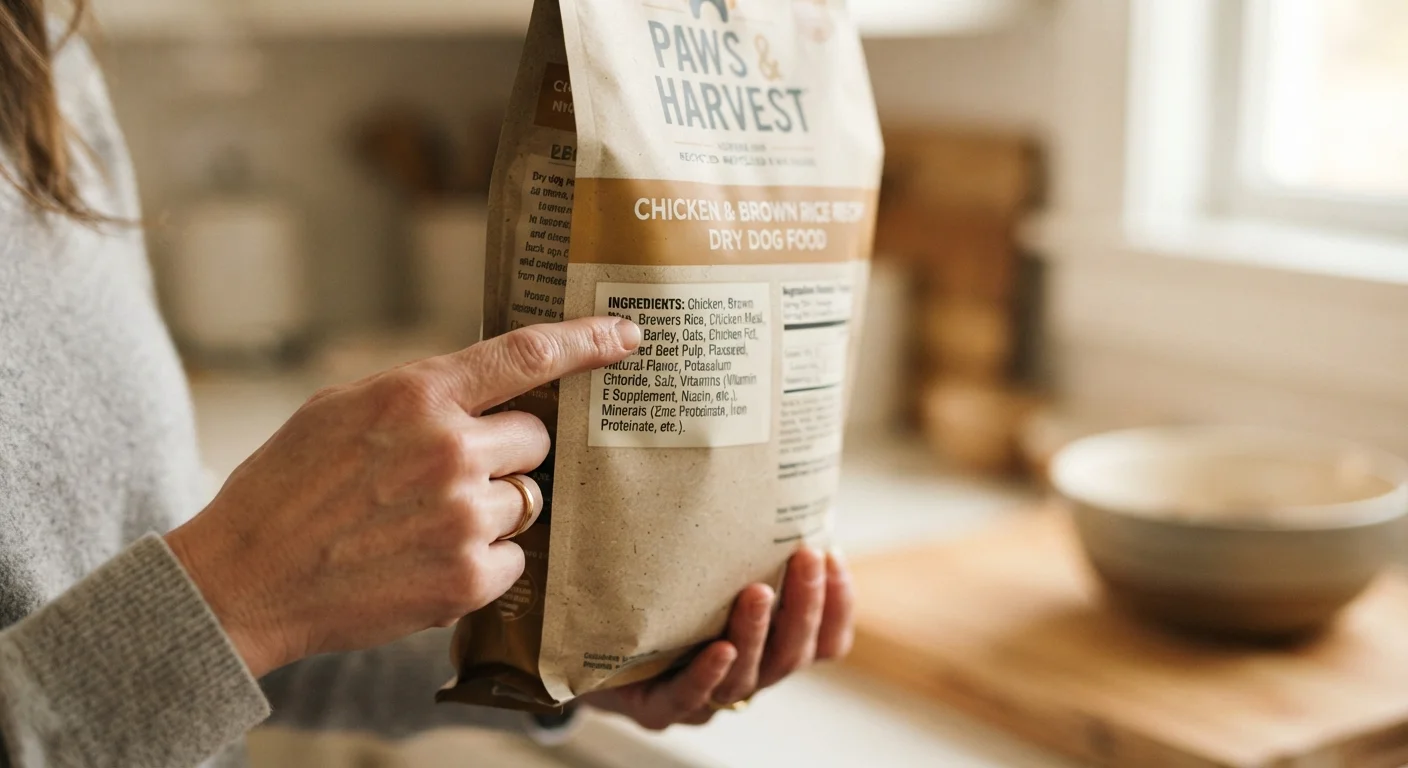
A pet food ingredient list is a legally required panel that names every component in the product, ordered by pre-cooking weight from heaviest to lightest. Regulated by the Association of American Feed Control Officials (AAFCO) and enforced at the state level, it must use standardized ingredient names. Reading it correctly can tell you a lot about the quality and nutritional balance of a food - but it requires knowing a few key rules.
Ingredients are listed by weight before moisture is removed, which means high-water ingredients like fresh chicken can rank higher than their actual dry contribution. This is why "chicken meal" - a concentrated, moisture-removed ingredient - can deliver more protein per pound than whole chicken listed first.
Why the Ingredient List Isn't Self-Explanatory
Most pet owners scan the ingredient list looking for familiar words at the top and unfamiliar ones at the bottom. That instinct isn't wrong, but it misses some critical mechanics. Pet food labels in the US are regulated through a patchwork of federal and state oversight, with AAFCO setting the ingredient definitions and model regulations that most states adopt. The result is a label that's more standardized than it looks - but only if you know what the rules actually are.
The single most important thing to understand: every ingredient is listed by its weight before processing. Water content counts. A fresh chicken breast is roughly 70% water, so it can weigh more than a bag of protein-dense chicken meal and still appear first on the list. Neither position is misleading in a legal sense, but the practical nutrient contribution can look very different from what the order implies.
For a practical tool you can use at the store, see our pet food shopping checklist.
The AAFCO Statement: The One Line That Actually Guarantees Nutritional Completeness
Before you read a single ingredient, find the AAFCO nutritional adequacy statement. It typically reads something like: " is formulated to meet the nutritional levels established by the AAFCO Dog Food Nutrient Profiles for maintenance." This line tells you two things: the food has been designed to meet defined minimum nutritional standards, and it's appropriate for a specific life stage.
There are two ways a food earns this statement: formulation (the recipe is calculated to meet nutrient profiles) or feeding trial (the food was actually fed to animals under AAFCO protocols and they maintained health). Feeding trials are a higher bar, though formulation-based foods are far more common and generally adequate for healthy pets.
If the label says "for intermittent or supplemental feeding only," the food is not a complete diet. Feeding it as a primary food long-term risks nutritional deficiencies. This isn't a red flag for treats or toppers - but it matters enormously if you're buying what looks like a main meal.
2
Ways an AAFCO adequacy claim can be earned
Foods may qualify through nutrient profile formulation or an actual animal feeding trial - the latter is considered a higher standard by many veterinary nutritionists.
70%
Approximate water content in fresh meat ingredients
This moisture weight is why whole chicken can appear first on a dry kibble label despite contributing less dry protein than concentrated ingredients listed lower.
4
Required nutrient values in guaranteed analysis
US pet food regulations require labels to disclose minimum crude protein, minimum crude fat, maximum crude fiber, and maximum moisture - expressed as percentages.
Ingredient Tricks That Shift Your Perception
Two practices are legal, common, and worth understanding before you draw conclusions from an ingredient list.
Ingredient Splitting
A manufacturer might list corn as "ground corn," "corn gluten meal," and "corn flour" - three separate entries that each appear lower than the named meat protein. Add those fractions together, however, and corn may collectively outweigh the chicken listed first. This is called ingredient splitting. It's not fraud, but it can make a food look more protein-centric than it is. If you see three or four variations of the same base ingredient scattered across the list, that's worth noting.
Water Weight and Moisture Content
Fresh and frozen ingredients carry significant moisture. Kibble uses dry or rendered ingredients that are more concentrated. This is why comparing ingredient lists between a wet food and a dry food can be like comparing apples to oranges without accounting for moisture. The guaranteed analysis panel - which shows minimum crude protein, minimum crude fat, maximum crude fiber, and maximum moisture - is a more apples-to-apples tool for nutrient comparison, though it shows ranges, not exact values.
For a broader look at how protein sources stack up, see our guide to protein sources in pet food.
Compare Foods on a Dry Matter Basis
When comparing wet and dry pet foods, moisture content makes direct comparison misleading. To get a true apples-to-apples comparison, use the dry matter basis calculation: subtract the moisture percentage from 100, then divide the nutrient percentage by that number. Your veterinarian or a veterinary nutritionist can walk you through this if the math feels unfamiliar.
Marketing Terms With No Regulatory Weight
Several words on pet food packaging carry emotional appeal but little legal definition. Knowing which terms are regulated and which are not can save you from paying a premium for a label rather than a better product.
- "Natural": Has an AAFCO definition, but it's broad and includes exceptions for added vitamins and minerals. It does not mean organic, raw, or minimally processed.
- "Holistic": Has no AAFCO definition whatsoever. It is purely a marketing word.
- "Human-grade": Technically meaningful only if the entire manufacturing process meets USDA standards for human food facilities - a high bar that most pet food plants do not clear. When used loosely, it's largely a marketing claim.
- "Grain-free": Describes an ingredient exclusion, not a nutritional benefit. The relationship between grain-free diets and certain heart conditions in dogs is an area of ongoing research. See our related piece on grain-free pet diet myths for context.
None of these terms should drive a purchase decision on their own. The AAFCO statement, the ingredient order, and the guaranteed analysis together are far more informative than any front-of-bag phrase.
This article provides general educational information about pet food labeling and is not a substitute for guidance from a licensed veterinarian or veterinary nutritionist regarding your specific pet's dietary needs.