

Key Takeaways
Summary
18 items · 10-20 minutes per product
Why a Consistent Verification Routine Pays Off
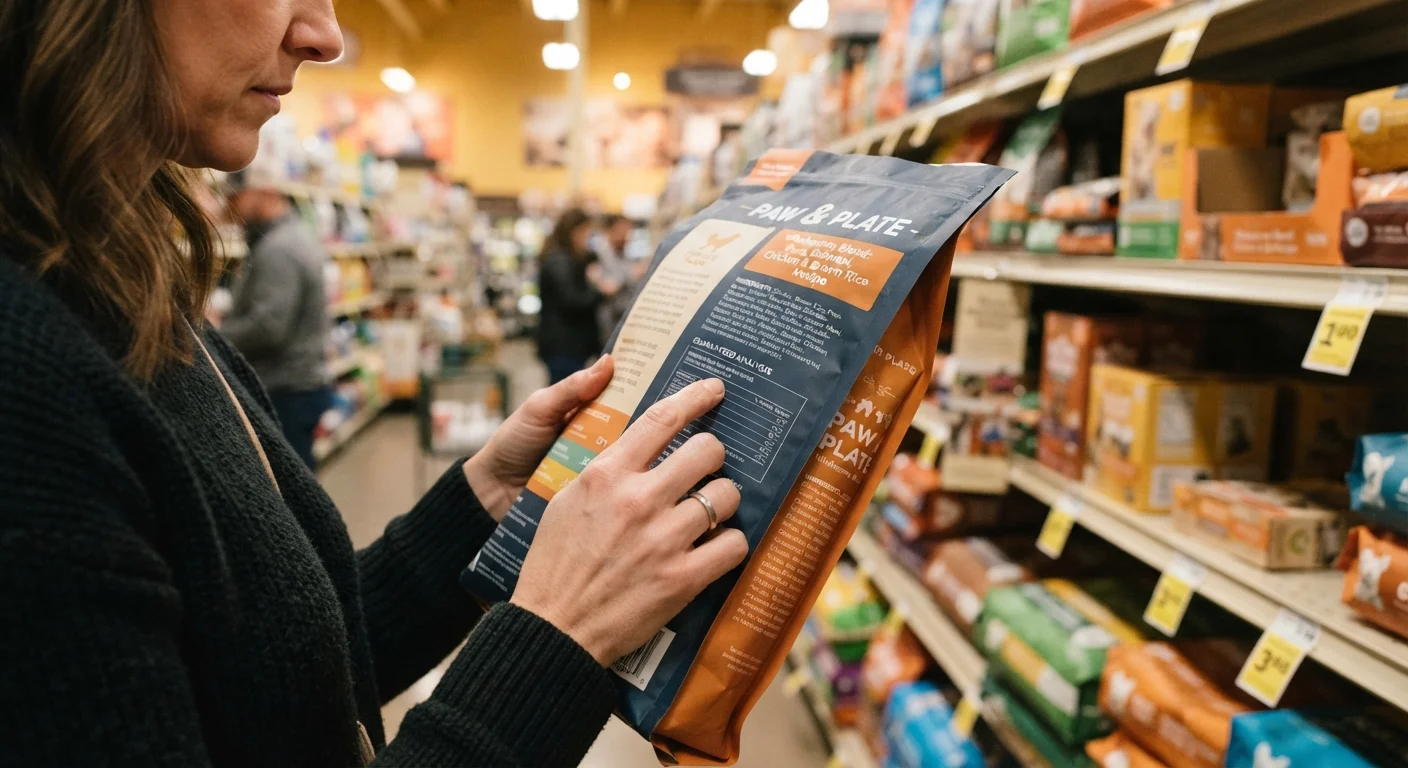
Pet food packaging is dense with marketing language, and it's easy to mistake a bold claim on the front of a bag for a nutritional guarantee. Building a short, repeatable verification habit - one you run through every time you consider a new food or restock a familiar one - removes that guesswork.
This checklist is organized so you can move from the most critical checks (regulatory and safety) down to cost efficiency. Work through it in order when evaluating an unfamiliar product; for a brand you already trust, the budget section alone may be all you revisit. For a deeper breakdown of how pet food labels are structured, see Pet Food Labels Decoded.
Regulatory and Safety
Ingredient Quality
Guaranteed Analysis
Budget and Value
Tools and Resources That Make This Easier
You don't need much equipment to run through this checklist, but a few resources streamline the process considerably - especially when comparing multiple products at once.
FDA Pet Food Recall Database
Search by brand or product to verify no active recalls exist before purchasing.
Calculator (phone or standalone)
Needed to convert wet food guaranteed analysis to dry-matter basis and to compute cost-per-serving.
Manufacturer website or customer service line
Retrieve caloric density (kcal/kg) and ingredient sourcing details not always printed on the label.
Notebook or notes app
Record lot numbers from bags you bring home for quick recall cross-referencing.
Once you know a food passes these checks, the next question is whether your cart is as cost-efficient as possible. Our pet food budget guide covers bulk-buying math and other practical approaches. And if you want to apply the same systematic thinking to the rest of your household spending, the savings verification routine is worth bookmarking alongside this one.
Don't rely on front-of-bag claims alone
Terms like "natural," "premium," and "holistic" have no regulated definition in US pet food labeling and carry no guaranteed nutritional meaning. Always move past the front panel to the ingredient list, guaranteed analysis, and AAFCO statement before drawing conclusions about quality.
Understanding What You Find on the Label
Passing a checklist item doesn't always mean a food is the right fit - context matters. A food marketed for "all life stages" meets the nutritional floor for puppies and kittens, which are the most demanding life stages, so it may actually exceed what an adult, less-active pet needs. Conversely, a food formulated for adults may not carry sufficient calcium for a growing puppy.
Protein source identity matters too. "Chicken" and "chicken meal" are both legitimate, but they behave differently in the formula - meal is a concentrated, pre-dried source, while fresh chicken is mostly water weight. Protein Sources in Pet Food breaks down what these distinctions mean practically. If you're ever considering preparing food yourself, Homemade Pet Food: What You Need to Know outlines the nutritional risks and how to approach home feeding responsibly.
This article provides general educational information about pet food labels and is not a substitute for personalized veterinary nutritional advice. Consult your veterinarian before making significant changes to your pet's diet, especially for animals with health conditions.