

Key Takeaways
Pet Food Protein Sources
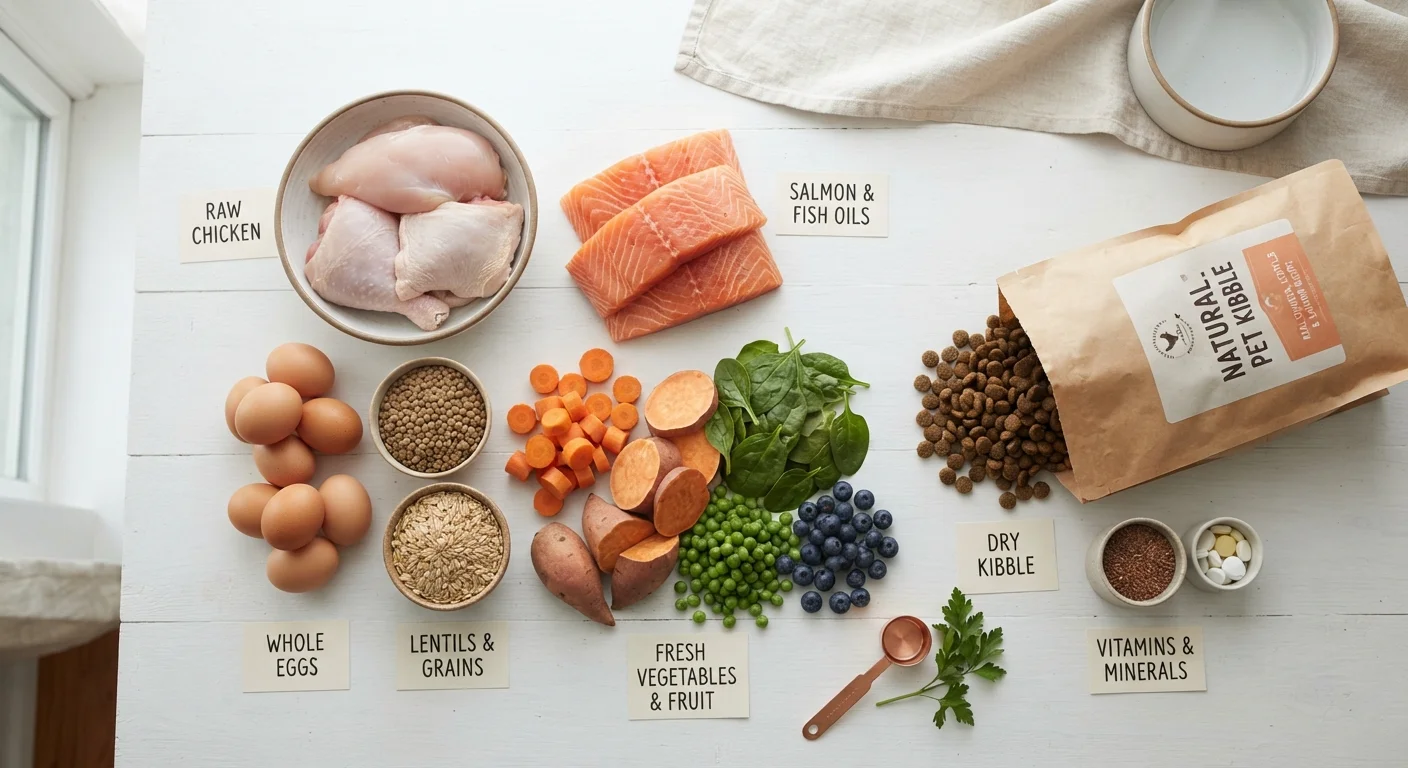
Protein sources in pet food are the ingredients that supply amino acids - the building blocks pets need for muscle, organ function, immune health, and more. They fall into three broad categories: animal-based proteins (meat, fish, poultry), plant-based proteins (legumes, grains, soy), and animal byproducts (organ meat, bone meal, rendered tissues). Each type differs in digestibility, amino acid completeness, and cost.
Digestibility and amino acid profile - not just crude protein percentage - determine how useful a protein source actually is to your pet's body. The guaranteed analysis on a label shows minimum crude protein but says nothing about how much of it your pet can actually absorb.
Animal-Based Proteins: The Gold Standard for Most Pets
Named whole meats - chicken, beef, salmon, turkey - and their meal equivalents are the most digestible protein sources for both dogs and cats. When a label says "chicken," it refers to raw whole chicken before cooking; when it says "chicken meal," moisture has been removed first, producing a concentrated protein powder. Both are legitimate, though meal forms often deliver more protein per gram in a finished kibble.
For cats especially, animal protein isn't optional - it's physiologically essential. Cats cannot synthesize adequate taurine, arachidonic acid, or vitamin A from plant precursors. These must come from animal tissue. For dogs, animal protein is still the most bioavailable option, supporting muscle maintenance, coat health, and immune function more efficiently than plant alternatives.
If you're evaluating any food, look for a named animal protein or meal within the first two or three ingredients. See how pet food labels work for a deeper breakdown of what ingredient position actually signals.
Byproducts: Misunderstood, Not Low-Quality by Default
"Byproduct" is one of the most misread terms in pet nutrition. By AAFCO definition, poultry byproducts include organ meats, necks, feet, and undeveloped eggs - parts considered less desirable by human food standards but often more nutrient-dense than muscle meat alone. Liver, kidney, and heart are rich in vitamins, minerals, and amino acids that aren't as concentrated in skeletal muscle.
The legitimate concern with byproducts isn't the ingredient type - it's the lack of specificity. "Poultry byproduct meal" without a named species is vaguer than "chicken byproduct meal." Vague sourcing makes quality harder to assess. Named byproduct meals from identified species, produced under consistent quality controls, are used in many nutritionally complete formulas, including budget-tier options.
What 'Meal' Actually Means on a Label
The word 'meal' in any ingredient name simply means the water content has been removed before weighing. Because fresh meat is roughly 70% water, 'chicken meal' often contains significantly more protein per pound than fresh chicken listed first. This is standard, regulated processing - not a red flag on its own.
The word "meal" in any ingredient name simply means the water content has been removed before weighing. This is standard processing for dry pet food - not a red flag on its own.
Plant-Based Proteins: Useful Supplement, Not a Complete Solution
Ingredients like peas, lentils, soy, corn gluten meal, and potato protein appear frequently in commercial pet foods - sometimes as primary proteins in grain-free formulas. Plant proteins are less expensive and extend a formula's total protein percentage, but they come with meaningful limitations.
Most plant proteins are deficient in one or more essential amino acids that dogs and cats need. Soy is the closest to a complete protein among plant options, but it's still not equivalent to animal tissue in amino acid profile or digestibility for carnivorous species. Additionally, the FDA has been investigating a potential link between diets high in legumes and dilated cardiomyopathy (DCM) in dogs - research that remains ongoing and inconclusive, but is worth factoring into your decisions.
Plant proteins aren't automatically harmful. In a balanced, AAFCO-compliant formula where animal protein is the foundation, plant ingredients serve a supplementary role. The problem arises when they become the primary or sole protein driver. For context on how this compares to human nutrition thinking, see plant vs. animal protein compared.
Quick Label Check for Protein Quality
Look for a named animal protein or named animal meal (chicken, salmon, beef) within the first two ingredients. If the first two are plant proteins or unnamed 'meat meal,' the formula's amino acid profile may not fully support your pet's needs. An AAFCO adequacy statement confirms the formula at least meets baseline nutrient minimums.
Making Smarter Choices on a Budget
Budget-conscious owners don't have to choose between affordability and adequate nutrition - but they do need to read labels carefully. A moderately priced food led by chicken meal and supplemented with rice or oats can outperform a pricier formula where the first several ingredients are legumes and plant concentrates.
Key things to verify before buying: an AAFCO nutritional adequacy statement for your pet's life stage, a named animal protein or meal in the top ingredients, and a named species wherever byproducts appear. Use our pet food shopping checklist as a quick-reference tool at the store or online.
If you're considering supplementing commercial food with home-cooked additions, read what to know before making homemade pet food first - nutritional gaps are a real and common risk. And before adding any extras to your pet's bowl, understand what actually belongs in your pet's diet.
This article is for general informational purposes only and is not a substitute for veterinary nutritional advice. Consult a licensed veterinarian or board-certified veterinary nutritionist for guidance specific to your pet's health needs.