

| Most common match window (post-purchase) | 7-30 days after original purchase (General industry standard; individual retailer policies vary) |
| Typically excluded events | Black Friday, Cyber Monday, doorbuster and flash sales (Standard exclusion language across most major retailer policies) |
| Third-party marketplace sellers | Usually excluded (e.g., marketplace sellers on major platforms) (Common policy restriction; verify per retailer) |
| Item stock requirement | Both retailers must have item in stock at quoted price (Standard condition across most policies) |
| SKU match requirement | Exact model number, size, color, and configuration (Retailer-exclusive SKUs frequently disqualify matches) |
| Where to find the policy | Retailer website, customer service chat, or in-store signage |
How Price Matching Actually Works
Price matching lets you buy an item at one retailer while paying a competing retailer's lower price-without leaving the store or abandoning your cart. It sounds simple, but execution varies dramatically by retailer, and most shoppers leave money on the table because they don't know the exact conditions that trigger a match.
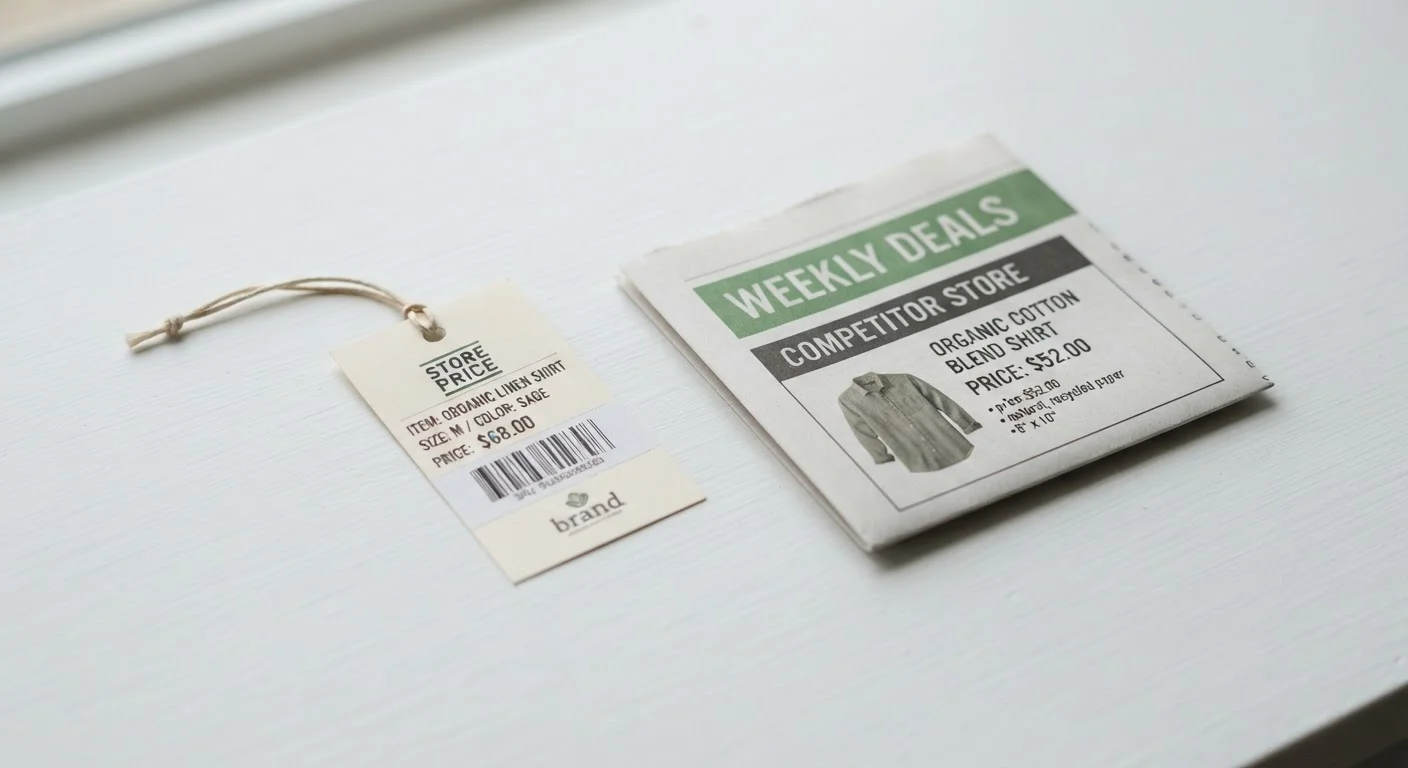
The core mechanic: you present proof of a lower price (a live webpage, a printed ad, or a competitor app screenshot), the retailer's associate verifies it against their policy, and the difference is applied at checkout. Some retailers also offer post-purchase price matching-a retroactive adjustment if the price drops within a defined window after you buy.
Understanding which retailers honor which types of competitors matters more than most shoppers realize. A policy that matches "local competitors" won't cover a national online seller. A policy that covers online prices may exclude marketplace third-party sellers. The devil is in the exclusions. See the how retailers use pricing psychology to understand why those exclusions are rarely accidental.
| Most common match window (post-purchase) | 7-30 days after original purchase (General industry standard; individual retailer policies vary) |
| Typically excluded events | Black Friday, Cyber Monday, doorbuster and flash sales (Standard exclusion language across most major retailer policies) |
| Third-party marketplace sellers | Usually excluded (e.g., marketplace sellers on major platforms) (Common policy restriction; verify per retailer) |
| Item stock requirement | Both retailers must have item in stock at quoted price (Standard condition across most policies) |
| SKU match requirement | Exact model number, size, color, and configuration (Retailer-exclusive SKUs frequently disqualify matches) |
| Where to find the policy | Retailer website, customer service chat, or in-store signage |
Common Policy Rules and Exclusions to Know Before You Ask
Most retailer price match policies share a core set of conditions. Here's what to check before you approach a register or contact customer service:
- Identical item requirement: The exact same model number, color, size, and configuration must be in stock at the competing retailer. Bundle differences, retailer-exclusive SKUs, or even packaging variants typically disqualify a match.
- Stock requirement: Both retailers usually need to have the item in stock and available for purchase at the quoted price. Out-of-stock or clearance items are frequently excluded.
- Competitor eligibility: Policies define which competitors qualify. Many brick-and-mortar stores now include major online retailers but exclude third-party marketplace sellers, auction sites, and membership-only warehouses.
- Exclusions for sale events: Black Friday, Cyber Monday, flash sales, liquidation events, and doorbuster pricing are routinely excluded from price match policies-even when the lower price is clearly posted.
- One match per transaction: Some retailers cap the number of items or quantity eligible per customer visit.
- Post-purchase window: Retroactive matching is typically limited to 7-30 days after purchase. Know this window before you buy.
For context on how price matching interacts with other savings tools, see our overview of how coupons, promo codes, and cashback work - because stacking a price match with a coupon is sometimes possible, and sometimes explicitly blocked.
Price match
A retailer's agreement to sell an item at a lower price documented by a qualifying competitor. The buyer presents proof of the lower price, and the retailer adjusts the transaction accordingly.
Post-purchase price match
A retroactive price adjustment applied after a purchase is completed, typically within a set window (often 7-30 days). The shopper contacts the retailer with proof the price dropped and requests a refund of the difference.
Doorbuster pricing
Deeply discounted prices offered for a very limited time or quantity-usually during major sale events. These prices are almost universally excluded from price match policies.
Authorized retailer
A seller officially recognized by a manufacturer or policy as a legitimate reseller. Many price match policies restrict matches to authorized retailers, excluding gray-market or third-party marketplace sellers.
SKU (Stock Keeping Unit)
A unique identifier assigned to a specific product variant. Price match policies typically require an exact SKU match, meaning the same model number, color, and configuration at both retailers.
How to Submit a Price Match Request That Actually Gets Approved
Preparation is what separates successful requests from frustrated ones. Follow this sequence:
- Verify the competitor's current price before you're at checkout. Prices change in real time. A screenshot with a timestamp is stronger evidence than a recalled memory.
- Confirm the item is identical. Pull up both product pages side by side and confirm the model number matches exactly-not just the product name.
- Check in-stock status at the competitor. If it's out of stock, the match will likely be denied. Add it to your cart at the competitor's site to confirm availability.
- Read the policy before asking. Most retailers post their price match policy online. Knowing the specific language-"authorized retailers" vs. "online retailers"-helps you cite the policy accurately if challenged.
- Ask politely and specifically. Say: "I'd like to request a price match under your price match policy. The same item is currently listed at for , and I have the page pulled up." Vague requests get vague responses.
- Escalate if declined incorrectly. Front-line associates sometimes misapply their own policy. Asking for a manager or contacting customer support via chat (which creates a written record) often produces different results.
Price matching pairs well with timing strategy. Combining a matched price during a competitor's legitimate sale event-if the retailer's policy allows it-can meaningfully reduce what you pay. See deal timing guidance for when competitors are most likely to run those qualifying sales.
One more angle worth knowing: if a price match is approved, check whether a cashback portal or a retailer coupon can still apply on top. Policies on stacking vary. Our coverage of when stacking backfires walks through the specific scenarios where combining discounts can void one or the other.