

Key Takeaways
Savings Tools: Coupons, Promo Codes & Cashback
Coupons, promo codes, and cashback are three distinct mechanisms for reducing what you spend or recovering money after a purchase. A coupon or promo code lowers your checkout price upfront. Cashback returns a percentage of your spending after the transaction clears. Each tool operates at a different point in the purchase process and has different rules about where and how it applies.
Cashback is typically tracked via affiliate cookies or card network data, which means the timing of your click or payment method can affect whether the reward is credited.
Coupons: An Upfront Price Cut
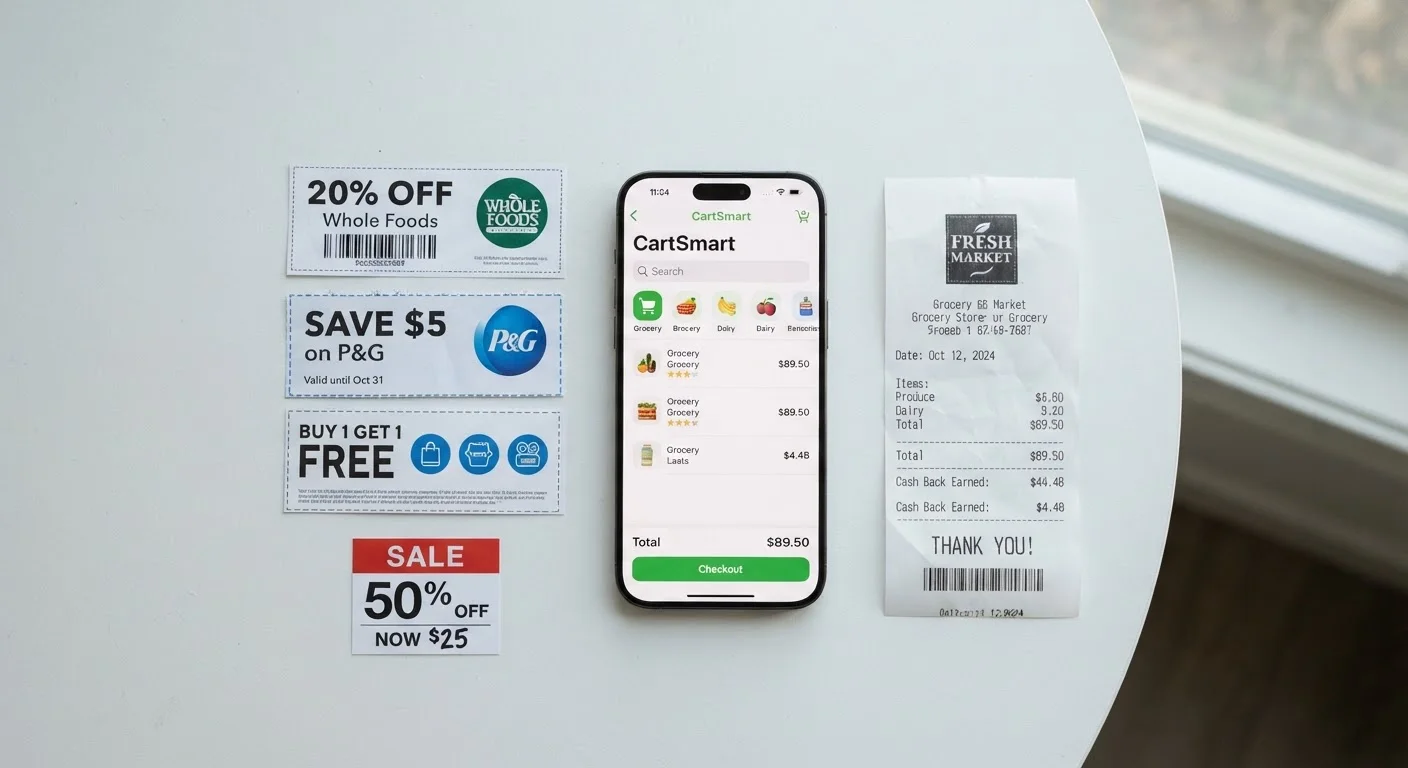
A coupon is a voucher-physical or digital-that authorizes a specific discount at the time of purchase. The discount is applied before you pay, so your checkout total reflects the reduction immediately. Coupons can be percentage-based (e.g., 15% off), fixed-amount (e.g., $2 off), or conditional (e.g., buy two, get one free).
There are two main types: manufacturer coupons, issued by the brand that makes a product, and retailer coupons, issued by the store selling it. The distinction matters because their stacking rules differ. Our retailer vs. manufacturer coupon comparison goes deeper on when you can use both at once.
Coupons typically carry expiration dates and product-specific restrictions. A coupon for a particular brand of motor oil won't apply to a different brand, even if both are in the automotive section.
Check Expiration Dates Before You Shop
Manufacturer and retailer coupons almost always expire, and many have blackout periods around major sales events. Before building a shopping trip around a coupon, confirm it's still valid and that the specific product you're buying is eligible-not just the brand or category.
Promo Codes: The Digital Checkout Discount
A promo code (also called a discount code or coupon code) is an alphanumeric string entered into a designated field during online checkout. Mechanically, it functions exactly like a coupon-your order total drops before payment is processed. The difference is purely in delivery: promo codes are distributed digitally, often via email newsletters, loyalty programs, or coupon aggregator sites.
Because they're entered manually, promo codes give retailers precise control over distribution and eligibility. A code emailed to first-time customers won't work for returning customers. Some codes are single-use; others work for anyone who has them.
Automatic coupon-finder browser extensions try promo codes at checkout on your behalf-useful, but not exhaustive. They surface publicly available codes and miss private or loyalty-exclusive ones.
88%
US shoppers who used a coupon or code in the past year
According to RetailMeNot's shopper research, the vast majority of US consumers actively use some form of discount code or coupon when shopping online or in-store.
30-90 days
Typical cashback confirmation window
Most cashback portals hold earnings in 'pending' status until after the retailer's return window closes, which commonly ranges from 30 to 90 days depending on the retailer's policy.
1%-10%
Common cashback portal rate range
Cashback rates on major portals typically fall between 1% and 10% of the purchase total, though promotional rates on specific retailers can occasionally exceed this range.
Cashback: Money Returned After the Sale
Cashback works differently from coupons or promo codes. Instead of reducing your price at checkout, it returns a percentage of what you paid-after the transaction is complete. There are two main delivery channels:
- Cashback portals: Websites (and browser extensions) that track your purchase via an affiliate link and credit you a share of the retailer's commission. You must initiate your shopping session through the portal for tracking to work.
- Cashback credit cards: Cards that earn a percentage of every eligible purchase as a statement credit or redeemable reward. The cashback is calculated on your final charged amount and typically posts within one to two billing cycles.
For a detailed comparison of how these two channels differ mechanically, see cashback credit cards vs. cashback portals. Understanding why cashback portals pay you also helps you evaluate their reliability.
When You Can-and Can't-Use All Three Together
Because coupons and promo codes reduce your price upfront while cashback operates post-sale, they often coexist on a single order. Stacking all three is possible with planning. Our guide on stacking coupons and cashback on the same purchase walks through the specific sequence to follow.
The key exception: some retailers' affiliate terms exclude cashback when specific promo codes are used-particularly sitewide sale codes or codes sourced from unauthorized third parties. If a retailer detects a flagged code in an affiliate-tracked order, they may void the cashback commission. This is covered in detail in our piece on situations where coupons and cashback don't mix.
A practical rule: portal-specific or loyalty codes rarely trigger exclusions; broad public discount codes carry more risk. When in doubt, compare the value of the coupon savings against the cashback amount you'd forfeit, and choose the larger one.
Cashback Tracks the Amount You Actually Pay
When you apply a coupon or promo code before checkout, your cashback is calculated on the discounted total-not the original price. A $100 order discounted to $80 with a promo code earns cashback on $80. This is standard practice across virtually all cashback portals and credit card programs.