

Key Takeaways
Our Verdict
Refurbished offers the most structured protection for shoppers who want savings without taking on full risk. Open-box is a reliable middle ground for items that are likely untouched. Private-party used makes sense only when you can verify condition independently and the price gap justifies the exposure.
| Best for | Recommended |
|---|---|
| Shoppers who want savings with some warranty protection | Refurbished |
| Those buying electronics or appliances with minimal risk tolerance | Open-Box |
| Budget-focused buyers comfortable assessing condition themselves | Used (private party) |
| Anyone buying high-failure-risk items like laptops or power tools | Refurbished |
Why the Category Label Matters
"Pre-owned" is not a single condition - it's an umbrella covering at least three distinct purchase categories, each with a different risk profile, price range, and protection level. Treating them as interchangeable is how shoppers end up overpaying for a lemon or leaving real savings on the table.
Before you can make a smart pre-owned purchase, you need a working definition of each category. That framework also helps you apply the difference between a good deal and a cheap purchase - because a low sticker price on a used item that fails in 30 days is not a deal.
Here's how the three main categories actually work:
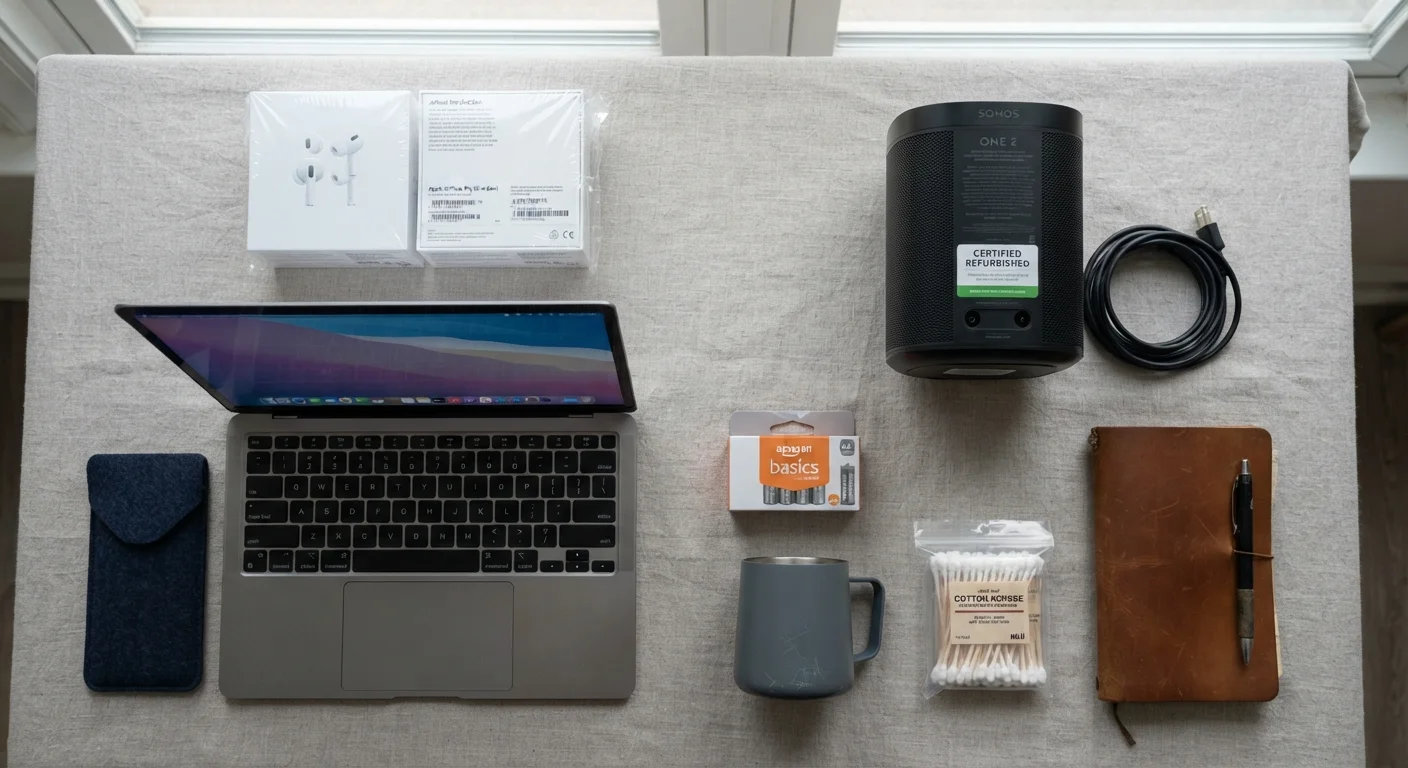
- Refurbished: An item that was returned, inspected, repaired if needed, and tested to meet a defined standard before resale. The refurbishing may be done by the original manufacturer (often labeled "Certified Refurbished") or by a third-party refurbisher.
- Open-box: A returned item that was opened but typically not used - or used very briefly. It's sold without original packaging, usually at a discount, and often by the original retailer.
- Used (private party): A second-hand item sold by its previous owner, with no standardized inspection process, no retailer backing, and typically no warranty.
Comparing the Three Categories
Each category involves a tradeoff between price savings and protection. The table below captures the key variables to weigh before buying.
| Refurbished | Open-Box | Used (Private Party) | |
|---|---|---|---|
| Typical discount vs. new | 15-40% | 10-30% | 30-70% |
| Inspection / testing standard | Defined process, documented | Varies by retailer policy | None - buyer dependent |
| Warranty coverage | Usually 90 days to 1 year | Retailer return window only | None in most cases |
| Return option | Yes, per warranty terms | Yes, per retailer policy | Rarely - as-is sales common |
| Condition reliability | High - tested to standard | Moderate - often unused | Low - self-reported |
| Best item types | Electronics, power tools, appliances | Small appliances, accessories | Furniture, vehicles, instruments |
A few patterns stand out. Refurbished items cost more than used but come with meaningful structural protection - a tested unit and often a 90-day to one-year warranty. Open-box items are frequently as good as new (the return rate on functioning items is high), and they're sold by retailers who have a reputational stake in what they move. Private-party used carries the most uncertainty but also offers the most room to negotiate.
When to Choose Each Category
The right category depends on what you're buying and what failure would cost you.
Choose Refurbished When:
- The item is complex or has moving parts (laptops, power tools, HVAC equipment).
- You need some warranty coverage as a backstop.
- The manufacturer's certified program is available - those units are held to a higher standard than generic third-party refurbishers.
Choose Open-Box When:
- The retailer has a clear return and inspection policy you can verify.
- The item is simple enough that "opened but unused" is easy to confirm (small appliances, accessories, fitness equipment).
- The discount is meaningful - open-box savings are often 10-30% off retail, which is worth capturing on the right item.
Choose Used (Private Party) When:
- You can inspect the item in person or get detailed photos and condition documentation.
- The category has a reliable resale market where condition is easy to verify (vehicles, furniture, musical instruments).
- The price gap over refurbished or open-box is large enough to justify the added risk.
Verify the Refurbisher's Grade System
Many refurbished listings use a grading scale (Grade A, Grade B, etc.) but these grades are not standardized across sellers. Always read the condition description in full rather than relying on the grade label alone. For electronics, confirm whether the battery has been replaced or tested - that's often the first failure point on refurbished devices.
Before committing to any pre-owned purchase over a significant dollar amount, run through the pre-purchase decision checklist to make sure the timing and logic hold up.
The Two Questions That Cut Through the Noise
No matter which category you're buying in, two questions determine whether the purchase makes sense:
- What does the return or warranty policy actually cover? A 30-day return window on an open-box laptop is very different from a 90-day warranty on a certified refurbished one. Read the policy before you buy, not after.
- What happens if it fails? For a $40 blender, a failed unit is an inconvenience. For a $900 laptop needed for work, it's a crisis. Calibrate how much protection you need to the real cost of failure - including time, not just money.
If you're timing a larger pre-owned purchase, the pre-buy timing checklist can help you decide whether waiting for a better condition unit or lower price makes financial sense. And if you're weighing pre-owned against waiting for a new-item sale, the waiting vs. buying now framework gives you a structured way to compare those options.
The core principle: pre-owned buying is a risk management exercise, not just a discount hunt. Match the category to the stakes, verify the protection, and the savings become reliable rather than lucky.