

Key Takeaways
Captures meaningful savings on predictable discount cycles
Categories like electronics, appliances, and seasonal goods follow consistent price-drop patterns. Aligning purchases to these windows can yield discounts that exceed 20% on full retail in dollar terms.
Filters out impulse purchases before they happen
A built-in waiting period naturally separates genuine needs from momentary wants, reducing regretted spending without requiring extra willpower.
Allows time for price comparison and research
Waiting gives you a window to monitor price history tools, evaluate alternatives, and confirm the item is actually the right fit - reducing the chance of a costly return or replacement.
Enables cashback and coupon stacking at sale events
Major promotional periods often allow stacking store coupons, portal cashback, and card rewards simultaneously - a combination rarely available at regular prices.
Delay cost can exceed projected discount
If workarounds during the wait - rentals, repairs, or repeated trips - add up, the real cost of waiting may surpass whatever discount eventually materializes.
Sale prices are not guaranteed to arrive
Not every item goes on meaningful sale on a predictable schedule. Waiting on an assumption that a discount will appear can leave you paying the same price later, just later.
Stock availability risk is often underestimated
Specialized parts, limited-run items, or products in high seasonal demand may sell out before a sale event, leaving you with no option or a more expensive substitute.
Opportunity cost of deferred utility is real
For items that improve productivity, safety, or quality of life, the value of owning the item now may outweigh the savings from waiting - a cost that doesn't appear on any receipt.
Our Verdict
Waiting for a sale is a sound strategy when a discount cycle is predictable, the purchase is non-urgent, and holding off carries no meaningful cost. But when need is immediate, stock is limited, or the projected savings are thin, buying now is often the financially rational move. Neither approach wins universally - the right answer depends on four variables: urgency, expected discount size, availability risk, and carrying cost.
Shoppers who have flexibility in timing, are buying discretionary or big-ticket items, and are willing to track price cycles will get the most value from a wait-and-time strategy.
The Core Question: Is the Discount Worth the Wait?
Every delay involves a trade-off. You give up something - convenience, availability, or the utility of owning the item now - in exchange for the possibility of paying less. The word possibility matters: discounts are not guaranteed, and the savings window is often narrower than shoppers expect.
Start by estimating the realistic discount, not the advertised one. A "40% off" sale headline rarely applies to the specific item you need. Look at historical price data - browser extensions that track price history can show what an item actually sold for over the past 90 to 180 days - and calculate the likely net savings in dollars, not percentages. If the expected savings on a $60 item is $8, that changes the calculus compared to a $400 appliance where waiting could save $80 or more.
For large planned purchases, see the pre-buy timing checklist for a structured way to evaluate whether holding off makes financial sense before you commit.
When Waiting Makes Sense
Captures meaningful savings on predictable discount cycles
Categories like electronics, appliances, and seasonal goods follow consistent price-drop patterns. Aligning purchases to these windows can yield discounts that exceed 20% on full retail in dollar terms.
Filters out impulse purchases before they happen
A built-in waiting period naturally separates genuine needs from momentary wants, reducing regretted spending without requiring extra willpower.
Allows time for price comparison and research
Waiting gives you a window to monitor price history tools, evaluate alternatives, and confirm the item is actually the right fit - reducing the chance of a costly return or replacement.
Enables cashback and coupon stacking at sale events
Major promotional periods often allow stacking store coupons, portal cashback, and card rewards simultaneously - a combination rarely available at regular prices.
Waiting is most defensible when a known discount cycle is approaching. Consumer electronics typically drop in price around November sales events and again after new-model releases. Appliances follow post-holiday and late-summer patterns. Seasonal items - lawn equipment, winter clothing, holiday décor - go on clearance on predictable schedules. If the item falls into one of these categories and you can wait 4-8 weeks without consequence, the math often favors patience.
The other case for waiting: the item is a want, not a need. Pausing between wanting and buying serves a dual function - it filters out impulse decisions and positions you to catch a lower price if one materializes. For discretionary purchases, a 30-day wait is almost never costly and occasionally very rewarding.
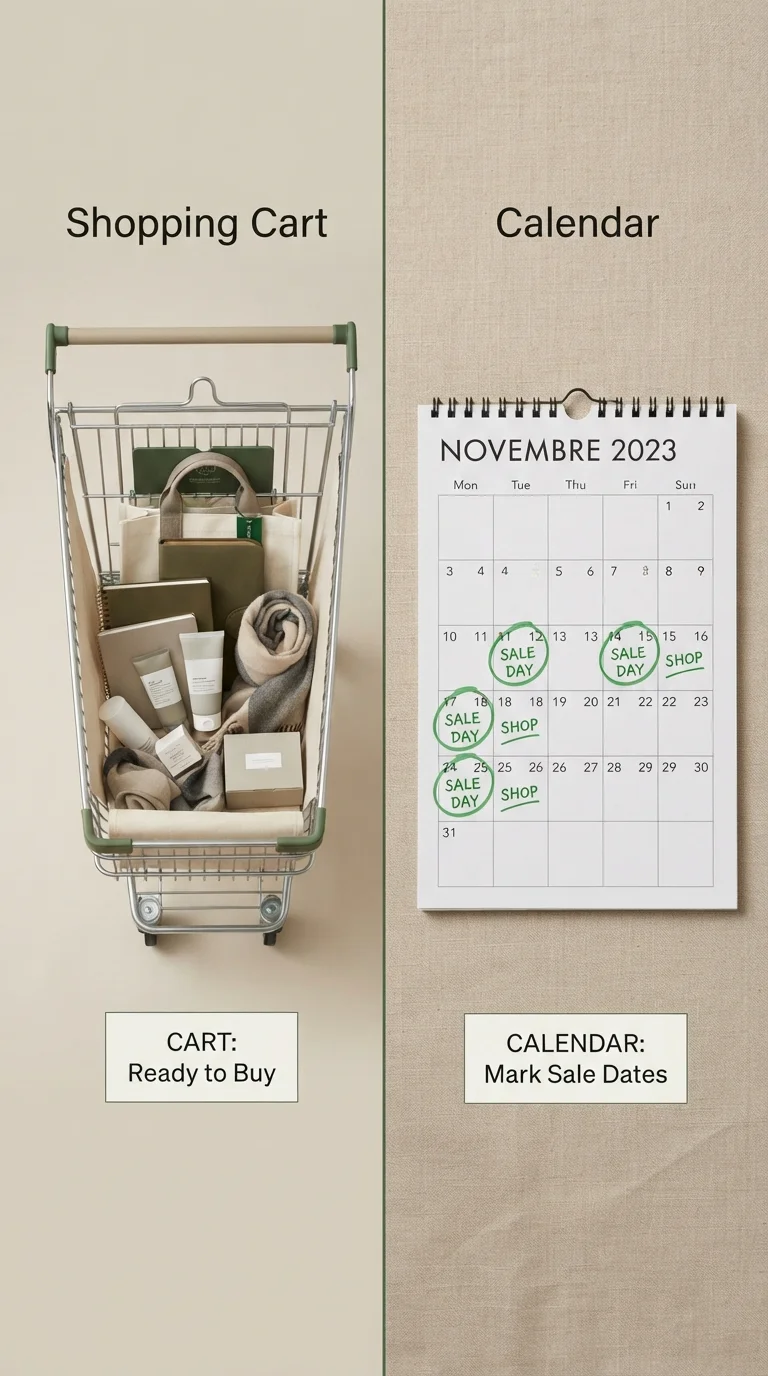
You can systematize this approach by mapping purchases against known discount windows. The personal shopping calendar method helps budget-conscious shoppers align spending to predictable price drops rather than reacting to them.
When Buying Now Is the Smarter Move
Delay cost can exceed projected discount
If workarounds during the wait - rentals, repairs, or repeated trips - add up, the real cost of waiting may surpass whatever discount eventually materializes.
Sale prices are not guaranteed to arrive
Not every item goes on meaningful sale on a predictable schedule. Waiting on an assumption that a discount will appear can leave you paying the same price later, just later.
Stock availability risk is often underestimated
Specialized parts, limited-run items, or products in high seasonal demand may sell out before a sale event, leaving you with no option or a more expensive substitute.
Opportunity cost of deferred utility is real
For items that improve productivity, safety, or quality of life, the value of owning the item now may outweigh the savings from waiting - a cost that doesn't appear on any receipt.
The case for buying immediately is strongest when the item is needed now or the cost of delay is concrete. If a car repair is keeping you off the road, or a broken appliance is disrupting daily life, the economic cost of waiting - rental fees, workarounds, lost time - can easily exceed the expected discount.
Stock availability is a real constraint that deal-seekers underestimate. Certain products, especially in automotive parts, home repair, or specialized gear, may not be reliably restocked. Waiting for a sale that never materializes - or watching an item go out of stock entirely - is a form of timing error that undercuts savings rather than smart planning.
Finally, consider carrying cost. If you're paying interest on a credit card while waiting, or if the delay requires renting a substitute, run the numbers explicitly. A 15% discount in 60 days may not beat the cumulative cost of the workaround.
Sale Events Don't Always Mean the Lowest Price
Major promotional events - including widely marketed annual sales - don't automatically produce the lowest price a given item has ever reached. Price history tools frequently show that some items sell at or below "sale" prices during off-peak periods. Checking 90-day price history before assuming a sale represents genuine savings is a reliable habit worth building.
A Four-Variable Decision Framework
15%+
Discount threshold where waiting typically justifies delay
Consumer finance guidance generally suggests that discounts below roughly 15% in actual dollar terms rarely offset the friction and opportunity cost of a deliberate wait.
30 days
Common "cooling off" window for discretionary purchases
Personal finance practitioners widely recommend a 30-day pause on non-essential purchases as a practical heuristic for separating impulse from genuine need.
Apply these four filters to any purchase decision:
- Urgency: Is there a functional need that makes delay costly? If yes, lean toward buying now.
- Discount probability: Is a meaningful price drop (generally 15% or more in dollar terms) demonstrably likely within a defined window? If yes, lean toward waiting.
- Availability risk: Could the item go out of stock, or is supply stable and consistent? High availability risk favors buying now.
- Carrying cost: Does waiting incur any real expense - interest, rental, repeated trips? If yes, deduct that cost from the projected savings before deciding.
When two or more of these factors point the same direction, that's your answer. When they split evenly, default to buying now for needs and waiting for wants. This framework won't eliminate uncertainty, but it replaces guesswork with a repeatable process. For a broader set of strategies around stretching a budget, the budget buying strategies hub covers complementary approaches including pre-owned alternatives and evaluating refurbished and open-box goods.