

Key Takeaways
Option A
Cashback Credit Cards
The automatic, purchase-level rebate built into your payment method.
Best for: Shoppers who want consistent, hands-off earnings on every transaction without changing their checkout habits.
Option B
Cashback Portals
The click-through gateway that unlocks retailer-funded rebates online.
Best for: Online shoppers willing to start every session through a portal to capture variable, often higher rates on specific retailers.
If you want effortless, consistent savings with zero extra steps
Cashback Credit Cards
Card rewards apply automatically at checkout regardless of where or how you shop, making them the most reliable baseline for everyday spending.
If you're making a large one-time online purchase and want maximum return
Cashback Portals
Portal rates can reach 5-15% or more on specific retailers during promotions - significantly outpacing most flat-rate card rewards on a single transaction.
If you shop primarily in-store or at non-participating retailers
Cashback Credit Cards
Portals only track online purchases through their affiliate links; card rewards work anywhere the card is accepted.
If you're already comfortable with portal mechanics and want to maximize each dollar
Both tools stacked together
Using a cashback card through a cashback portal is the standard stacking move - the portal tracks the sale, and the card adds its own layer on top.
How Each Tool Actually Works
The confusion between these two tools is understandable - both promise money back - but their mechanics are fundamentally different, and that difference determines when and how to use each one.
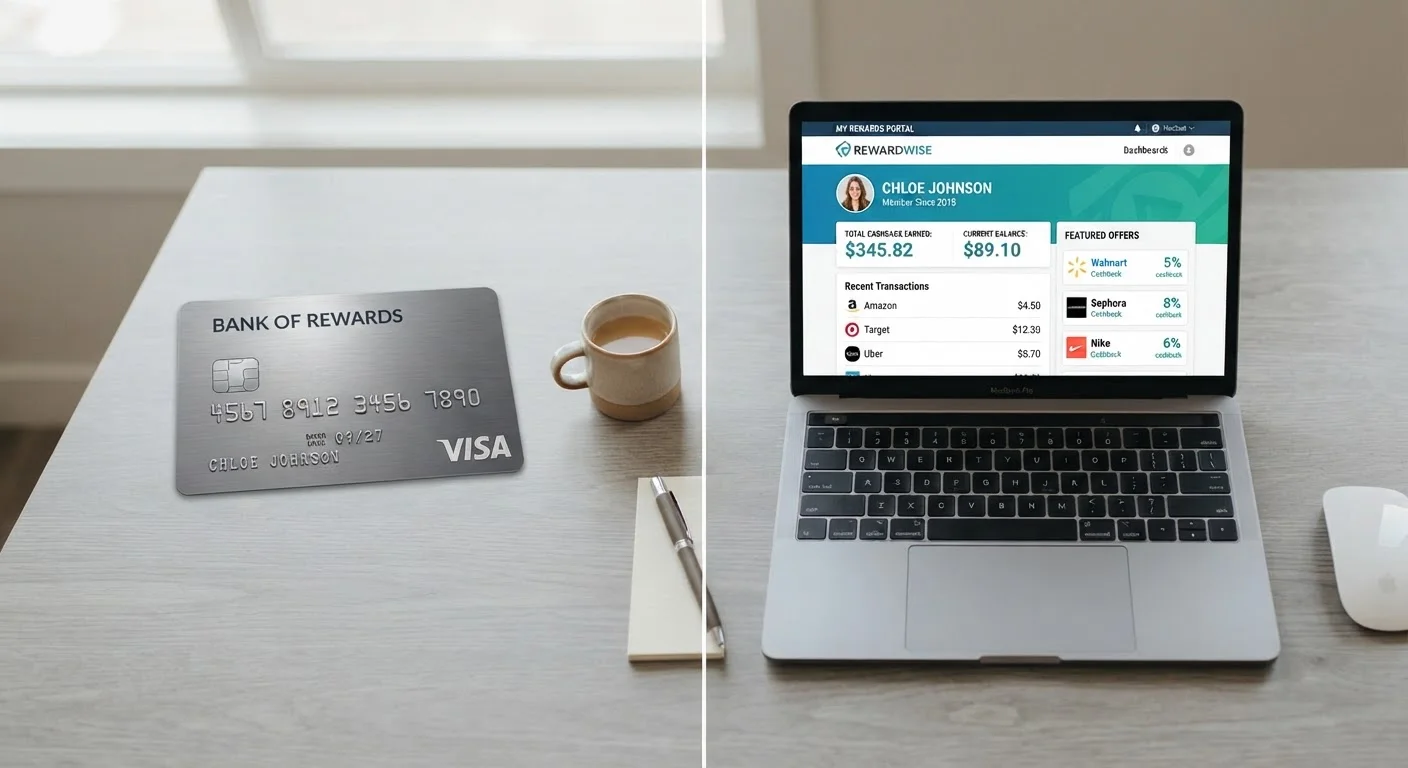
Cashback credit cards are payment instruments. When you pay with a cashback card, the card issuer returns a percentage of your spend - typically 1-5% depending on the card tier and spending category - directly to your account. No extra steps. No third-party tracking. The rebate processes because you used that specific card.
Cashback portals - sometimes called cashback sites or rebate portals - are affiliate intermediaries. When you click through to a retailer from a portal, the portal embeds a tracking cookie in your browser session. If you complete a purchase, the retailer pays the portal an affiliate commission. The portal then passes a portion of that commission back to you as cashback. The mechanics are explained in detail in why cashback portals pay you. The key point: the portal earns nothing unless its tracking link gets credit for the sale.
This tracking dependency is the single biggest practical difference. A card reward is guaranteed the moment you swipe. Portal cashback is contingent on a correctly attributed session - and several common shopping behaviors can break that attribution.
| Criterion | Cashback Credit Cards | Cashback Portals |
|---|---|---|
| How earnings are triggered | Automatically at payment | Requires click-through before purchase |
| Typical rate range | 1-5% by category | 1-15%+ varies by retailer and date |
| Rate stability | Fixed by card agreement | Changes frequently; promotional spikes common |
| Works in-store | Yes | No - online only |
| Tracking risk | None - card-level | Cookie-based; can be broken by ad blockers |
| Redemption timeline | Monthly, automatic | 60-90 day hold; minimum payout threshold |
| Stackable with the other tool | Yes, in most cases | Yes, in most cases |
When Stacking Both Makes Sense - and When It Doesn't
The good news: for the majority of online purchases, you can earn from both simultaneously. Pay with your cashback card after clicking through a portal, and both systems record independently. Your card logs a purchase; the portal logs a referred sale. This is the foundation of the stacking strategy covered in stacking coupons and cashback on the same purchase.
However, stacking isn't always clean. The scenarios where it breaks down include:
- Coupon codes not issued by the portal: Many portals void cashback when a coupon code from outside their network is applied at checkout. The portal interprets this as a pricing conflict. See situations where coupons and cashback genuinely don't mix for the specific scenarios.
- Private browsing or ad blockers: These can prevent the tracking cookie from being set, causing the portal to miss the sale entirely - while your card reward still posts normally.
- Retailer exclusions: Some retailers specifically exclude certain product categories (often sale items, electronics, or gift cards) from portal cashback, regardless of which card you use.
Portal Tracking Can Fail Silently
Unlike a card reward - which always posts - a portal session can break without any notification. Browser extensions that modify URLs, switching devices mid-session, or opening a new tab can all sever the tracking link. If you're relying on portal cashback for a significant purchase, consider completing the full transaction in a single standard browser window with extensions paused.
The practical takeaway: treat your cashback card as the guaranteed floor and the portal as the variable ceiling. When the portal works, it adds on top. When it doesn't, the card still earned.
Rates, Flexibility, and Redemption Compared
Rate structure is where the two tools diverge most visibly. Card rates are fixed - your agreement specifies exactly what percentage each category earns, and that rate doesn't change week to week. Portal rates, by contrast, are dynamic. A retailer might offer 3% through a portal on a Tuesday and bump it to 8% on a promotional weekend. Checking portal rates before a large purchase takes roughly 60 seconds and can meaningfully change your return.
60-90 days
Typical portal cashback hold period
Most cashback portals withhold payment until the retailer's return window closes, delaying access to earned rewards.
Up to 15%+
Portal cashback rates during promotions
Promotional portal rates on select retailers can reach double digits for limited windows, compared to the fixed 1-5% on most cashback cards.
1 click
Extra step required to activate portal cashback
Clicking through the portal before shopping is the only action required - but missing it means the portal earns nothing to pass back.
Redemption also differs. Card cashback typically flows directly into your statement credit, bank account, or rewards balance - usually monthly, automatically. Portal cashback often requires a minimum payout threshold (commonly $5-$25) and may be held for 60-90 days while the retailer's return window remains open. If you let portal balances sit uncollected, you risk the situation described in cashback earned but never claimed.
For shoppers building a broader savings framework across every category - groceries, auto parts, home goods, travel - understanding how these two tools fit together is a starting point. The end-to-end cashback playbook maps out where each method performs best by category.
Bottom line: these aren't competing tools. They operate on different layers of a transaction. Once you understand the mechanics, using both together becomes the default - not the exception.