

Key Takeaways
Cashback Portal
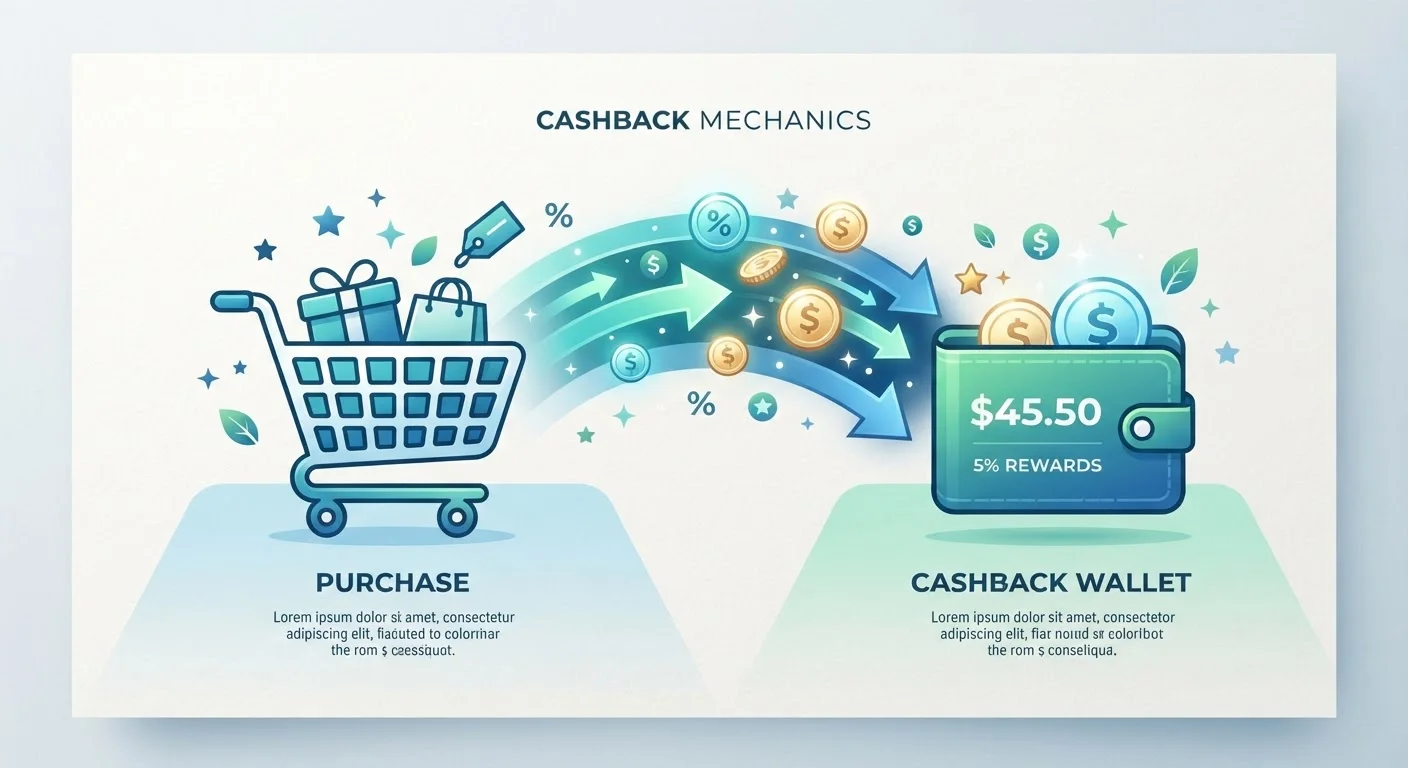
A cashback portal is a website or browser extension that pays you a percentage of your purchase price after you shop at participating retailers through their platform. The portal earns a referral commission from the retailer for sending you there, then splits a portion of that commission with you as cashback. You don't pay extra - the retailer funds the reward through their existing marketing budget.
Portals track purchases via affiliate cookies or redirect links. The commission split between portal and shopper varies by retailer agreement, typically ranging from 1% to 15% of the purchase value.
The Affiliate Commission Explained in Plain Terms
Every time a cashback portal sends a shopper to a retailer and that shopper makes a purchase, the retailer pays the portal a referral fee - called an affiliate commission. This is the same mechanism that powers millions of websites that link to products online: the referrer earns a cut of the sale.
Retailers set these rates voluntarily inside affiliate networks. They do it because acquiring a paying customer through a portal is often cheaper than running traditional paid advertising. The commission comes out of the retailer's existing marketing budget - not from inflating the price you pay at checkout.
The portal then splits that commission. It keeps a margin to cover its operating costs and profit, and passes the remainder back to you as the cashback reward. A portal advertising "8% cashback" at a given retailer may be earning 12% in commission and keeping 4%. The exact split is rarely disclosed publicly, but the underlying arithmetic is straightforward.
~$8B+
Global affiliate marketing spend annually
Industry estimates consistently place global affiliate marketing spending in the multi-billion-dollar range, reflecting how mainstream performance-based referral has become for retailers.
1%-15%
Typical cashback portal rate range by retailer
Rates vary widely by merchant category and negotiated agreement; commodity and grocery categories tend toward the lower end while travel and apparel can reach the higher end.
30-90 days
Typical cashback confirmation delay
Portals generally hold cashback as 'pending' until the retailer's return window closes and the commission is confirmed - often between one and three months after purchase.
How Tracking Actually Works
When you click a cashback link or activate a portal's browser extension, a tracking cookie is placed in your browser. This cookie identifies the portal as the referring affiliate when you complete your purchase. The retailer's system reads that cookie at checkout, confirms the referral, and queues the commission payment to the portal.
This is why tracking can break silently. If you clear your cookies between clicking the portal link and completing your purchase, the retailer has no record of the referral - and no commission is owed. The same happens if an ad blocker prevents the cookie from being set, or if you click a second affiliate link (from another site) that overwrites the first cookie.
Best practice: click through from the cashback portal as your final action before adding items to your cart and checking out. Don't open new tabs or visit other deal sites in between.
Protect Your Tracking Cookie
After clicking a cashback portal link, go straight to checkout without visiting other deal sites, coupon aggregators, or clicking any other affiliate links. Each new affiliate click can overwrite the portal's cookie, silently voiding your cashback. Disable ad blockers for the retailer's domain if tracking failures recur.
Why Retailers Accept This Arrangement
A common question is why retailers would agree to pay commissions at all. The answer is that affiliate channels are highly measurable performance marketing - retailers only pay when a sale actually happens. Compare that to display advertising, where brands pay per impression regardless of whether anyone buys.
Cashback portals also draw in price-sensitive shoppers who might not have chosen that retailer otherwise. From the retailer's perspective, a sale at a 10% commission cost can still be profitable if the customer is new or if the cart size is large. Repeat business from price-motivated shoppers is an added benefit they factor in.
Understanding this helps you recognize that the cashback system isn't a loophole or a trick - it's a deliberate marketing channel that retailers fund intentionally. That said, retailers do adjust rates, pause programs, or add exclusions, which is why portal rates fluctuate and certain product categories (like gift cards) are typically excluded.
What This Means for Your Shopping Strategy
Knowing the mechanics lets you use portals more deliberately. A few things follow directly from the economics:
- Rates vary by retailer and season. Portals often negotiate higher commission rates during peak retail periods, and they pass some of that increase to shoppers. Checking portal rates before a large purchase - particularly in categories like automotive parts, home goods, or electronics - can surface meaningfully higher returns than you'd get during an off-peak period.
- Gift cards and marketplace sellers are usually excluded. Retailers set exclusions to protect already-thin-margin products. Expect gift card purchases and third-party sellers on marketplace platforms to earn zero cashback even when the portal shows a rate for that store.
- Stacking with credit card cashback is often viable. The portal commission and your credit card's cashback come from separate systems - the portal charges the retailer, your card charges the bank's interchange. Both can pay simultaneously on the same purchase.
For a broader picture of how these tools interact, see how coupons, promo codes, and cashback each work differently. And if you want to understand payout timing before your first withdrawal, cashback thresholds and payout delays explains exactly when and how you'll see your money.