

Key Takeaways
Why Southeast Asia Works for Tight Budgets
Southeast Asia's cost structure is fundamentally different from Western destinations. Lower local wages, abundant food production, and high regional competition for tourist spending all keep prices accessible. A meal from a street vendor, a bed in a clean guesthouse, and a bus ticket between cities can together cost less than a single lunch in many US cities.
This isn't a matter of roughing it. It's a matter of understanding where value actually lives. The region rewards travelers who eat where locals eat, sleep outside the tourist core, and use the same transport networks that residents rely on daily. For travelers already thinking seriously about cost-conscious planning, the practical starting point for tight-budget trips covers how to build a realistic budget before booking anything.
$35-$45
Typical daily budget in Vietnam or Cambodia
Estimates based on traveler-reported averages across accommodation, food, and local transport in budget travel communities and backpacker resources.
$1-$3
Average street meal cost across the region
Street food pricing observed across Vietnam, Thailand, Cambodia, and Indonesia in widely cited travel cost guides.
20-40%
Accommodation savings from non-tourist neighborhoods
Consistent pattern reported by budget travelers comparing guesthouse pricing one or two districts away from main tourist zones.
Where Your Money Goes Furthest
Not every country in the region is equally affordable. Vietnam, Cambodia, and Laos consistently offer the lowest daily costs. In Vietnam, travelers regularly move through multiple cities - Hanoi, Hue, Hoi An, Ho Chi Minh City - on $30-$45 per day including accommodation, food, and local transport. Cambodia's Siem Reap and Phnom Penh run comparably, though Angkor Wat entrance fees add a meaningful one-time cost.
Thailand sits at a moderate level. Bangkok, Chiang Mai, and the northern regions remain affordable, but popular southern islands like Koh Samui and Phuket have drifted toward mid-range pricing, particularly for accommodation. Indonesia offers a similar split: Bali's tourist infrastructure has pushed costs up in Seminyak and Ubud, while Java and Lombok remain genuinely inexpensive.
Myanmar and the Philippines vary significantly by location. Remote islands in the Philippines require ferry and small-plane connections that add up quickly. Singapore, while part of the region, operates at a cost level comparable to Western Europe and is not a budget destination by any definition.
For a sense of how regional pricing variation works across a different budget-friendly continent, the breakdown of South America's low-cost destinations applies similar logic to Bolivia, Colombia, and Peru.
Getting Around Without Overspending
Overland transport is Southeast Asia's most underutilized budget tool. Overnight sleeper trains between cities - particularly on Vietnam's Reunification Express - eliminate a night's accommodation cost while covering hundreds of miles. Overnight buses operate on similar routes in Thailand, Laos, and Cambodia, with varying comfort levels at varying prices.
Within cities, ride-hailing apps (Grab dominates across most of the region) provide metered, reliable pricing that avoids the negotiation dynamic of street taxis. For shorter distances, motorbike taxis and tuk-tuks are standard; always confirm a price before boarding.
Book overnight trains in Vietnam at least a week ahead during peak season - soft sleeper berths sell out fast, and the step up from hard seat is worth the modest price difference for rest quality.
Arriving rested reduces the temptation to spend on taxis and conveniences that tired travelers default to, keeping overall daily costs lower.
Download offline maps and the Grab app before leaving your home country - the app requires a foreign phone number to register, which is harder to sort out on spotty guesthouse Wi-Fi.
Reliable navigation and metered ridesharing prevent the overcharging that commonly hits newly arrived travelers unfamiliar with local fare norms.
Budget airlines - AirAsia, VietJet, and others - connect major regional hubs at fares that can undercut long bus journeys on time-sensitive routes. These low fares exist primarily on routes booked well in advance; last-minute regional air tickets lose their cost advantage quickly. Baggage fees on these carriers are meaningful and should be factored into any fare comparison.
Accommodation Realities at the Budget End
Hostels in Southeast Asia range from spartan dormitories to well-designed social spaces with reliable air conditioning, private lockers, and included breakfast. Dorm beds in Vietnam and Cambodia typically run $6-$12 per night; private rooms in guesthouses start around $15-$25 in most non-resort areas.
Booking platforms show headline prices, but reading recent reviews matters more here than in more regulated markets. Air conditioning reliability, hot water, and neighborhood noise levels vary considerably even within the same price tier. Arriving without a reservation in peak season - December through February in most of the region - creates real availability pressure in smaller towns.
Staying one or two neighborhoods removed from the main tourist district routinely cuts accommodation costs by 20-40% with minimal impact on accessibility, since most areas are easily navigated by motorbike taxi or rideshare.
Food, Daily Costs, and Where Budgets Leak
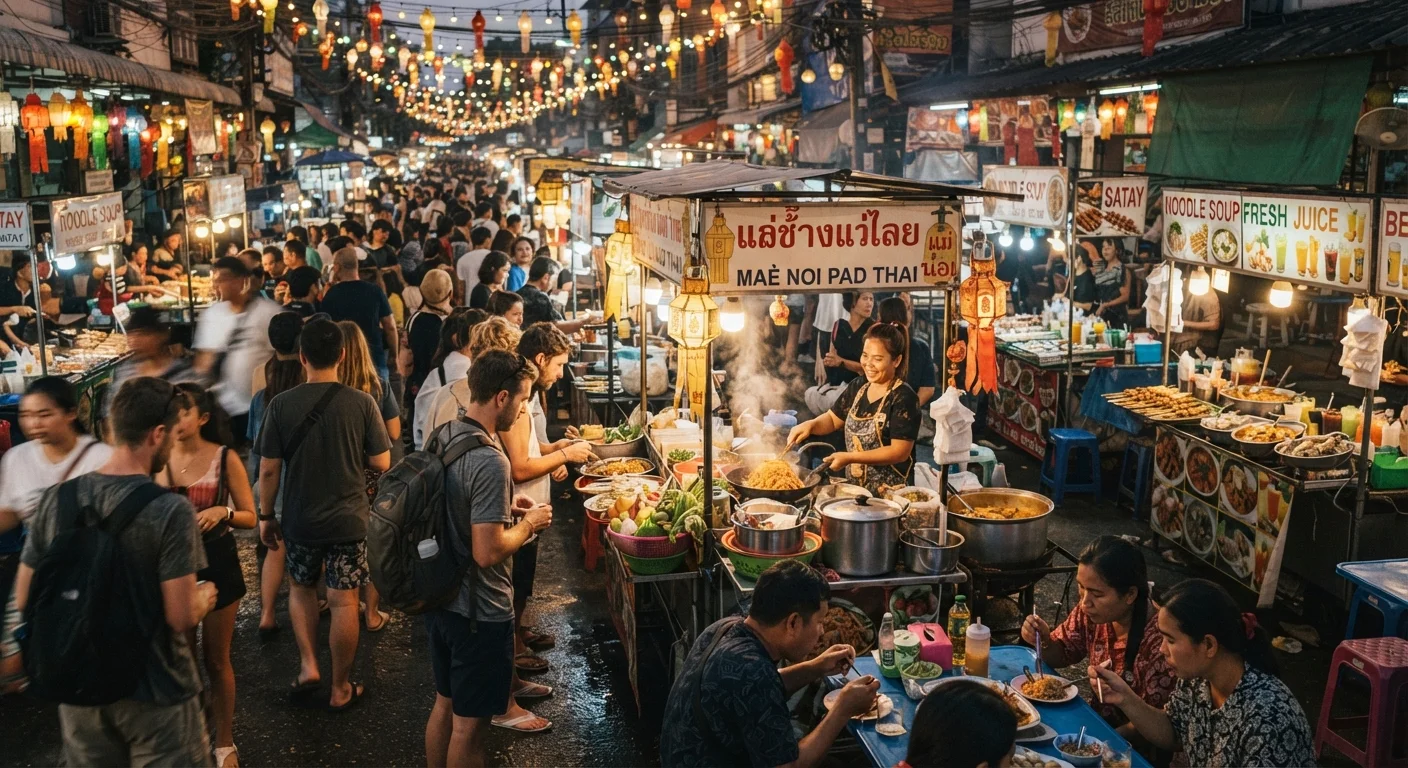
Street food is the economic backbone of budget travel in Southeast Asia. Pho, banh mi, pad thai, nasi goreng, and dozens of country-specific dishes are available from vendors and small stalls at prices - typically $1-$3 per meal - that make restaurant dining feel unnecessary. Markets and food halls consolidate vendors and are safe, well-trafficked, and easy to navigate even without the local language.
Budget leakage follows predictable patterns. Tourist-zone restaurants with English menus charge three to five times local prices for similar food. Packaged tours to major attractions often carry markups that independent arrangements don't. Drinking alcohol, particularly in bar-heavy traveler areas like Vang Vieng in Laos or Khaosan Road in Bangkok, adds costs fast. Transport upgrades made impulsively - taking a taxi when a bus exists, flying when an overnight train was viable - quietly inflate daily averages.
The on-the-ground practices for keeping daily costs in check are worth reviewing before departure, as most of the principles apply directly to Southeast Asia's cost environment.
Planning Before You Arrive
Seasonal timing shapes costs more than most travelers anticipate. The dry season (roughly November-February across much of mainland Southeast Asia) is peak travel season, bringing higher accommodation prices and fuller guesthouses. Shoulder season - March through May or September through October - offers meaningfully lower rates and thinner crowds, with weather that remains workable in many areas, though humidity and occasional rain are factors.
Visa requirements vary by country and nationality, and policies change. Always verify current entry requirements through official government immigration sources and your country's foreign affairs department before finalizing itineraries. Some countries offer visa-on-arrival; others require advance e-visa applications with processing windows of several days.
Travel insurance is a practical necessity, not an optional add-on. Medical care quality varies significantly outside major cities, and medical evacuation from remote areas carries costs that dwarf any savings accumulated during a trip. For travelers comparing Southeast Asia against other affordable regions, Eastern Europe's budget travel case illustrates how currency differentials and lower living costs create similar value in a very different setting.
The full landscape of budget travel planning brings together destination selection, flight strategy, and daily spending into a single planning framework that works equally well for Southeast Asia itineraries.
This article provides general travel information only. Prices, visa requirements, entry conditions, and safety situations change over time. Always verify current requirements with official government sources and consult qualified professionals for insurance and financial decisions before travel.